FomaFomapan 100 Classic
Contrasty and vintage-looking, with crushed shadows and slow highlights
- Manufacturer
- Foma Bohemia
- ISO
- 100
- Type
- Black and white
- Process
- B&W
- Formats
- 135, 120, 4x5, 5x7, 8x10
- Status
- In production
- Datasheet
- Fomapan 100 Classic (FOMA 05/22)
- Preset
- GA — 024 / P
Status checked [3]
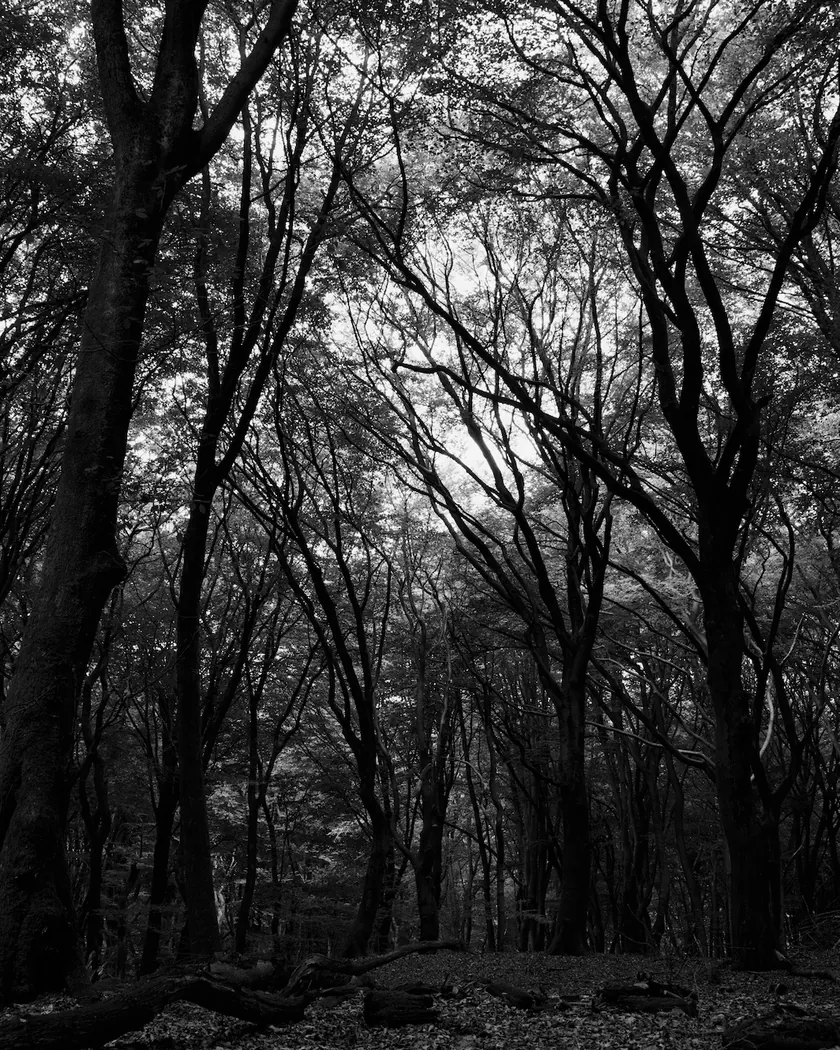
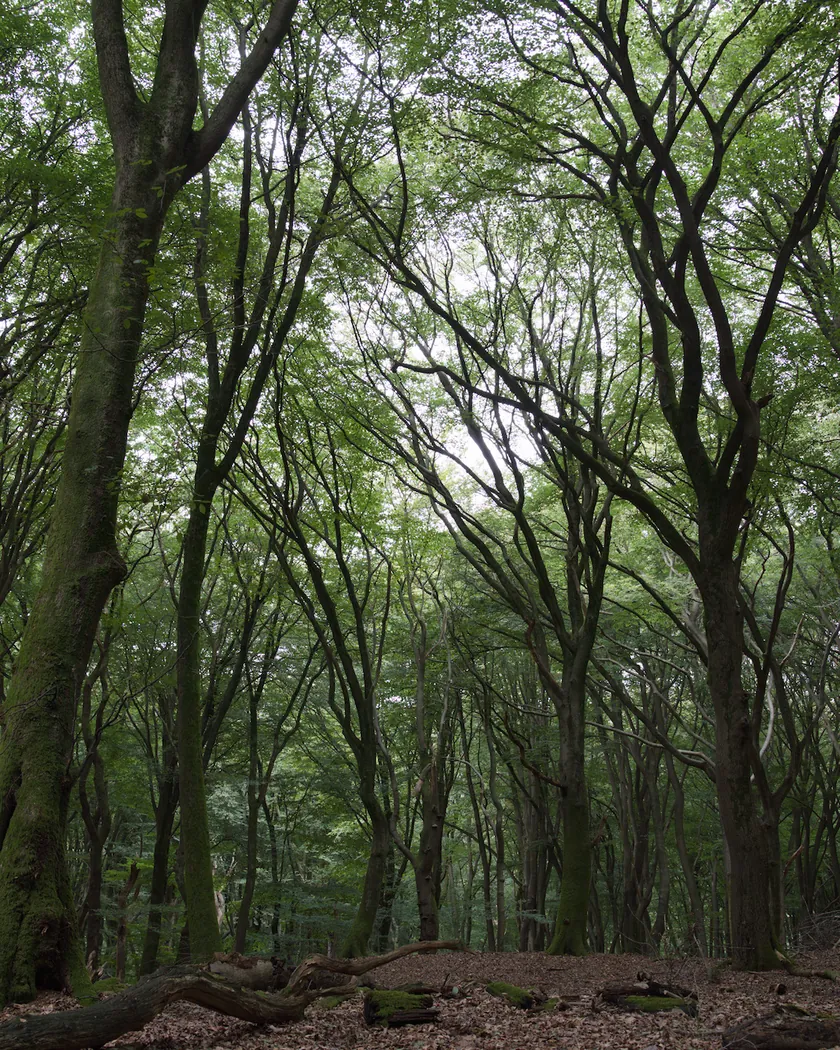
Character
- Contrast
- High according to reviews; Foma's times aim at medium-contrast negatives
- Grain
- Diffuse RMS granularity 13.5 (Microphen, datasheet)
- Latitude
- 1 stop over to 2 stops under without changing development (Foma)
- Best for
- General photography; reviews favor bright light for its rich blacks
Fomapan 100 Classic is an ISO 100 panchromatic black-and-white negative film made by Foma Bohemia in the Czech Republic and developed in standard black-and-white chemistry [1]. It is a traditional cubic-grain film [5] known for high contrast, crushed shadows and a look reviewers compare to the black-and-white films of the 1960s and 70s [7] [8]. It is reportedly also sold under other names, such as Arista EDU Ultra 100 and Kosmo Foto Mono 100 [7] [11].
Look and color
Fomapan 100 turns colors into grays according to its own spectral sensitivity, not the eye’s:
- Close to Tri-X. Converting our test RAW files with the Fomapan 100 curve instead of plain luminance made a sky 3.4 L* lighter, skin 4.2 L* darker and a pink shirt 1.5 L* darker. The Tri-X 400 curve gives +3.2, −3.8 and −1.2 [15]. This rests on an assumption, because Foma’s chart has no scale (see below).
- A vintage look. Kosmo Foto describes “a contrast black and white film with hard blacks and fine grain”, suited to “bright sunlight” [7]; Blue Moon Camera finds “an old world feel” [5]; Casual Photophile an “old-school newspaper archive look” [6].
Tonality
- Curves. In Microphen, the characteristic curves for 5, 7 and 11 minutes have a short toe and a long straight section that runs above a density of 2, bending slightly at the top for the longest development (our reading of the graph) [1].
- Development. Foma’s times aim at “medium-contrast negatives”. Its development charts give a gamma of about 0.65 to 0.75 in D-76 or ID-11 at the recommended 6 to 7 minutes (our reading) [1].
- Reviews find it contrasty, with shadows that drop fast. Blue Moon Camera describes “deep, ‘crunchy’ shadows” that “often fall off quite quickly” [5]; Japan Camera Hunter calls it “a high contrast film” that tends to “crush blacks” [8]; Casual Photophile says it “tends toward higher contrast” [6].
- Highlights: the reviews disagree. For Blue Moon Camera, tones above middle gray are “very rich, even and slow to move to full white” [5]. Casual Photophile warns that “highlights will be blown” and that the “lack of highlight latitude might give scenes a starker look” [6].
- Latitude: the maker and the reviews disagree. Foma promises good results from 1 stop over to 2 stops under without changing development [1]. Casual Photophile speaks of “narrow exposure latitude” [6], and Japan Camera Hunter finds it “unforgiving when underexposed” [8].
- Long exposures: no correction from 1/1000 to ½ s, then double the exposure at 1 s, ×8 at 10 s and ×16 at 100 s [1].
Grain and sharpness
| Film | Diffuse RMS granularity | Developer |
|---|---|---|
| Fujifilm Acros 100 II | 7 [13] | Microfine |
| Ilford FP4 Plus (motion-picture version) | 10 [12] | Kodak D-96 |
| Fomapan 100 Classic | 13.5 [1] | Microphen |
| Kodak Tri-X 400 | 17 [14] | HC-110 (B) |
- Foma measures its RMS in Microphen, developed to a gamma of 0.6, and gives a resolving power of 110 lines/mm [1]. RMS values from different developers are only roughly comparable.
- Reviews: “not a fine grained film by any comparative standards”, “one of the grainiest ISO 100 films out there” [5]; “a tad grainier than your average 100 speed film but not so much that it is distracting” [8]; “fine, but present enough to lend a kind of softness” [6].
- Sharpness: Blue Moon Camera finds it “sharp enough at least that you will never think of it as a soft film” [5].
- Halation. The datasheet lists an anti-halation backing for 120 and sheet film, not for the 35 mm film, which is coated on a gray base [1]. Reports are mixed: a Casual Photophile reader saw “burned-out high-lights that glow” and found the anti-halation “rather weak” [6]. In a forum thread about 4×5 sheets, one user reports bloom around highlights, while others see none in 120 or 8×10, and one of them blames strong overexposure [9].
Spectral sensitivity
Foma publishes a wedge spectrogram made under 2850 K tungsten light, with no scale on the sensitivity axis. The curve rises slowly from 400 nm, stays flat from 460 to 500 nm, steps up near 520 nm, shows a small hump near 577 nm, peaks near 640 nm and reaches zero at about 667 nm [1]. A 2850 K source emits about five times more energy at 640 nm than at 450 nm, so much of the rise toward red comes from the light itself. Once that is corrected, and assuming the curve spans about one log unit as on Ilford’s charts, skies render lighter and skin darker than in a luminance conversion, almost as with Tri-X [15].
Datasheet digest
| Item | Value | Source |
|---|---|---|
| ISO speed | 100/21°; good results from ISO 50 to ISO 400 without changing development | [1] |
| Diffuse RMS granularity | 13.5 (Microphen at 20 °C, developed to gamma 0.6, measured at D 1.0) | [1] |
| Resolving power | 110 lines/mm | [1] |
| Characteristic curves | Short toe, long straight section above D 2, slight bend at the top for the longest development (Microphen, 5, 7 and 11 min; read from the graph) | [1] |
| Gamma in D-76 / ID-11 stock, 20 °C | About 0.65 to 0.75 at the recommended 6 to 7 min (read from the development charts) | [1] |
| Development, 20 °C | D-76 or ID-11 stock 6 to 7 min, Microphen 5 to 7, Xtol 5 to 6, Fomadon R09 (1+50) 8 to 9 | [1] |
| Reciprocity | None from 1/1000 to ½ s; ×2 exposure at 1 s, ×8 at 10 s, ×16 at 100 s | [1] |
| Base | 35 mm: gray or gray-blue triacetate 0.125 mm, no anti-halation backing listed. 120: polyester 0.1 mm and sheets: polyester 0.175 mm, both with anti-halation backing | [1] |
Names, status and history
- Maker. Foma Bohemia is based in Hradec Králové, in the Czech Republic [1]. Its logo reads “since 1921”, and Kosmo Foto dates its film production to 1921 [7].
- Introduction date: the sources disagree. Wikipedia’s list of films dates Fomapan 100 Classic from 1991 [10]; Blue Moon Camera says it was introduced “around 2002” [5].
- Also sold as (reported, not confirmed by Foma).
- Arista EDU Ultra 100, sold by Freestyle Photographic in the United States: Kosmo Foto wrote in 2017 that Fomapan 100 is “repackaged as Arista EDU100” there [7], and Wikipedia says the Arista EDU Ultra films “are currently the same” as Foma’s [10].
- Kosmo Foto Mono 100: Analog.cafe reports that Fomapan 100 is “the same film, according to Stephen” Dowling, who created Mono [11]; Wikipedia lists it as rebranded Fomapan 100 [10].
- Status. On September 29, 2026, Foma’s catalogue listed Fomapan 100 Classic [3]. In June 2025, Foma added 35 mm cassettes of Fomapan 100, 200 and 400 in retro packaging [4].
- Formats. The 05/22 datasheet lists 135-24 and 135-36, bulk lengths of 17, 30.5 and 50 m, 120, and sheets from 9×12 cm to 24×30 cm and from 4×5 to 8×10 inches. Foma adds that the film can be reversal-processed into slides [1].
- Datasheet. The current datasheet is marked FOMA 05/22. The spectral curve on this page was read from the 07/12 edition, which prints the same chart and also listed 135-12 cassettes [2].
Alternatives
- GA — 020 Ilford FP4 Plus
Classic cubic grain at ISO 125: finer on paper (RMS 10 for its motion-picture version), 'medium contrast' and a much wider stated latitude
- GA — 081 Kentmere Pan 100
Harman's budget classic-grain ISO 100, made in England
- GA — 023 Fujifilm Neopan 100 Acros II
Same speed at the other extreme: RMS 7 against 13.5, and a curve without a shoulder
- GA — 003 Kodak Tri-X 400
Two stops faster, with coarser grain (RMS 17) and a similar spectral rendering in our conversion
Get the look in darktable
The GA — 024 / P preset, inspired by Fomapan 100 Classic, is a darktable 5.6 style of 4 native modules, with no LUT. It sits on top of your own exposure and tone mapping.
| Zone | Metric | Before → after |
|---|---|---|
| sky | L (channel weights only) | 55.2 → 58.6 |
| skin | L (channel weights only) | 79.3 → 75.1 |
| pink T-shirt | L (channel weights only) | 47.8 → 46.3 |
Settings, all measurements and limits of the Fomapan 100 Classic preset
GA — 024 / P · darktable preset
Fomapan 100 Classic
for darktable
See real photos
Scans of real Fomapan 100 Classic film, published by others:
- Blue Moon Camera: Fomapan 100 film review with sample photos bluemooncameracodex.com
- Japan Camera Hunter: Fomapan 100 Classic 35mm, with sample photos japancamerahunter.com
- Casual Photophile: Foma Fomapan 100 35mm film review, with sample photos casualphotophile.com
Questions about Fomapan 100 Classic
What is the true ISO of Fomapan 100?
Foma rates Fomapan 100 Classic at ISO 100/21° and says it gives good results from 1 stop over (ISO 50) to 2 stops under (ISO 400) without changing development. Blue Moon Camera and Japan Camera Hunter shoot it at box speed; a reader of Casual Photophile recommends EI 50 with Rodinal.
Can you shoot Fomapan 100 at 400?
Foma says yes: its datasheet promises good results when the film is underexposed by 2 EV, at ISO 400, without lengthening development or raising the temperature. Reviewers are more cautious. Japan Camera Hunter warns that it 'can be unforgiving when underexposed', with unappealing grain, and Blue Moon Camera finds its shadows fall off quickly.
Does Fomapan 100 have halation?
Reports are mixed. Foma lists an anti-halation backing for 120 and sheet film, but not for 35 mm, which is coated on a gray base. A Casual Photophile reader saw highlights that glow and found the anti-halation weak, while in a forum thread other users see no halation in 120 or 8×10, one blaming strong overexposure.
Fomapan 100 vs FP4 Plus?
On paper FP4 Plus is finer-grained: its motion-picture version has an RMS of 10, against 13.5 for Fomapan 100, though measured in different developers. FP4 Plus is ISO 125, sold as medium contrast, with a stated latitude of 2 stops under to 6 over. Reviews describe Fomapan 100 as contrasty, with crushed shadows and a vintage look.
Where is Fomapan made?
Fomapan films are made by Foma Bohemia in Hradec Králové, in the Czech Republic; the company's logo reads 'since 1921'. Fomapan 100 is also reportedly sold under other names, such as Arista EDU Ultra 100 in the United States and Kosmo Foto Mono 100, but we found no confirmation from Foma.
Sources
- 1DS Foma Bohemia: Fomapan 100 Classic, technical data (05/22)
- 2DS Foma Bohemia: Fomapan 100 Classic, technical data (07/12), copy hosted by Freestyle Photographic
- 3M Foma Bohemia: Fomapan 100 Classic, catalogue page Accessed September 29, 2026.
- 4M Foma Bohemia: Fomapan retro edition (news, June 30, 2025) Accessed September 29, 2026.
- 5C Blue Moon Camera: Film Friday, Fomapan 100 film review (Zeb Andrews, June 13, 2025) Accessed September 29, 2026.
- 6C Casual Photophile: Foma Fomapan 100 35mm film review (Josh Solomon, February 18, 2019), with reader comments Accessed September 29, 2026.
- 7C Kosmo Foto: Fomapan 100, Bohemian black-and-white (Stephen Dowling, January 31, 2017) Accessed September 29, 2026.
- 8C Japan Camera Hunter: Fomapan 100 Classic 35mm (Jesse Hayes, January 6, 2022) Accessed September 29, 2026.
- 9C Talk Photography forum: Fomapan halation/bloom (thread, March 2024) Accessed September 29, 2026.
- 10C Wikipedia: List of photographic films Accessed September 29, 2026.
- 11C Analog.cafe: Kosmo Foto Mono 100 film review (Dmitri, updated July 4, 2024) Accessed September 29, 2026.
- 12DS Ilford: FP4 Plus negative motion picture film, fact sheet (undated), copy hosted by Bioskop Lab
- 13DS Fujifilm: Neopan 100 Acros II (135), data sheet AF3-0258E (February 2020)
- 14DS Kodak Professional Tri-X 320 and 400, technical data F-4017 (October 2021)
- 15B The Grain Archive: Fomapan 100 Classic style, validation measurements
DS: datasheet · M: manufacturer · C: review or community · B: Grain Archive measurement