HarmanPhoenix II 200
Stylized, often pastel colors; no orange mask, so hues can be unusual (Harman, reviews)
- Manufacturer
- Harman technology
- ISO
- 200
- Type
- Color negative
- Process
- C-41
- Formats
- 135, 120
- Status
- New (2025)
- Datasheet
- Phoenix II Technical Information
- Preset
- GA — 054 / P
Status checked [2]
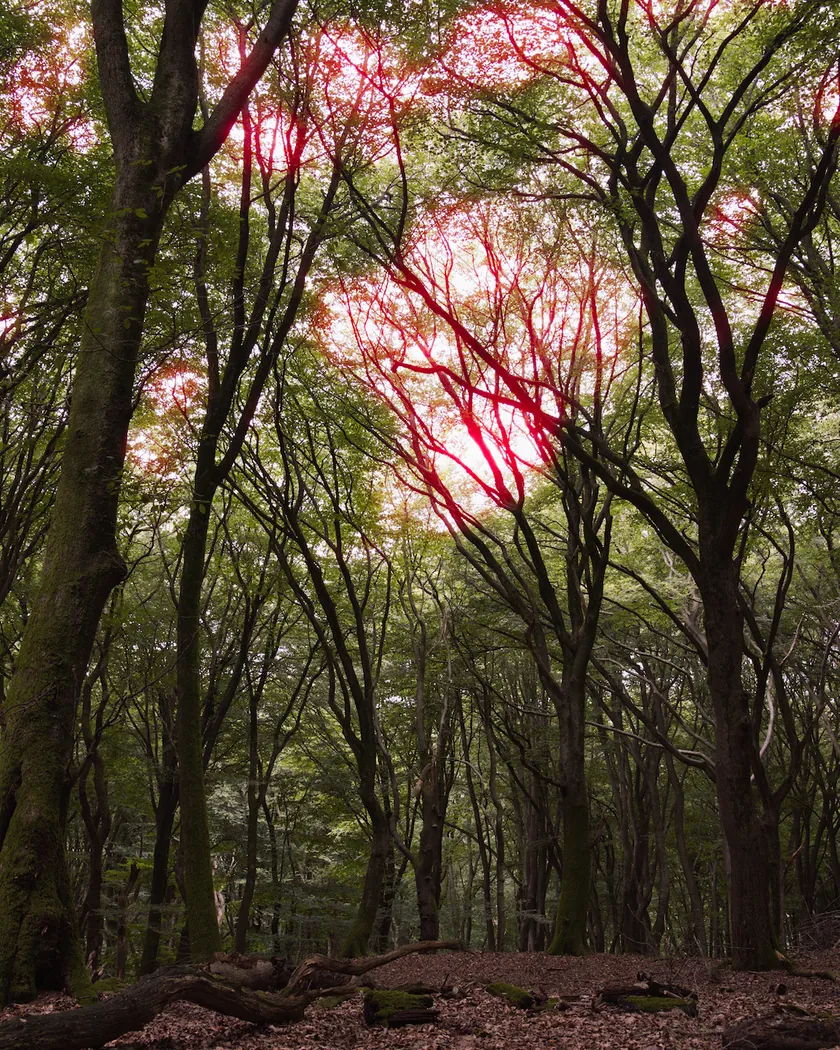
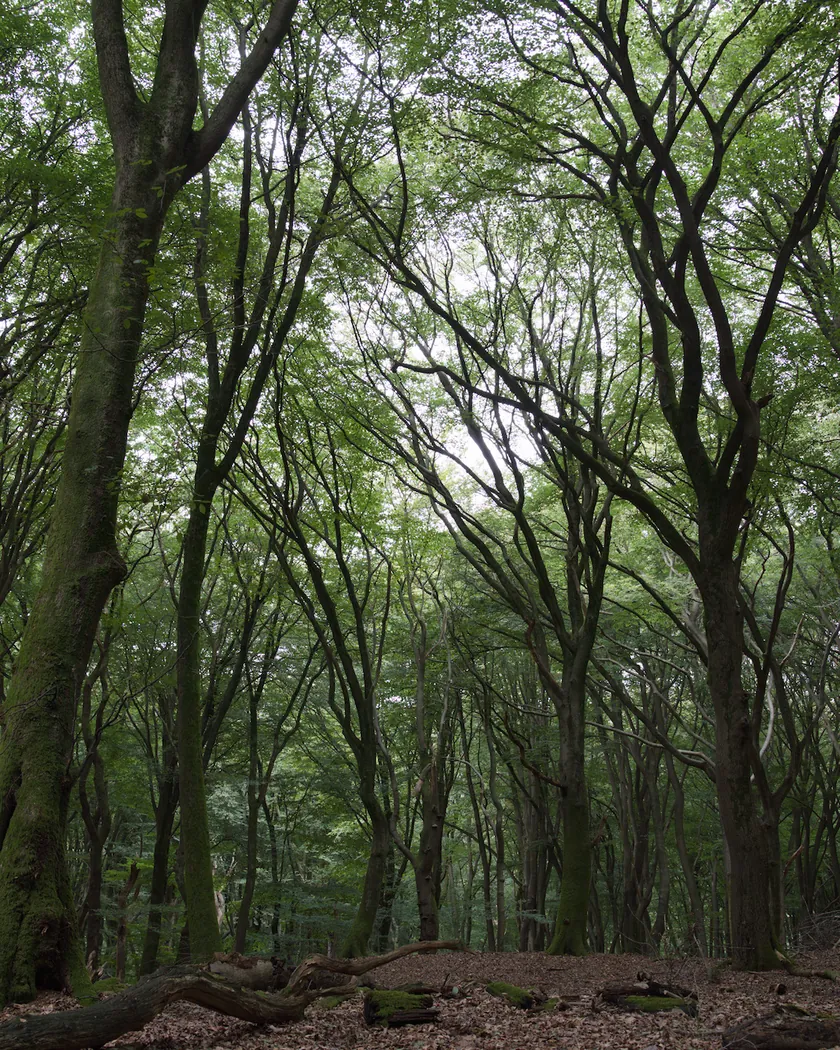
Character
- Contrast
- More normal than Phoenix, still firm; 'not too harsh' (PetaPixel)
- Grain
- Finer than Phoenix (Harman), yet 'crunchy'; no RMS or PGI published
- Latitude
- Wider than Phoenix; best at EI 100 to 200
- Best for
- Outdoors, metering for the midtones; bracket bright or difficult scenes (Harman)
Harman Phoenix II 200 is an ISO 200 color negative film for C-41 processing, released in July 2025 as the second generation of Harman’s experimental Phoenix [1] [3]. It is not the same film as the original Phoenix (now sold as Phoenix 125): Harman describes more normal contrast and color balance, finer grain and wider latitude, while still calling it a creative, experimental film [1].
Look and color
- No orange mask. Harman warns that color rendition “can be unusual compared with an established colour film”, and that the negatives look purplish in standard C-41, which it says is normal [1].
- Softer than the original. Parallax finds colors “still far from true to life”, with hints of pink and green in the midtones, but “more subtle and better balanced” than before [6].
- Pastel rather than vivid. PetaPixel says colors “lean towards pastels more than vivid, high-saturation” [4]. Digital Camera World calls them “stylized” and notes that the purplish base can lead to unexpected hues [5].
- The scan matters. Harman gives scanner starting points, such as saturation +2 and tone adjustment “All Hard” on a Fujifilm SP3000 and chroma 100 on a Noritsu, milder than the saturation cuts it advised for the original [1] [8].
- Halation. The datasheet says the film “can exhibit halation in high contrast lighting” [1]. Digital Camera World sees a slight tendency towards it [5]; Parallax finds it still present in the highlights [6]. A reader comment on Analog.cafe describes the halos as more orange than the red ones of CineStill; this is one commenter’s view [7].
Tonality
- Contrast. Harman says it is more normal than the original’s [1]. Parallax reports “more controlled contrast” and better highlight and shadow retention [6]. PetaPixel: “not too harsh to where shadows get crushed, but just enough to give a nice visual depth” [4].
- Latitude. Wider than the original, per Harman [1]. A commenter on Analog.cafe puts the gain at about one stop; that is not from Harman [7].
- Exposure. Best results between EI 100 and 200; Harman advises bracketing at first, particularly in bright scenes [1]. PetaPixel warns that an underexposed frame loses the film’s character [4].
- Curve. Harman publishes no characteristic curve, so no slope or toe can be quoted [1].
- Push: not recommended. Long exposures: no correction from 1/10,000 s to 1 s; beyond that, adjusted time = metered time^1.31 [1].
Grain and sharpness
Harman claims finer grain than the original Phoenix but publishes no RMS granularity or Print Grain Index [1], so no table of neighbors is possible: for scale, Kodak Gold 200 is rated PGI 44 for a 4×6 print from 35 mm [10].
- PetaPixel calls the grain profile “crunchy”, and recommends the film for 120 rather than for 35 mm shooters concerned about grain [4]. Digital Camera World also mentions crunchy grain [5].
- One Analog.cafe commenter finds it fairly grainy in high-resolution scans yet smoother than other new small-batch films [7].
Spectral sensitivity
Under daylight (D55), the three layers form separate, moderately overlapping bands: blue about 360 to 520 nm, green about 480 to 600 nm and red about 570 to 720 nm, each peaking near 2.7 to 2.8 on an undefined “relative sensitivity” scale [1]. The red layer stops near 720 nm, where the original’s red curve trailed off near 760 nm under tungsten light [8]; the two charts use different light sources, so this suggests, but does not prove, a less shifted red.
Datasheet digest
| Item | Value | Source |
|---|---|---|
| ISO speed | 200/24° in daylight; works best at EI 100 to 200 | [1] |
| Granularity | Not published ("finer grain" than Phoenix) | [1] |
| Characteristic curve | Not published | [1] |
| Base | 0.125 mm (5 mil) acetate; no orange mask, purplish negatives | [1] |
| Reciprocity | No correction from 1/10,000 s to 1 s; beyond 1 s, adjusted time = metered time^1.31 | [1] |
| Push processing | Not recommended | [1] |
| Process | C-41, on standard lines without adjustment | [1] |
| Scanning, Fujifilm SP3000 | Tone adjustment All Hard, saturation +2, color balance C −2 / M 0 / Y 0 | [1] |
| Scanning, Noritsu | Overall contrast 3, chroma 100, automatic contrast 2 = 5 | [1] |
Names, status and history
- July 2025. Harman released Phoenix II, in which “each layer and component has been redesigned” according to press coverage [3]. Harman’s page says it is made at its Mobberley, UK factory [2].
- Formats. 36-exposure DX-coded 35 mm cassettes and 120 roll film, edge numbered 1 to 19 [1].
- Status. Listed on Harman’s site on September 30, 2026 [2].
- The original Phoenix. Harman repackaged it in August 2026 as Phoenix 125, with the same characteristics, per Harman [9]. Phoenix II remains the ISO 200 film.
- Datasheet. July 2025 edition, hosted by Harman [1].
Alternatives
- GA — 011 Harman Phoenix 200
The original, more radical Phoenix: higher contrast, stronger halation and grain (Harman); sold as Phoenix 125 since August 2026
- GA — 012 CineStill 800T
The other color film known for halation, with red halos; Phoenix II's halation is described as slight
- GA — 008 Kodak Gold 200
A conventional ISO 200 color negative, with a published Print Grain Index of 44 for a 4×6 print from 35 mm
- GA — 026 LomoChrome Purple
Another film bought for unusual color rather than accuracy
Get the look in darktable
The GA — 054 / P preset, inspired by Harman Phoenix II 200, is a darktable 5.6 style of 6 native modules, with no LUT. It sits on top of your own exposure and tone mapping.
| Zone | Metric | Before → after |
|---|---|---|
| sky | C (chroma) | 27.5 → 26.1 |
| sea | L (lightness) | 38.4 → 37.1 |
| skin | L (lightness) | 78.2 → 80.5 |
Settings, all measurements and limits of the Harman Phoenix II 200 preset
GA — 054 / P · darktable preset
Phoenix II 200
for darktable
See real photos
Scans of real Harman Phoenix II 200 film, published by others:
- PetaPixel: Harman Phoenix II film review, 35 mm and 120 samples petapixel.com
- Parallax Photographic: Harman Phoenix II 200 film review parallaxphotographic.coop
- Digital Camera World: Harman Phoenix II 35mm film review digitalcameraworld.com
Questions about Harman Phoenix II 200
Is Harman Phoenix II the same as Phoenix?
No. Harman describes Phoenix II as its second-generation film, a reformulation in which layers and components were redesigned. Compared with the original it has more normal contrast and color balance, finer grain and wider latitude. It stays a creative, experimental film, and the original is now sold as Phoenix 125.
What ISO should I shoot Phoenix II at?
The film is rated ISO 200, measured with standard C-41 processing. Harman's practical evaluations found the best results between EI 100 and EI 200 depending on scene brightness and contrast, and it advises bracketing at first. PetaPixel warns that an underexposed frame can lose the film's character.
Does Phoenix II have halation?
Yes, in high-contrast light, according to Harman's datasheet. Digital Camera World saw a slight tendency towards halation and Parallax found it still present in bright areas. The film has no orange mask, so the effect is not tuned out. Reviewers describe it as gentler than on the original Phoenix.
Can I develop Phoenix II in C-41 chemistry?
Yes. Harman says it can go through standard C-41 lines with no change to speed, temperature or replenishment, alongside other makes of color negative film. Push processing is not recommended. Negatives look purplish or magenta rather than orange because the film has no orange mask; Harman says this is normal.
Is Phoenix II grainy?
Harman claims finer grain than the original Phoenix but publishes no granularity figure. PetaPixel calls the grain profile crunchy and cautions 35 mm shooters, while recommending the film for 120. Digital Camera World also mentions crunchy grain. Grain looks stronger in high-resolution scans than in lab scans.
Sources
- 1DS Harman Phoenix II, technical information (July 2025)
- 2M Harman Photo: Harman Phoenix II 35mm, product page Accessed September 30, 2026.
- 3C Kosmo Foto: Harman Technology releases Phoenix II colour negative film (July 16, 2025) Accessed September 29, 2026.
- 4C PetaPixel: Harman Phoenix II film review, crunchy pastels (Jaron Schneider, July 18, 2025) Accessed September 30, 2026.
- 5C Digital Camera World: Harman Phoenix II 35mm film review (Jon Stapley, October 15, 2025) Accessed September 30, 2026.
- 6C Parallax Photographic: Harman Phoenix II 200 film review (July 2025) Accessed September 30, 2026.
- 7C Analog.cafe: reader comment on the Phoenix review Accessed September 29, 2026.
- 8DS Harman Phoenix 200, technical information (November 2023), copy hosted by Emulsive
- 9M Harman Photo: Harman Phoenix 125 35mm, product page Accessed September 29, 2026.
- 10DS Kodak Gold 200, technical data E-7022 (June 2023)
- 11B The Grain Archive: Harman Phoenix II 200 style, validation measurements
DS: datasheet · M: manufacturer · C: review or community · B: Grain Archive measurement