Fujifilm400
Warm, with a yellow bias next to UltraMax 400 and Superia X-TRA 400
- Manufacturer
- Fujifilm
- ISO
- 400
- Type
- Color negative
- Process
- C-41
- Formats
- 135
- Status
- In production
- Datasheet
- AF3-0262E
- Preset
- None yet · closest
Status checked [3]
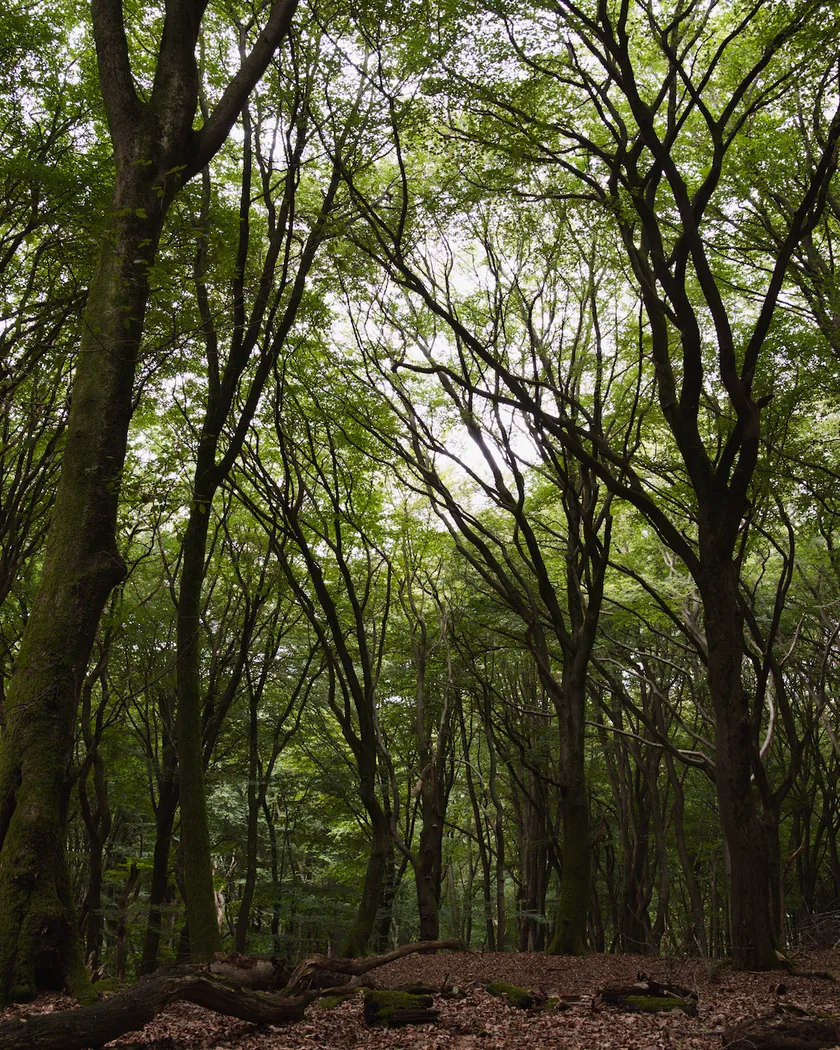
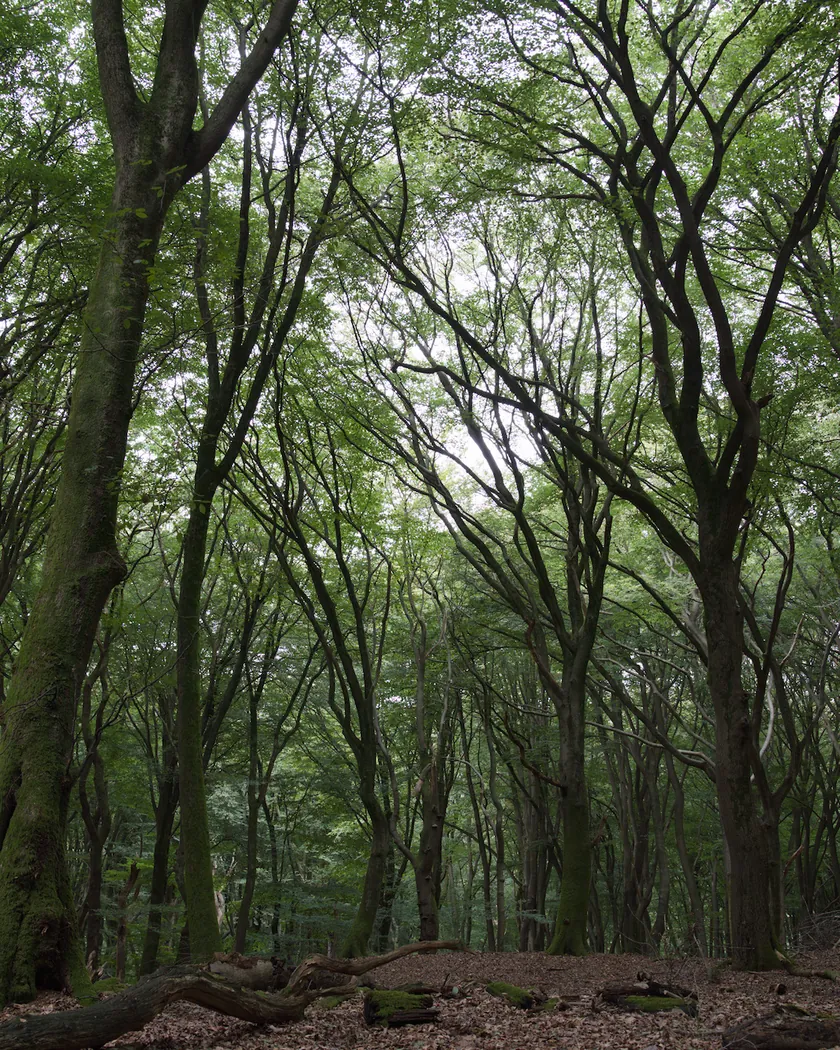
Character
- Contrast
- Slightly lower than UltraMax 400 in a side-by-side; curve slope about 0.57 to 0.63 (datasheet)
- Grain
- No figure published; 'fine grain for a high-speed film' (Fujifilm)
- Latitude
- About ten stops of dynamic range in one review; pushable to EI 1600
- Best for
- Everyday shooting, including low light (Fujifilm)
Fujifilm 400 is an ISO 400 consumer color negative film for C-41 processing, sold by Fujifilm in 35 mm since 2023 [1] [5]. It replaced Fujifilm’s own Superia X-TRA 400 but is a different film: the rolls are marked “Made in USA”, and the press reports it is made by Kodak [5] [8]. Whether it is the same emulsion as Kodak UltraMax 400 is disputed and has not been confirmed [6] [7].
Look and color
- What Fujifilm promises. “Vibrant and dynamic reds, blues, yellows, violets”, a variety of greens and natural skin tones, much the same wording Fujifilm used for Superia [4] [10]. The datasheet adds gray balance “from the brightest highlights to the deepest shadows” [1].
- Warm. Analog.cafe describes warm tones [7]. Side by side with UltraMax 400, Fujifilm 400 showed a slight yellow bias and UltraMax a blue one [6]. Next to Superia X-TRA 400, it came out warmer, with “a yellow look” [9].
- Foliage and low light are its strengths for Analog.cafe, which finds skin tones harder to fine-tune in complex light than with Portra 400 [7].
- Shadows lean green when underexposed, as with UltraMax [9].
- Fluorescent light. Unlike Superia, whose fourth layer was meant for it, Fujifilm 400 “may result in a greenish tint”, which Fujifilm says is corrected at printing [1] [10].
- Vivid colors, or the scan? Emulsive’s reviewer found bright, punchy colors but could not tell how much came from the scanning [8].
Tonality
- Curve. On the datasheet, the three curves have a toe up to about log H −2.5, then run straight with a slope of about 0.57 (red) to 0.63 (green) and no shoulder to the end of the chart [1]. On paper that is less steep than Superia X-TRA 400 (about 0.65 to 0.73) and a little steeper than UltraMax 400 (about 0.52 to 0.60) [10] [11] (our readings of the three graphs).
- Contrast. Marginally lower than UltraMax 400 in a side-by-side [6].
- Latitude. Analog.cafe estimates about ten stops of dynamic range, comparable to similar films [7].
- Pushing. Pushed two stops to EI 1600, the film gained grain and contrast, with minor color shifts [8].
- Long exposures: no correction from 1/4000 to 2 s, then +1/3 stop at 4 s up to +1 at 64 s: the same table as in Superia X-TRA 400’s datasheet [1] [10].
Grain and sharpness
Fujifilm publishes no granularity figure for Fujifilm 400 [1]. Kodak’s Print Grain Index and Fujifilm’s RMS values are different scales.
| Film | Published grain figure | Resolving power (1000:1) |
|---|---|---|
| Fujifilm 400 | none [1] | 125 lines/mm [2] |
| Fujifilm Superia X-TRA 400 (discontinued) | RMS 4 [10] | 125 lines/mm [10] |
| Kodak UltraMax 400 | Print Grain Index 46 [11] | not given [11] |
Datasheet digest
| Item | Value | Source |
|---|---|---|
| ISO speed | 400 in daylight; 100 under 3200 K tungsten with a Wratten 80A or LBB-12 filter | [1] |
| Granularity | Not published | [1] |
| Resolving power | 125 lines/mm at 1000:1 chart contrast | [2] |
| Characteristic curve | Toe up to about log H −2.5, then straight lines with slope about 0.57 (red) to 0.63 (green), no shoulder to the end of the chart (our reading of the graph) | [1] |
| Layers | Three color-sensitive layers (blue, green, red); no fourth layer shown | [1] |
| Reciprocity | No correction from 1/4000 to 2 s; +1/3 stop at 4 s, +2/3 at 16 s, +1 at 64 s | [1] |
| Fluorescent light | May give a greenish tint, corrected at printing | [1] |
| Base | Cellulose triacetate | [2] |
| Process | C-41 or Fujifilm CN-16 | [1] |
Names, status and history
- April 2023. Fujifilm 400 appeared in the US through the retailer B&H [5]. Its datasheet, AF3-0262E, is dated April 1, 2023, and names only Fujifilm Corporation [1].
- Who makes it. The rolls say “Made in USA” [8]. Emulsive’s reviewer found Kodak-style edge markings instead of Fujifilm’s red and green stripes and concluded that “Kodak has its hands in this” [8]. Kosmo Foto calls it “a Kodak-made emulsion, possibly the same film as Lomography 400” [5]. Neither Fujifilm nor Kodak has confirmed it, as Analog.cafe notes [7].
- The UltraMax question. A side-by-side on identical cameras found the two films “so close” that the author considers them interchangeable, while noting that their datasheet curves differ [6]. Analog.cafe concludes that “Fujifilm 400 and Kodak Ultramax are not the same thing” [7]. A third comparison sees “a definite comparison” with UltraMax [9]. We treat it as unconfirmed.
- April 2024: Superia’s replacement. Fujifilm brought Fujifilm 400 to Japan when it ended Superia X-TRA 400 [5]. In its processing section, the datasheet calls its “photographic and processing characteristics” “almost the same” as Superia X-TRA 400’s, and says it prints on the same printer setup [1]. Fujifilm’s US site even links it under the file name “SUPERIA 400 Data Sheet” [2].
- In production. On September 29, 2026, Fujifilm’s US consumer film page listed Fujifilm 400 next to Fujifilm 200, in 36-exposure single rolls and 3-packs [3] [4].
Alternatives
- GA — 009 Kodak UltraMax 400
Reportedly from the same maker; close enough to be called interchangeable in one side-by-side, but its published curves differ
- GA — 010 Fujifilm Superia X-TRA 400
The film it replaced in 2024: four layers in its datasheet, cooler, with more magenta in the shadows
- GA — 004 Kodak Portra 400
Kodak's professional ISO 400, easier to fine-tune for skin tones in complex light according to one review
Get the look in darktable
No preset for Fujifilm 400 yet.
Closest preset on file: Kodak UltraMax 400 (GA — 009 / P). The comparison at the top of this sheet shows that preset.
In a side-by-side test, Fujifilm 400 and UltraMax 400 came out close enough to be called interchangeable, Fujifilm 400 slightly yellower and a little less contrasty. A shared emulsion is not confirmed.
| Zone | Metric | Before → after |
|---|---|---|
| sky | C (chroma) | 27.5 → 32.5 |
| sea | C (chroma) | 22.2 → 25.9 |
| skin | C (chroma) | 16.4 → 17.8 |
Settings, all measurements and limits of the Kodak UltraMax 400 preset
GA — 009 / P · closest preset
UltraMax 400
for darktable
See real photos
Scans of real Fujifilm 400 film, published by others:
Questions about Fujifilm 400
Is Fujifilm 400 the same as UltraMax?
Not confirmed. The press reports that Fujifilm 400 is made in the US by Kodak, and a side-by-side test found it so close to UltraMax 400 that the author treats them as interchangeable, Fujifilm 400 being slightly yellower. But the two datasheets publish different curves, Analog.cafe concludes they are 'not the same thing', and neither company has said.
Is Fujifilm 400 made by Kodak?
Reportedly, yes. The rolls are marked 'Made in USA', and reviewers who examined the negatives found Kodak-style edge markings instead of Fujifilm's colored stripes. Kosmo Foto calls it a Kodak-made emulsion. Neither Fujifilm nor Kodak has confirmed it publicly: Fujifilm's datasheet names only Fujifilm Corporation, in Tokyo.
Is Fujifilm 400 the same as Superia?
No. Fujifilm 400 replaced Superia X-TRA 400 in 2024. Its datasheet shows three color layers where Superia's showed four, and publishes no grain figure. Fujifilm's datasheet calls its processing characteristics 'almost the same' as Superia's. A photographer who shot both found them unlike each other: Fujifilm 400 warmer, Superia cooler, with more magenta shadows.
Sources
- 1DS Fujifilm 400 Color Negative Film, product information bulletin AF3-0262E (April 1, 2023)
- 2M Fujifilm USA: Fujifilm 400, specifications Accessed September 29, 2026.
- 3M Fujifilm USA: consumer film, product listing Accessed September 29, 2026.
- 4M Fujifilm USA: Fujifilm 400, product page Accessed September 29, 2026.
- 5C Kosmo Foto: Fujifilm axes Fujicolor Superia X-Tra 400 (Stephen Dowling, April 5, 2024) Accessed September 29, 2026.
- 6C 35mmc: Fujifilm 400 (made in the USA) vs Kodak UltraMax 400, the same or different? (Dave Palumbo, July 11, 2023) Accessed September 29, 2026.
- 7C Analog.cafe: Fujifilm 400 color negative film review (January 21, 2025) Accessed September 29, 2026.
- 8C Emulsive: Film stock review, three rolls with 'Made in USA' Fujifilm 400 (Mark Frey, June 25, 2023) Accessed September 29, 2026.
- 9C Aly's Vintage Camera Alley: Fujifilm 400, still Superia or UltraMax in disguise? (September 9, 2024) Accessed September 29, 2026.
- 10DS Fujifilm Fujicolor Superia X-TRA 400, product information bulletin AF3-151E, copy hosted by 125px
- 11DS Kodak UltraMax 400, technical data E-7023 (February 2016)
DS: datasheet · M: manufacturer · C: review or community