FujifilmAstia 100F
Soft, subdued color and natural skin; warmer than Provia 100F
- Manufacturer
- Fujifilm
- ISO
- 100
- Type
- Slide
- Process
- E-6
- Formats
- 135, 120, 220, 4x5, 8x10
- Status
- Discontinued (2012)
- Datasheet
- AF3-149E
- Preset
- GA — 016 / P
Status checked [3]
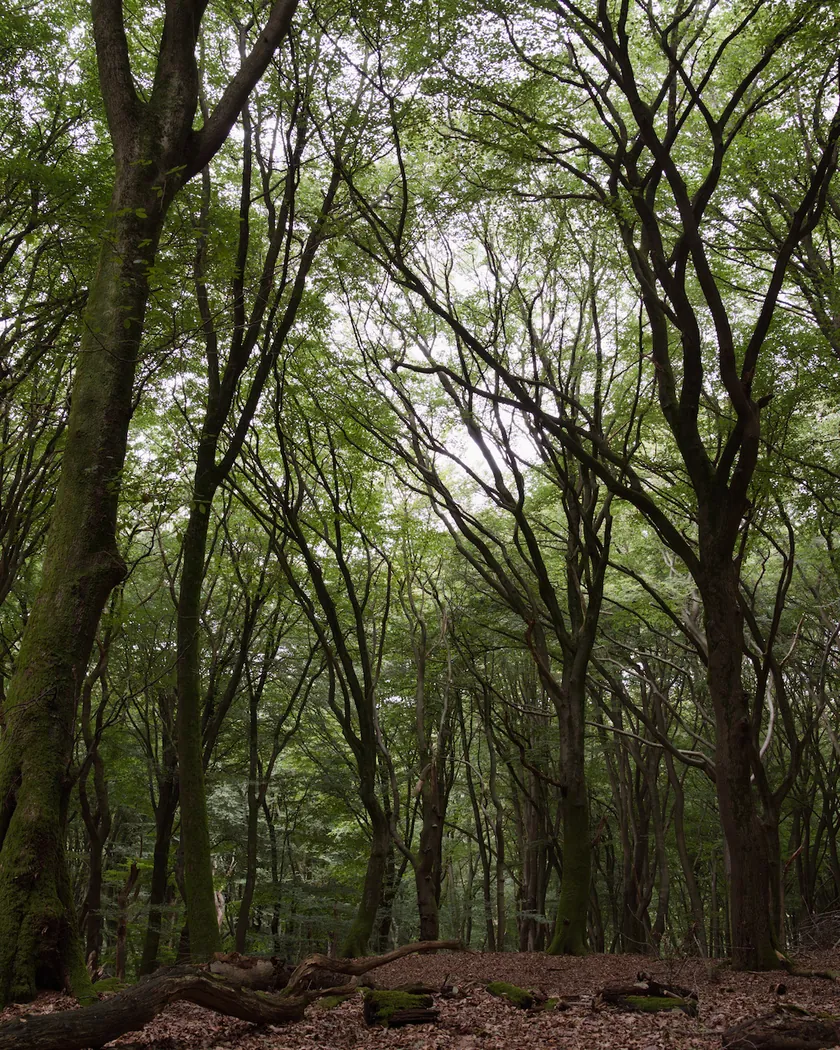
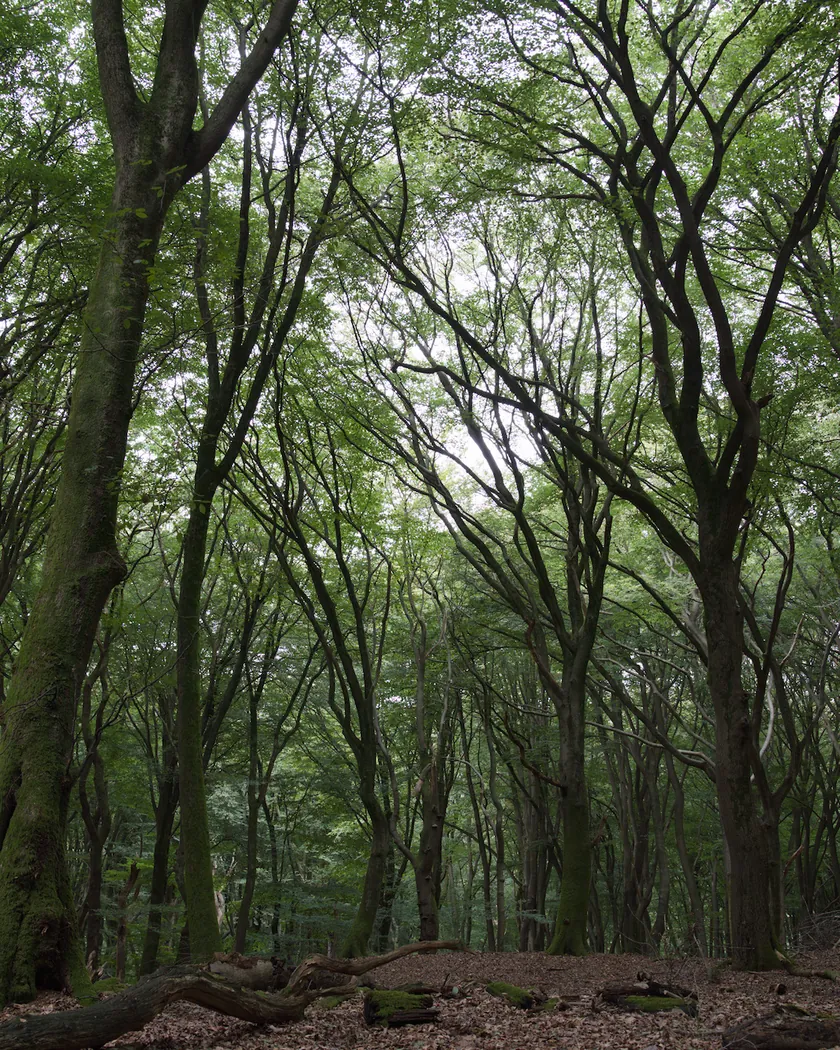
Character
- Contrast
- 'Soft' in Fujifilm's chart; on the datasheet, the softness is mostly in the highlights
- Grain
- Diffuse RMS granularity 7 (datasheet)
- Latitude
- About 6 stops on the datasheet; more forgiving than Velvia in one review
- Best for
- Fashion and portraits (Fujifilm)
Fujifilm Astia 100F (Fujichrome Astia 100F Professional, code RAP100F) was an ISO 100 daylight color slide film for E-6 processing, made for fashion and portraits: Fujifilm sold it on the “softest tones and subdued colors” of its Fujichrome range [1]. It was launched in 2003 and its production ended in March 2012, the last film to carry the Astia name [3].
Look and color
- What Fujifilm promised. “One of the world’s highest levels of color fidelity”, smooth and natural skin “from the highlights to the shadows”, and faithful rendering of costumes and accessories [1]. Fujifilm’s 2006 chart rates it “Real color”, with “Standard” saturation, where Provia 100F is “High” [2].
- Warmer than Provia. Shooting the same scenes on both, Oleg Novikov found that “Astia boasts much warmer colour reproduction; compared with it, Provia has a very noticeable green–and–blue tint”. The review praises its “lush” yellows and reds, finds its greens “somewhat muddy”, dislikes its skies, and judges Provia closer to reality [4].
- Saturation follows the light. In muted indoor light, colors become “soft, almost pastel”; in bright light, saturation rises, with “amazing oranges and reds” in autumn leaves [5]. “Vibrant and accurate” for Vividlight [6], but a “dull cast with very neutral color rendering” for a Velvia user [7].
- Skin is the film’s purpose: “perfect skin tones” [6], “accurate skin tones” [7]. One user switched to Astia because Provia 100F made skin “a bit blueish or reddish” [7].
- The cast varies with the source. A yellow cast, possibly from exposure [7]; a lean “a bit into the cyan” when scanning manually, easy to fix [5]; “a bit of purple cast” on expired film [8].
- UV. Deep red or purple flowers that reflect ultraviolet can take “a tinge of magenta” [7].
Tonality
- Fujifilm’s chart rates Astia’s contrast “Soft”, Provia 100F’s “Standard” and Velvia 100’s “High” [2].
- The datasheet curve tells a more precise story [1] [10] (our reading of both graphs):
- D-min is about 0.12 and D-max 3.3 to 3.5.
- In the upper highlights, the slope is about 1.05, against 1.25 for Provia 100F over the same range, and the toe is longer: highlights reach white more slowly.
- The midtones (about 1.8) and shadows (about 2.0) are close to Provia’s; a gradual shoulder follows, with no “wall”.
- About 6 stops separate densities 0.3 and 3.0, against 5.8 for Provia 100F. The softness is mostly in the highlights, not everywhere.
- Reviews confirm the highlights. In harsh 11 a.m. light, Astia held detail both in a model’s white shirt and in a dark blue skirt [6]; another user saw it hold “both the shadows and highlights with a superbly smooth tonal gradation” [7].
- Contrast against Provia: the sources disagree. Alex Luyckx finds “a bit more contrast and saturation in colour than Provia but far less than Velvia” [5], the opposite of Fujifilm’s chart. Novikov saw no meaningful difference in dynamic range between the two [4].
- Latitude. Luyckx found “a bit more forgiveness in exposure latitude than Velvia (100 and 50)” [5]. Processing can push or pull it from −1/2 to +2 stops [1].
- Long exposures: no correction up to 1 minute; from 2 minutes, a 5B filter and 1/3 to 2/3 stop more [1].
Grain and sharpness
| Film | Diffuse RMS granularity | Resolving power (1000:1) |
|---|---|---|
| Fujifilm Astia 100F | 7 [1] | 140 lines/mm [1] |
| Fujifilm Provia 100F | 8 [10] | 140 lines/mm [10] |
| Kodak Ektachrome E100 | 8 [12] | not given [12] |
| Fujifilm Velvia 50 | 9 [11] | 160 lines/mm [11] |
- Vividlight notes the drop from an RMS of 10 on the previous Astia to 7, which it called the finest-grained slide film yet produced [6]. Fujifilm credits a grain technology derived from Provia 100F’s [1].
- Measurement conditions differ slightly: gross density 1.0 for Astia and E100, 1.0 above D-min for Provia and Velvia [1] [10] [12].
- Reviews: “little to no visible grain” even in 35 mm [5].
Spectral sensitivity
The three peaks are of similar height: blue near 445 nm, green near 550 nm and red near 645 nm. Blue and green cross near 503 nm, green and red near 590 nm, both closer to the peaks than on Velvia 50: the layers overlap more [1] [11] (our reading). Fujifilm also describes a fourth layer that reproduces the “negative spectral sensitivity” of the human eye and a fifth, red-correcting layer; neither is plotted [1].
Datasheet digest
| Item | Value | Source |
|---|---|---|
| ISO speed | 100 in daylight; 32 under 3200 K tungsten with a Wratten 80A or LBB-12 filter | [1] |
| Diffuse RMS granularity | 7 (48 µm aperture, gross diffuse density 1.0) | [1] |
| Resolving power | 60 lines/mm at 1.6:1 chart contrast, 140 lines/mm at 1000:1 | [1] |
| Characteristic curve | D-min about 0.12, D-max about 3.3 to 3.5; slope about 1.05 in the upper highlights (Provia 100F: 1.25), 1.8 in the midtones, 2.0 in the shadows, then a gradual shoulder; about 6 stops from D 0.3 to 3.0 (our reading of the graph) | [1] |
| Layers | Blue, green and red layers plus a fourth 'green-color-correction' and a fifth 'red-color-correction' layer | [1] |
| Push and pull | From −1/2 to +2 stops with minimal change in color balance and gradation | [1] |
| Reciprocity | No correction from 1/4000 s to 1 min; 5B filter and +1/3 stop at 2 min, +1/2 at 4 min, +2/3 at 8 min | [1] |
| Base | Cellulose triacetate, 127 µm (135) and 98 µm (120, 220); polyester, 175 µm (sheets) | [1] |
| Process | E-6 or Fujifilm CR-56 | [1] |
Names, status and history
- Before 2003. The previous Astia had an RMS granularity of 10 [6].
- 2003: Astia 100F. Fujifilm updated Astia with new couplers, color-correction layers and finer grain [1] [3] [6].
- 2006. Fujifilm’s chart places Astia 100F at the soft, low-saturation corner of its slide range [2].
- March 2012: end of production, which brought all Astia-branded films to an end [3]. We found no Fujifilm notice to confirm the date.
- Afterlife. Fujifilm’s digital cameras carry an ASTIA film simulation that, in Fujifilm’s words, “preserves this beloved film stock in digital form” [9].
Alternatives
- GA — 015 Fujifilm Provia 100F
The closest Fujichrome still made: same speed, RMS 8, more contrast and saturation in Fujifilm's chart, and cooler in a side-by-side
- GA — 017 Kodak Ektachrome E100
The other ISO 100 slide film in production, RMS 8, which Kodak sells on a low-contrast tone scale and natural skin
- GA — 005 Kodak Portra 160
If a slide is not essential: a color negative Kodak recommends for portraits and fashion, with 'neutral skin tones'
Get the look in darktable
The GA — 016 / P preset, inspired by Fujifilm Astia 100F, is a darktable 5.6 style of 3 native modules, with no LUT. It sits on top of your own exposure and tone mapping.
| Zone | Metric | Before → after |
|---|---|---|
| sky | C (chroma) | 27.5 → 21.8 |
| sea | C (chroma) | 22.2 → 17.5 |
| skin | h (hue, °) | 44.2 → 44.7 |
Settings, all measurements and limits of the Fujifilm Astia 100F preset
GA — 016 / P · darktable preset
Astia 100F
for darktable
See real photos
Scans of real Fujifilm Astia 100F film, published by others:
Questions about Fujifilm Astia 100F
Is Fuji Astia discontinued?
Yes. Astia 100F, launched in 2003, ended production in March 2012, which brought all Astia-branded films to an end, according to filmcolors.org. Expired rolls still circulate; one user reports that they keep their speed with a slight purple cast. The name lives on as a film simulation in Fujifilm's digital cameras.
Fuji Astia vs Provia: what is the difference?
In Fujifilm's 2006 chart, Astia 100F has 'Soft' contrast and 'Standard' saturation, Provia 100F 'Standard' and 'High'. On the datasheets, Astia's highlights are softer while the midtones are similar. A side-by-side found Astia much warmer and Provia green-blue, with similar dynamic range. Astia's RMS is 7, Provia's 8.
Fuji Astia vs Velvia?
They sit at opposite ends of Fujifilm's range. Velvia is its high-saturation, high-contrast slide film; Fujifilm calls Astia its softest, with 'subdued colors' for skin and fashion. One reviewer found Astia 'far less' contrasty and saturated than Velvia, with more exposure latitude. Astia's grain is finer on paper: RMS 7, against 9 for Velvia 50.
Is the Fujifilm Astia film simulation the same as Astia film?
Not exactly. Fujifilm says its ASTIA film simulation 'preserves this beloved film stock in digital form', with smooth transitions from highlights to shadows while 'saturation is maintained'. The film itself was sold on 'subdued colors'. The simulation is a rendering built into Fujifilm cameras; Fujifilm publishes no comparison with Astia 100F slides.
Sources
- 1DS Fujifilm Fujichrome Astia 100F Professional [RAP100F], product information bulletin AF3-149E (print code EIGI-03.11), copy hosted by 125px
- 2M Fujifilm: Fujichrome range, 'Contrast and Saturation' chart (2006), copy hosted by filmcolors.org
- 3C Filmcolors.org (Timeline of Historical Film Colors): Fujichrome Astia 100F Professional [RAP 100F] Accessed September 29, 2026.
- 4C Oleg Novikov: Fujifilm Astia 100F vs. Provia 100F Accessed September 29, 2026.
- 5C Alex Luyckx: Classic film review blog, Fujichrome Astia 100F (September 17, 2021) Accessed September 29, 2026.
- 6C Vividlight: Fujifilm Astia 100F (Jim McGee) Accessed September 29, 2026.
- 7C PhotographyREVIEW.com: Fujifilm Fujichrome Astia 100F, user reviews (2003–2005) Accessed September 29, 2026.
- 8C Canon Classics: Fujichrome Astia 100F, user review (October 30, 2024) Accessed September 29, 2026.
- 9M Fujifilm X Series: ASTIA film simulation Accessed September 29, 2026.
- 10DS Fujifilm Fujichrome Provia 100F Professional [RDP III], data sheet AF3-036E
- 11DS Fujifilm Fujichrome Velvia 50 Professional [RVP50], product information bulletin AF3-0221E2, copy hosted by ishootfujifilm.com
- 12DS Kodak Professional Ektachrome E100, technical data E-4000 (August 2018)
DS: datasheet · M: manufacturer · C: review or community