darktable preset inspired by FujifilmAstia 100F
A soft slide film for portraits: gentle contrast, natural skin.
- Film
- GA — 016 · sheet, datasheet, sources
- Pack
- Full pack
- darktable
- 5.6 or later
- In darktable
- Styles › Pellicules › Diapo
- File
- Pellicules - Diapo - Fujifilm Astia 100F.dtstyle
A darktable 5.6 style built from the Fujifilm Astia 100F datasheet: native modules, no LUT, measured on real RAW files. In the full pack.
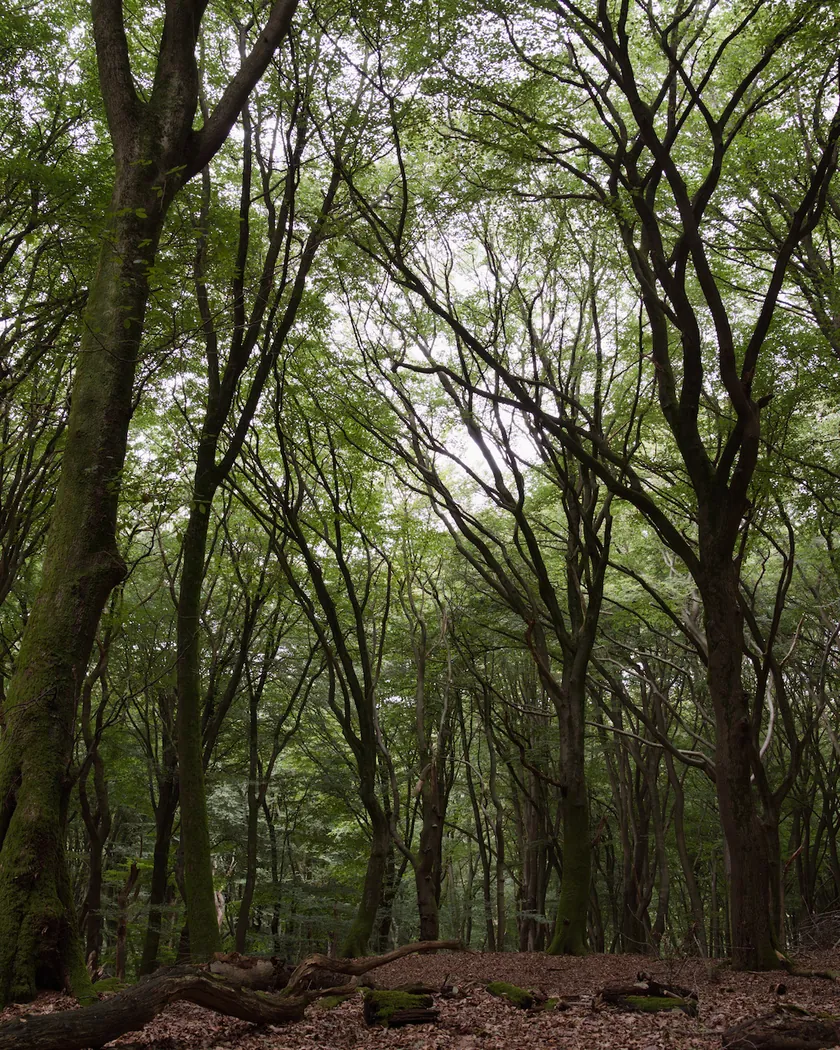
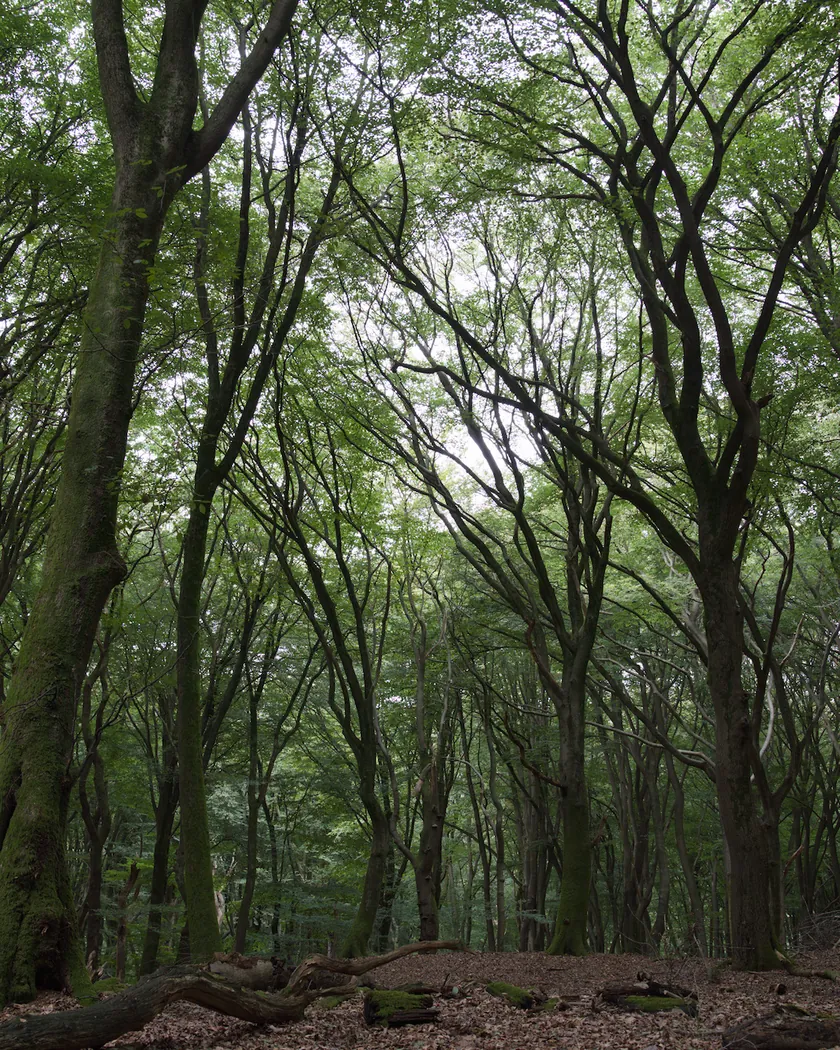
Translation into darktable
| Module | Role | Settings |
|---|---|---|
| color balance rgb (instance “film”) | Subdued colors and creamy whites; a slight red-yellow warmth, warmer than Provia; shadows left untinted | Chroma −0.04, highlight saturation −3 %; midtones 40° / 0.007, highlights 40° / 0.006 |
| color equalizer | Less blue skies and sea, held back from violet; muted greens; lush reds and yellows; skin kept natural under the warm tint | Saturation blue ×0.90, green ×0.92, red ×1.05, yellow ×1.03; hue blue −3°, orange −3° |
| tone curve (RGB, linked channels) | Midtone slope of about 1.06, against 1.15 in the Provia 100F style; highlights reach white more slowly; deep but graded shadows | Nodes (0, 0) (0.10, 0.07) (0.25, 0.23) (0.5, 0.505) (0.75, 0.76) (0.9, 0.895) (1, 0.985) |
Measurements
The measurements come from a few test photos of our own, which are not published on this site. The photos shown here are different.
| Photo | Zone | Baseline | Metric | Before | After | Film expectation |
|---|---|---|---|---|---|---|
| 0775 | whole image | Base rendering | Lsd (contrast) | 14.3 | 15.4 | The softest Fujichrome: a small rise |
| 1014 | whole image | Base rendering | Lsd (contrast) | 30.7 | 31.8 | The softest Fujichrome: a small rise |
| 1014 | whole image | Base rendering | L95 (whites) | 87.9 | 87.5 | Highlights not pushed |
| 1014 | whole image | Base rendering | L5 (blacks) | 2.6 | 1.6 | Still a slide film: deeper blacks |
| 0775 | sky | Base rendering | C (chroma) | 27.5 | 21.8 | Subdued colors |
| 0775 | sky | Base rendering | h (hue, °) | 273.6 | 275.9 | Slightly toward violet, as in one side-by-side |
| 0775 | sea | Base rendering | C (chroma) | 22.2 | 17.5 | Subdued colors |
| 0989 | skin | Base rendering | h (hue, °) | 44.2 | 44.7 | Natural skin |
| 1014 | pink T-shirt | Base rendering | C (chroma) | 33.7 | 36.1 | Lush reds |
| 1014 | white wall | Base rendering | b* (yellow–blue) | 0.3 | 2.0 | Creamy whites, warmer than Provia |
Base rendering: darktable’s default processing of the RAW file, without the preset. Luminance conversion (black and white): the same photo converted with plain luminance weights, to isolate the effect of the film’s spectral sensitivity.
What the style changes
The style adds three darktable modules. It aims at Astia 100F as Fujifilm and the reviews describe it: the softest of the Fujichrome slide films, with gentle highlights, subdued colors, a slight warmth next to Provia and natural skin. The sources are detailed on the Fujifilm Astia 100F film page. All figures below come from renders made with darktable-cli 5.6.0 at 1000 px, measured in CIELab.
- Soft contrast, gentle highlights. Contrast rises by only 1.1 on both test photos (Lsd 14.3 → 15.4 and 30.7 → 31.8), half as much as with the Provia 100F style. The whites are not pushed (L95 87.5, against 87.9 for the base and 90.6 with Provia), following the datasheet, where Astia’s highlights reach white more slowly than Provia’s. Blacks still get deeper (L5 1.6): it remains a slide film, not a negative with raised blacks.
- Subdued colors. A color balance rgb instance named “film” lowers chroma, and color equalizer lowers the saturation of blues and greens. Sky and sea lose 21 % chroma each; the sky ends up a third below the Provia style’s.
- Warmer than Provia. The “film” instance warms the midtones and highlights slightly: a white wall turns creamy (a* +0.9, b* +2.0) and a shaded floor a little warmer, while the Provia style goes the other way.
- A touch of violet in the blues. Sky and sea turn 2° and 5° toward violet. That is the direction we measured on the two pairs of images Oleg Novikov published of the same scenes on Astia and Provia: Astia’s skies came out 12° and 21° more violet and about 25 % less saturated, and the whole frame redder (a* +3 to +5). Those are web JPEGs from scans, an indication rather than a measurement of the film, so the style stays well short of them. A first version, which turned the sky 15°, made the whole image look lavender.
- Natural skin, lush reds. Skin hue barely moves (+0.5°) and gains 6 % chroma. The pink T-shirt gains 7 % chroma and turns 7° toward red.
- No grain. With an RMS granularity of 7, grain is invisible at normal sizes.
For comparison, the t3mujinpack style for this film, rendered on the same files, keeps the base contrast, desaturates sky and sea much more (−39 % and −44 %) and turns skin clearly pink (44° → 30°). We do not follow it on skin: no source we read describes Astia’s skin as pink.
What it leaves alone
- Your base development. The style contains no exposure, no sigmoid or filmic, no white balance, no color calibration and no LUT: those stay as you set them.
- Your pipeline order. The style file carries no module order list, so it does not impose one on your image.
- Your own color balance rgb. The style’s instance is named “film”, so it is added next to yours without changing it (unless the photo already has an instance named “film”, for example from an earlier application of the style).
What it does not leave alone: applied from the lighttable or the darkroom, each module of the style replaces the instance of the same name on the photo, or is added if there is none. The style’s unnamed modules, color equalizer and tone curve, therefore overwrite any settings you had already made in those modules. Your earlier settings stay in the history stack. Exporting with a style, or rendering with darktable-cli as our measurements do, adds the style’s modules as separate instances instead. Details in Install and apply darktable styles.
Limits
- An interpretation, not a calibration. No film was scanned or measured to tune the style, and the film has not been made since 2012: recent images come from expired film, which can drift.
- Conflicting sources on contrast and saturation against Provia. The style follows Fujifilm’s chart, Novikov’s side-by-side and most reviews; Alex Luyckx sees the opposite.
- Midtone slope. The datasheet shows midtones about as steep as Provia’s. The style lowers that slope slightly on top of rounding the highlights, following Fujifilm’s “Soft” rating more than the curve.
- The nature of the warm cast is uncertain: red-magenta in Novikov’s images, yellow for one user, cyan at the scanner for Luyckx. The style keeps a light warmth between red and yellow.
- The violet sky comes from a single published comparison and is deliberately reduced.
- Greens are not verified: the test photos have few of them.
- Not simulated: the magenta tinge on flowers that reflect ultraviolet, and the color shift of long exposures (5B filter from 2 minutes).
- Discreet: on a photo that is already soft and muted, it changes little.
Tips
- Everything stays editable. The style’s modules are ordinary modules in your history: to judge the tone curve alone, for example, switch off the “film” color balance rgb and color equalizer.
- Compare with Provia 100F and Velvia 50. The three Fujifilm slide styles share the same approach: Astia is the softest, Velvia the most saturated and contrasty.
- Installation: see Install and apply darktable styles.
Get the preset
GA — 016 / P · darktable preset
Astia 100F
for darktable