FujifilmPro 160NS
Pastel to natural color, fresh greens; one reviewer found it very saturated in low light
- Manufacturer
- Fujifilm
- ISO
- 160
- Type
- Color negative
- Process
- C-41
- Formats
- 120
- Status
- Discontinued (2021)
- Datasheet
- AF3-174E
- Preset
- GA — 050 / P
Character
- Contrast
- Soft to moderate; no shoulder visible on the datasheet curve
- Grain
- Diffuse RMS granularity 3 (Fujifilm's scale)
- Latitude
- Described as wide by Fujifilm; the bulletin gives no figure
- Best for
- Portraits, skin tones and neutral gray balance (Fujifilm)
Fujifilm Pro 160NS is an ISO 160 color negative film for C-41 processing, designed for portraits, with a fourth, cyan-sensitive color layer [1]. It is the name Pro 160S took in 2010, reportedly with no change to the emulsion, and Fujifilm ended it in 2021 [2] [5]. The only datasheet we found is the one for Pro 160S, so the figures below come from that bulletin.
Look and color
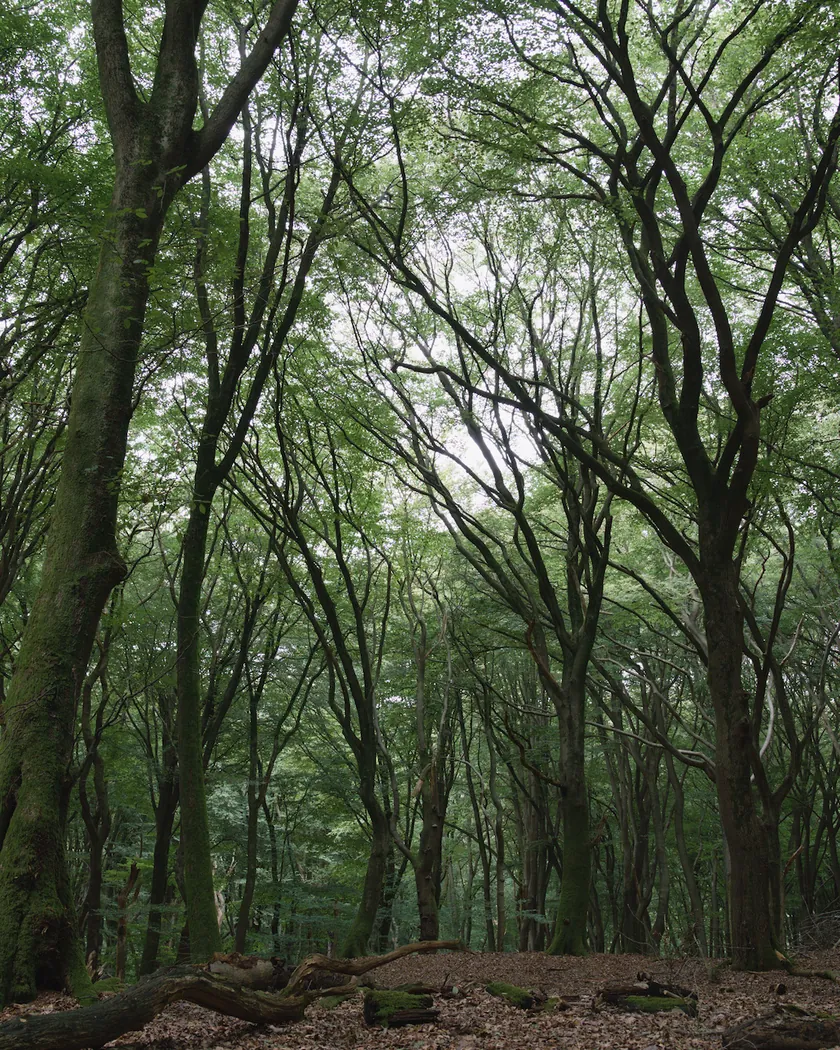
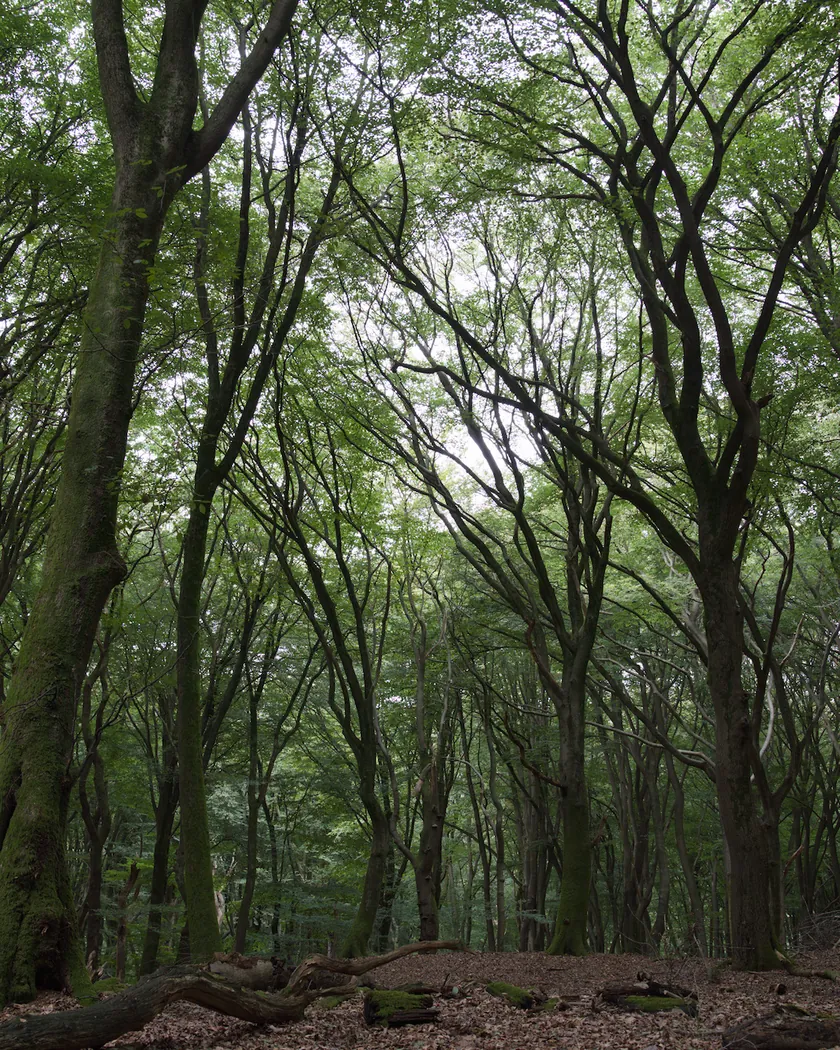
- Skin first. Fujifilm’s bulletin promises “superb skin tone” rendition and a neutral gray balance, credited to the fourth color layer and a new coupler technology [1].
- The reviews disagree on saturation. Legendary Presets, a preset vendor’s blog, describes pastel tones, faithful color and a subtle green cast [6]. An Emulsive photographer found the saturation “really vibrant, even as powerful as Kodak Ektar 100”, especially at dusk, next to “delicate nuances” in bright light [7]. Saturation seems to depend on the light and the subject.
- Greens. Another Emulsive writer, on the Pro 160S, calls them “vibrant, fresh and lively” on a gray winter day [8]. Legendary Presets mentions muted greens, which contradicts this, and we did not keep that point [6].
- Customer reviews on a retailer’s page speak of natural, vibrant color and sharpness. We did not count the ratings [9].
- Reviews of this film are few, and several come from sellers or preset makers rather than from long-term users.
Tonality
- Curve. On the datasheet’s characteristic curves, the three layers run almost parallel: a toe near log H −2.5, then a straight line with no visible shoulder to the edge of the graph at log H +0.4. The slope reads at about 0.5 (our reading of the graph) [1].
- Contrast is described as soft and forgiving for portraits on Wikipedia and as moderate by Legendary Presets, two loose descriptions [5] [6].
- Fujifilm advertises “rich gradations from the highlights to the shadows” and a wide latitude suited to scanners, without a figure [1]. Reviewers praise the smooth highlights [7].
- Long exposures: no correction from 1/4000 to 2 s, and +1/3 stop at 4 s [1].
Grain and sharpness
Fujifilm rates grain as diffuse RMS granularity, measured with a 48 µm aperture at a density of 1.0 above minimum. This scale cannot be compared with Kodak’s Print Grain Index [1].
| Film | Fujifilm RMS granularity |
|---|---|
| Fujifilm Pro 160NS (bulletin of the 160S) | 3 [1] |
| Fujifilm Pro 400H | 4 [12] |
- The bulletin claims finer grain, higher sharpness and smoother tones than the earlier NPS at the same speed, from a “Super Nano-Structured Σ Grain” technology [1].
- Resolving power is 63 lines/mm at 1.6:1 test-object contrast and 125 lines/mm at 1000:1 [1].
- An Emulsive reviewer finds the grain “extremely fine, in contrast to its sister, Fuji Pro 400H” [7].
Spectral sensitivity
The blue-sensitive layer has a plateau from about 415 to 450 nm and peaks near 471 nm, the green-sensitive layer peaks near 555 nm and the red-sensitive layer near 623 nm. A fourth, cyan-sensitive layer peaks near 518 nm, between the blue and green bands, and Wikipedia says it improves color under fluorescent light [1] [5]. The Grain Archive color style is tuned from the datasheet and the reviews above; it is not computed from these curves.
Datasheet digest
| Item | Value | Source |
|---|---|---|
| ISO speed | 160 in daylight and with flash; 50 under 3200 K tungsten with a Wratten 80A or LBB-12 filter | [1] |
| Diffuse RMS granularity | 3 (Fujifilm measurement, 48 µm aperture, density 1.0 above D-min; not comparable with slide films or with Kodak's Print Grain Index) | [1] |
| Resolving power | 63 lines/mm at 1.6:1 chart contrast, 125 lines/mm at 1000:1 | [1] |
| Characteristic curve | Short toe near log H −2.5, then a straight line with slope about 0.5 and no visible shoulder up to the edge of the graph, log H +0.4 (our reading of the graph) | [1] |
| Layers | Blue, green and red layers plus a fourth, cyan-sensitive layer ("Fourth Color Layer technology") | [1] |
| Reciprocity | No correction from 1/4000 to 2 s; +1/3 stop at 4 s | [1] |
| Base | Cellulose triacetate, 122 µm (135), 98 µm (120, 220); polyester, 175 µm (sheets) | [1] |
| Process | C-41 or Fujifilm CN-16 | [1] |
Names, status and history
- Pro 160S to Pro 160NS. Wikipedia dates the Pro 160S to 2004, as the successor of NPS 160, and says it was renamed Pro 160NS in 2010 with no change to the emulsion. We found no Fujifilm statement on this [5].
- Fewer markets. After the rename, Wikipedia lists 120, 220 and sheet film, sold in Europe, Asia and Australia. Kosmo Foto reports that sheets ended in 2016 and that 120 became Japan-only in 2018 [2] [5].
- Discontinued in 2021. On October 15, 2021, Fujifilm announced the end of Fujicolor Pro 160NS 120 in five-roll packs, because some raw materials had become hard to procure [2] [4]. PetaPixel called it the end of the Pro line [3]. Shipping was expected to end in March 2022 [4]. Fujifilm named no replacement [4].
- Formats: sources differ. The bulletin lists 135, 120, 220 and sheets for the 160S [1]. Wikipedia says the 135 was dropped with the 2010 rename [5]. Legendary Presets says the film is available in 35 mm, which we could not confirm [6].
- Still findable. A retailer’s page lists it as sold out [9], and photographers still post scans on Flickr [10].
Alternatives
- GA — 002 Fujifilm Pro 400H
Its sister film, also discontinued in 2021: ISO 400 and coarser, with RMS granularity 4 against 3 on Fujifilm's own bulletins
- GA — 005 Kodak Portra 160
Still in production, and Kodak's portrait negative at the same ISO 160; grain is rated on another scale, Print Grain Index 28 for a 4×6 print from 35 mm
- GA — 007 Kodak Ektar 100
One Emulsive reviewer likened the low-light saturation of 160NS to Ektar 100; Ektar is still in production, at ISO 100
Get the look in darktable
The GA — 050 / P preset, inspired by Fujifilm Pro 160NS, is a darktable 5.6 style of 5 native modules, with no LUT. It sits on top of your own exposure and tone mapping.
| Zone | Metric | Before → after |
|---|---|---|
| sky | C (chroma) | 27.5 → 24.8 |
| sea | C (chroma) | 22.2 → 19.6 |
| skin | L (lightness) | 78.2 → 79.2 |
Settings, all measurements and limits of the Fujifilm Pro 160NS preset
GA — 050 / P · darktable preset
Pro 160NS
for darktable
See real photos
Scans of real Fujifilm Pro 160NS film, published by others:
Questions about Fujifilm Pro 160NS
Is Fuji Pro 160NS the same as Pro 160S?
Reportedly, yes. Wikipedia states that Fujifilm renamed Pro 160S to Pro 160NS in 2010 with no change to the emulsion. We found no Fujifilm statement confirming it, and Fujifilm's only bulletin we could find is the one for Pro 160S, so the technical figures on this page come from that document.
Is Fujifilm Pro 160NS discontinued?
Yes. On October 15, 2021, Fujifilm announced the end of production and sales of Fujicolor Pro 160NS 120, the last of its professional color negatives, because some raw materials had become hard to procure. It had been Japan-only since 2018, and shipping was expected to end in March 2022.
Fuji Pro 160NS vs Pro 400H: what is the difference?
Both are professional Fujifilm negatives with a fourth color layer, and both ended in 2021. Pro 160NS is ISO 160 with RMS granularity 3; Pro 400H is ISO 400 with RMS 4, on Fujifilm's bulletins. One reviewer calls the 160NS grain extremely fine, in contrast to its sister, the 400H.
What is the fourth color layer in Pro 160NS?
Fujifilm's bulletin credits the film to "Fourth Color Layer technology", and its spectral sensitivity graph shows a fourth, cyan-sensitive curve peaking near 518 nm, between the blue and green layers. Wikipedia says the fourth layer improves color rendition under fluorescent lighting.
Is Pro 160NS good for portraits?
It was designed for them: Fujifilm's bulletin stresses skin tone reproduction and neutral gray balance. Reviews are less uniform on color: one describes pastel tones and a slight green cast, another vivid saturation in low light. Both mention fine grain and smooth highlights.
Sources
- 1DS Fujifilm Fujicolor Pro 160 S Professional, product information bulletin AF3-174E (print code EIGI-05.1), copy hosted by 125px
- 2C Kosmo Foto: Fujifilm axes large-format Velvia 50 and Pro 160NS 120 (Stephen Dowling, October 16, 2021) Accessed September 30, 2026.
- 3C PetaPixel: Fujifilm ends the Fujicolor Pro line and Velvia 50 sheet film (Michael Zhang, October 16, 2021) Accessed September 30, 2026.
- 4C Fuji Rumors: Fujifilm discontinues Fujicolor Pro 160NS 120 and Fujichrome Velvia 50 film (October 15, 2021) Accessed September 30, 2026.
- 5C Wikipedia: Fujicolor Pro Accessed September 30, 2026.
- 6C Legendary Presets: Fujifilm Pro 160NS review (November 30, 2024) Accessed September 30, 2026.
- 7C Emulsive: 5 Frames with Fuji Pro 160 NS (Ignacio Gomez Sales, May 18, 2018) Accessed September 30, 2026.
- 8C Emulsive: 5 Frames with Fujicolor Pro 160S (Ludwig Hagelstein, February 16, 2018) Accessed September 30, 2026.
- 9R Analogue Wonderland: Fujifilm Pro 160NS 120, product page with customer reviews Accessed September 30, 2026.
- 10C Flickr: photos tagged Fujifilm PRO 160NS Accessed September 30, 2026.
- 11DS Kodak Professional Portra 160, technical data E-4051 (January 2025)
- 12DS Fujifilm Fujicolor Pro 400H Professional, product information bulletin AF3-176E (print code EIGI-05.1)
DS: datasheet · C: review or community · R: retailer