FujifilmPro 400H
Neutral to cool, deep greens and blues; pastel when overexposed
- Manufacturer
- Fujifilm
- ISO
- 400
- Type
- Color negative
- Process
- C-41
- Formats
- 135, 120, 220
- Status
- Discontinued (2021)
- Datasheet
- AF3-176E
- Preset
- GA — 002 / P
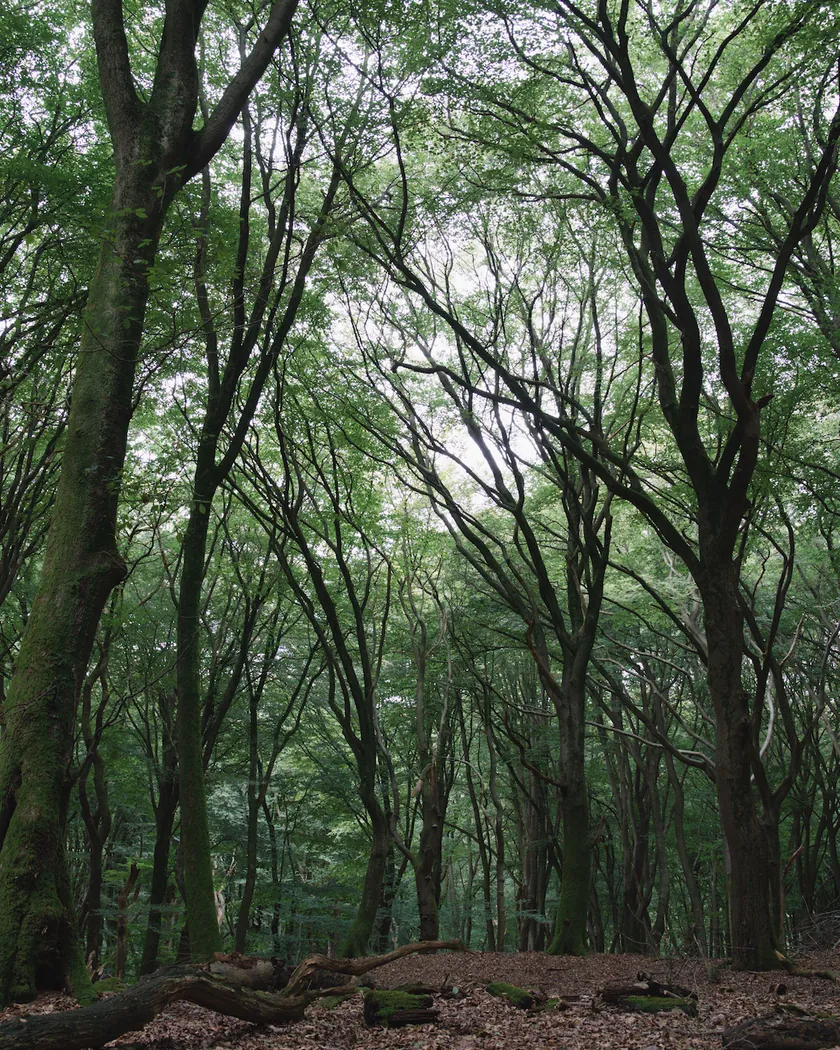
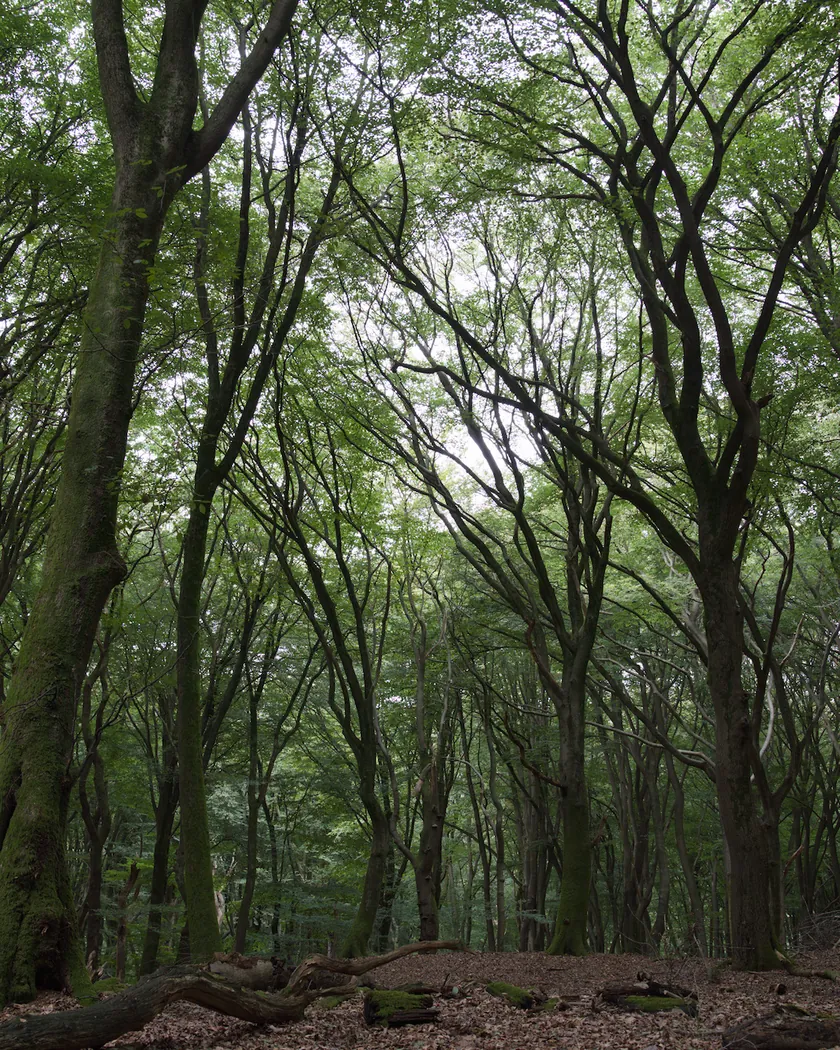
Character
- Contrast
- Soft for most reviews; one finds it more contrasty than Portra 400
- Grain
- Diffuse RMS granularity 4 (Fujifilm's scale)
- Latitude
- Very tolerant of overexposure; about two stops under in one review
- Best for
- Portrait, wedding, commercial and fashion work (Fujifilm)
Fujifilm Pro 400H (Fujicolor Pro 400H Professional) was an ISO 400 professional color negative film for C-41 processing, made for portrait, wedding and fashion work, with a fourth, cyan-sensitive color layer [1]. Fujifilm discontinued it in January 2021, citing the difficulty of procuring the raw materials for that fourth layer [2]. No Fujifilm film has replaced it.
Look and color
- What Fujifilm promised. Colors reproduced “as they are perceived by the human eye”, natural even under fluorescent or mixed light; “clearer colors in the highlights” and controlled saturation in the shadows; “superb skin tones” [1].
- Neutral to cool. Casual Photophile finds the balance “remarkably neutral across the board with an added depth to blue and green” [6]. The Darkroom describes a “cooler look with beautiful magenta and green tones” [10], Parallax “soft, neutral colours that veered towards the blues and greens” [12]. A photo lab contrasts 400H’s “more neutral cool base” with Kodak’s warmer one [14].
- Greens are its signature: “deep, cool greens” [7], “fresh and vibrant” with “no yellow or muddy tint” [8], “minty greens” with “cyan undertones” for Mastin Labs, which sells presets imitating it [13].
- Skin: colder than Portra. Casual Photophile writes that 400H “elects for a colder skin tone” than Kodak films, which can look “smooth and natural or devoid of all blood” depending on the subject [6]. Analog.cafe finds skin tones accurate [7].
- Saturation: the sources disagree. “Very low” for The Darkroom [10], “low” for Mastin Labs [13], but “more vibrant than the Portras” for a 35mmc author [11].
- Overexposure changes the palette. Three to five stops over, the film “shifts more towards pastel” [6]; Mastin Labs associates it with “pastel shades” [13]. At box speed, Shoot It With Film finds it “more toned down and muted”, and “slightly muddy” in low light [8].
Tonality
- Curve. On the datasheet, the three curves run almost parallel: a short toe, then a straight line to the edge of the chart, with no visible shoulder over about 2.6 log units, almost 9 stops. The slope reads at about 0.5 to 0.6, in the same range as Portra 400 [1] (our reading of the graph).
- Fujifilm promises gradation “smoothly continuous from the highlights to the shadows” and neutral grays from under- to overexposure [1].
- Contrast: the sources disagree. “Mild” for The Darkroom [10], “a subtler, more nuanced look” for Casual Photophile [6], and “a little lower” at box speed for Shoot It With Film [9]. Analog.cafe finds it “more contrasty” than Portra 400 [7].
- Latitude: overexposure is the safe side.
- Casual Photophile got usable images from two stops under to “beyond even four or five stops over” [6].
- The Darkroom says it can often be overexposed by up to 3 stops without blowing the highlights [10].
- Shoot It With Film rates it at ISO 200: “Overexposing this film is really where those beautiful colors come out” [8].
- Long exposures: no correction from 1/4000 to 1 s; +1/2 stop at 4 s and +1 stop at 16 s; Fujifilm does not recommend longer exposures [1].
Grain and sharpness
Fujifilm’s RMS granularity and Kodak’s Print Grain Index are different scales. Fujifilm adds that the RMS of this negative film cannot be compared with that of its slide films either [1].
| Film | Published grain figure | Resolving power (1000:1) |
|---|---|---|
| Fujifilm Pro 400H | RMS 4 [1] | 125 lines/mm [1] |
| Fujifilm Superia X-TRA 400 | RMS 4 [15] | 125 lines/mm [15] |
| Kodak Portra 400 | Print Grain Index 37 (35 mm, 4×6 print) [16] | not given [16] |
- Fujifilm credits its “Fine Σ” technology, thin and flat grains, for speed and smoother skin texture [1].
- Reviews: “extraordinarily fine grain” and sharpness “normally reserved for slower films” [6]; “very fine grain” [12]. Analog.cafe disagrees and found it “chunky in 35mm under certain light” [7].
Spectral sensitivity
Four layers are plotted. Blue has a plateau from about 420 nm and peaks near 469 nm, green peaks near 554 nm, red is flat-topped between about 605 and 635 nm, and the dashed fourth, cyan-sensitive layer peaks near 519 nm, between blue and green, about 0.9 log below the green peak [1]. Fujifilm pairs it with an “optimized interlayer effect” to render colors as the eye sees them, including under fluorescent and mixed light [1].
Datasheet digest
| Item | Value | Source |
|---|---|---|
| ISO speed | 400 in daylight and with flash; 100 under 3200 K tungsten with a Wratten 80A or LBB-12 filter | [1] |
| Diffuse RMS granularity | 4 (Fujifilm measurement, 48 µm aperture, density 1.0 above D-min; not comparable with slide films) | [1] |
| Resolving power | 50 lines/mm at 1.6:1 chart contrast, 125 lines/mm at 1000:1 | [1] |
| Characteristic curve | Short toe, then a straight line with slope about 0.5 to 0.6 and no visible shoulder over about 2.6 log units, almost 9 stops (our reading of the graph) | [1] |
| Layers | Blue, green and red layers plus a fourth, cyan-sensitive layer; 'optimized interlayer effect' | [1] |
| Reciprocity | No correction from 1/4000 to 1 s; +1/2 stop at 4 s, +1 at 16 s; longer than 16 s not recommended | [1] |
| Base | Cellulose triacetate, 122 µm (135), 98 µm (120, 220) | [1] |
| Process | C-41 or Fujifilm CN-16 | [1] |
Names, status and history
- 2002: NPH 400. The emulsion was launched as Fujicolor NPH 400 and renamed Pro 400H in 2004, with new packaging, when Fujifilm introduced its Pro line. Wikipedia says the emulsion did not change; we found no Fujifilm statement on this [5].
- The Pro line started with Pro 160S, 160C, 400H and 800Z. By 2021, only Pro 400H and Pro 160NS remained [5].
- 2013. The 220 format was discontinued, with 24-exposure 35 mm rolls and 35 mm multipacks [5].
- January 2021: discontinued. Fujifilm North America wrote that the fourth layer requires “specialized raw materials and chemicals” that had become increasingly difficult to procure. Production and sales of 135 ceased on January 14, 2021; 120 stock was expected to last through the end of 2021 [2]. Wikipedia adds that it was not a matter of low sales [5].
- June 2025. Pro 400H reappeared on Fujifilm’s US website; Fujifilm North America called it an error and confirmed the film remains discontinued [3].
- September 29, 2026. Fujifilm’s US product page still lists Pro 400H, marked “Discontinued”, with a link to the discontinuation notice [4].
Alternatives
- GA — 004 Kodak Portra 400
One of a photo lab's two picks to replace 400H; its base is warmer, so the lab advises against overexposing it
- GA — 006 Kodak Portra 800
The same lab's other pick: it renders less red than Portra 400, closer to 400H's neutral, cool base
- GA — 005 Kodak Portra 160
The finer-grained Portra, which the same lab also suggests testing
- GA — 028 Fujifilm 400
Fujifilm's current ISO 400 negative, but a three-layer consumer film, reportedly made by Kodak and warm in reviews: not a successor
Get the look in darktable
The GA — 002 / P preset, inspired by Fujifilm Pro 400H, is a darktable 5.6 style of 5 native modules, with no LUT. It sits on top of your own exposure and tone mapping.
| Zone | Metric | Before → after |
|---|---|---|
| skin | h (hue, °) | 44.2 → 38.8 |
| foliage | h (hue, °) | 115.3 → 137.0 |
| turquoise shorts | h (hue, °) | 233.5 → 227.0 |
Settings, all measurements and limits of the Fujifilm Pro 400H preset
GA — 002 / P · darktable preset
Pro 400H
for darktable
See real photos
Scans of real Fujifilm Pro 400H film, published by others:
- The Darkroom: Pro 400H reviews and customer photos thedarkroom.com
- Analog.cafe: Fujifilm Fujicolor Pro 400H film review, with sample scans analog.cafe
- Casual Photophile: Fujifilm Fujicolor Pro 400H film profile casualphotophile.com
Questions about Fujifilm Pro 400H
Is Fuji Pro 400H discontinued?
Yes. Fujifilm announced it in January 2021: production and sales of the 35 mm version stopped on January 14, 2021, and 120 stock was expected to last through the year. Fujifilm said the raw materials for its fourth color layer had become too hard to procure. In June 2025, Fujifilm confirmed the film had not returned.
Fuji Pro 400H vs Portra 400?
Both are professional ISO 400 color negatives for portraits and weddings, and both take overexposure well. Reviews describe 400H as neutral to cool, with deep greens and blues and colder skin, where Kodak films lean warm. Portra 400 is still made; 400H was discontinued in 2021. Their grain figures use different scales and cannot be compared.
What is the best alternative to Fuji Pro 400H?
Fujifilm has not replaced it. Richard Photo Lab recommends Portra 400 and Portra 800, and testing Portra 160, but advises against overexposing Kodak film: it adds saturation and red, the opposite of 400H's cooler base. Fujifilm 400, the brand's current ISO 400 negative, is a consumer film, not a successor.
Fuji NPH 400 vs Pro 400H: are they the same film?
Reportedly, yes. Fujifilm launched the emulsion in 2002 as NPH 400 and renamed it Pro 400H in 2004, with new packaging, when it introduced the Pro line. Wikipedia states that the emulsion did not change; we found no Fujifilm statement confirming it. Fujifilm 400, launched in 2023, is an unrelated consumer film.
Sources
- 1DS Fujifilm Fujicolor Pro 400H Professional, product information bulletin AF3-176E (print code EIGI-05.1)
- 2M Fujifilm North America: Important information regarding discontinuation of PRO 400H film (January 2021) Accessed September 29, 2026.
- 3C PetaPixel: Fujifilm says beloved 400H and Superia films remain discontinued (Jeremy Gray, June 30, 2025) Accessed September 29, 2026.
- 4M Fujifilm USA: Fujicolor Pro 400H, product page (marked discontinued) Accessed September 29, 2026.
- 5C Wikipedia: Fujicolor Pro Accessed September 29, 2026.
- 6C Casual Photophile: Fujifilm Fujicolor Pro 400H film profile (Josh Solomon, November 28, 2018) Accessed September 29, 2026.
- 7C Analog.cafe: Fujifilm Fujicolor Pro 400H film review (updated January 21, 2025) Accessed September 29, 2026.
- 8C Shoot It With Film: How to shoot Fuji Pro 400H (Samantha Stortecky, March 13, 2020) Accessed September 29, 2026.
- 9C Shoot It With Film: Why Fuji Pro 400H might be my favorite color film (Drew Evans, June 7, 2024) Accessed September 29, 2026.
- 10C The Darkroom: Pro 400H film review Accessed September 29, 2026.
- 11C 35mmc: Olympus XA and Fujicolor Pro 400H, a favorite camera-film combo (Phil Calvit, December 9, 2020) Accessed September 29, 2026.
- 12C Parallax Photographic: Fuji Pro 400H film review Accessed September 29, 2026.
- 13C Mastin Labs (preset maker): Lightroom film presets for weddings Accessed September 29, 2026.
- 14C Richard Photo Lab: How to switch from Fuji 400H to a different film Accessed September 29, 2026.
- 15DS Fujifilm Fujicolor Superia X-TRA 400, product information bulletin AF3-151E, copy hosted by 125px
- 16DS Kodak Professional Portra 400, technical data E-4050 (January 2025)
DS: datasheet · M: manufacturer · C: review or community