HarmanRed 125
Redscale: red, orange and yellow, from deep red shadows to bright orange; greens appear when overexposed (Harman, PetaPixel)
- Manufacturer
- Harman Technology
- ISO
- 125
- Type
- Effects
- Process
- C-41
- Formats
- 135, 120
- Status
- New (2025)
- Datasheet
- Published
- Preset
- GA — 059 / P
Based on Harman Phoenix 200.
Status checked [2]
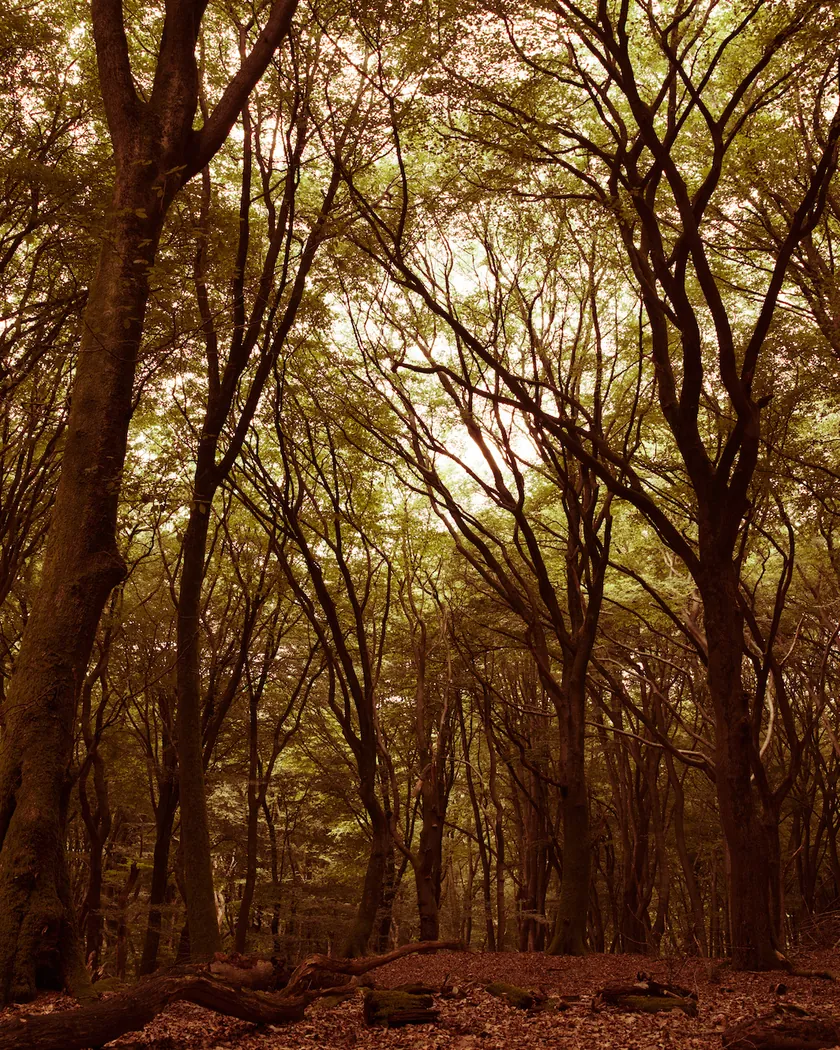
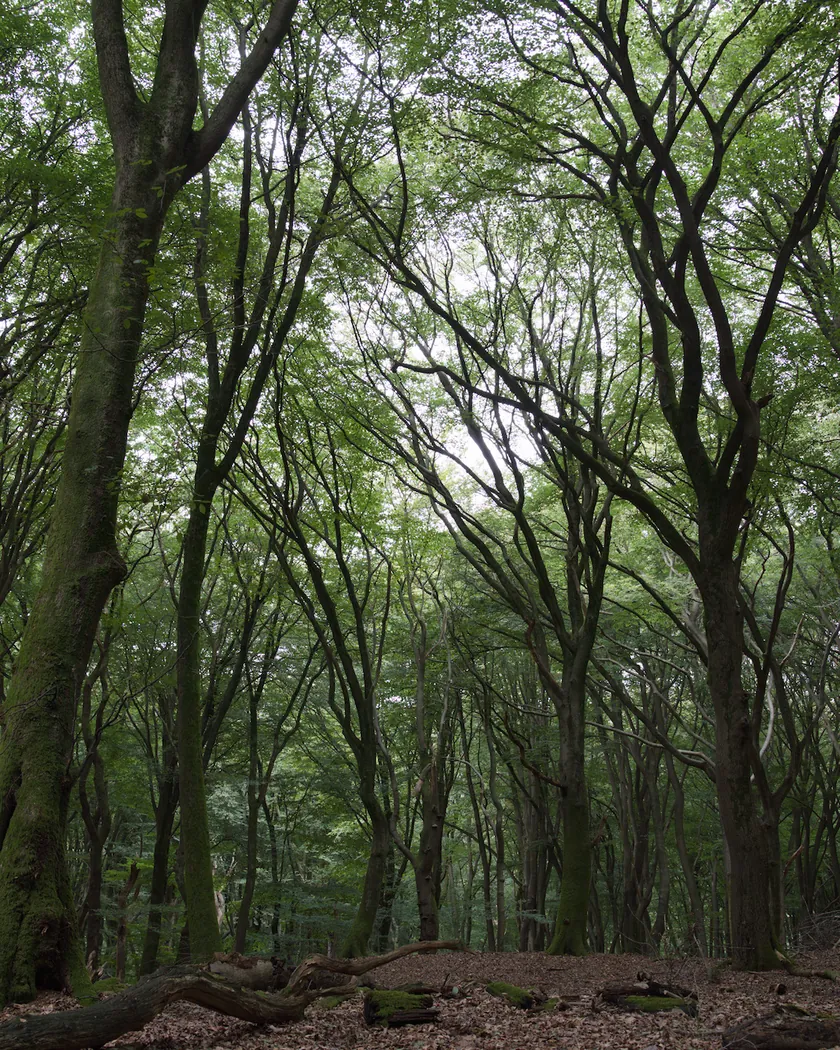
Character
- Contrast
- High (Harman); one reviewer found it more conventional than Phoenix
- Grain
- No RMS or grain index published; finer when overexposed, coarser when underexposed (Harman)
- Latitude
- Usable EI 50 to 400, best EI 100 to 200 (Harman)
- Best for
- Bold subjects in strong sun and hard shadows; bracket the exposure (Harman)
Harman Red 125 is a redscale color negative film from Harman Technology for standard C-41 processing. It is a color negative film wound in reverse, so the light passes through the base and reaches the red-sensitive layer first, which gives images in reds, oranges and yellows [1] [3]. It is rated EI 125, launched in 35 mm in February 2025 and followed by 120 in June 2025 [3] [4]. Harman says it is based on its Phoenix emulsion [2].
Look and color
Harman describes a wide range of results: from strong, “apocalyptic” bright orange and red tones to subtler orange and green tones with delicate shadows, depending on the scene and the exposure [1].
- How the layers record color. The datasheet says the red channel records red and blue light from the subject, the green channel records green and blue light, and very little is recorded in the blue channel. Blue areas of the scene are therefore recorded in the red and green channels, and the apparent blue speed is very low [1].
- Red, orange and yellow. 35mmc found results tend to be “pretty much red, orange and yellow”, with a post-apocalyptic look [7].
- Light matters. PetaPixel saw intense reds in direct sun and more muted, sepia-like tones under fluorescent or overcast light; overexposed frames shifted toward green [6].
- Exposure moves the palette. Underexposure gave “dark sometimes muddy reds” at 35mmc, and proper or over exposure more yellow [7]. Harman adds that lower exposures show more green foliage [1].
- Halos. 35mmc noticed haloing around light sources and liked it [7]. Kosmo Foto quotes Harman saying Phoenix has no anti-halation layer, one reason it was chosen for the conversion [5]. The datasheet does not mention halation.
- The negative. Correctly processed negatives usually have a slight magenta-purple base and strongly blue images, depending on scene and exposure [1]. Harman says scans need some density and color-balance correction, and suggests custom scanner settings [1].
Tonality
- Rating. Harman rates it EI 125 in daylight. The usable range is EI 50 to 400 and the best results fall between EI 100 and 200, depending on scene brightness and contrast [1].
- Bracketing. Harman calls it “very much an experimental film” and recommends bracketing, because a scene can change dramatically from one exposure to the next. Its examples are shot at EI 250, 125 and 64 [1].
- Contrast. The datasheet calls it a high-contrast film that still gives usable images across a range of exposures [1]. 35mmc found the result “almost more conventional” than Phoenix, with less contrast variation [7]. The two are not measured on the same scale.
- Exposure summary from Harman. Underexposure: coarser grain, prominent shadows, deeper reds. Normal exposure: normal grain, consistent orange tones, softer shadows. Overexposure: finer grain, brighter and more contrasty images, varying tones [1].
- Characteristic curve. Harman publishes a curve for the red, green and blue channels. This page does not quote values from it.
- Dynamic range. Analog.cafe reports about four stops of composite dynamic range, three of them in the red channel [8].
- Best conditions. Harman suggests bold, dramatic subjects and strong sunlight and shadows [1]. Slow Spin Society advises bright conditions and found some frames much more contrasty than others, straight from the scanner [9].
Grain and sharpness
Harman publishes no RMS granularity and no print grain index for this film [1]. The only statement is that grain changes with exposure: coarser when underexposed, finer when overexposed [1]. Analog.cafe’s launch note, as fetched, gives no grain description [8]. The film is coated on a 0.125 mm (5 mil) acetate base [1]. No sharpness or resolution figure is published.
Datasheet digest
| Item | Value | Source |
|---|---|---|
| Nominal speed | EI 125 (22 DIN) in daylight | [1] |
| Usable exposure range | EI 50 to 400 | [1] |
| Best results | EI 100 to 200, depending on scene brightness and contrast | [1] |
| Process | C-41 / CN-16, standard times and temperatures, no adjustment for bracketed exposures | [1] |
| Base | 0.125 mm (5 mil) acetate | [1] |
| Push processing | Not recommended | [1] |
| Emulsion orientation | Reversed: emulsion outermost, facing out of the cassette; yellow layer outermost, back side green | [1] |
| Grain (RMS / print grain index) | Not published | [1] |
Names, status and history
- Names. The datasheet is titled “HARMAN Red”; the product is sold as Harman Red 125 [1] [2].
- Launch. PetaPixel reported the 35 mm film on February 14, 2025, in 36-exposure DX-coded cassettes [3]. The 120 version followed on June 17, 2025, at $12.99 per roll [4]. Kosmo Foto lists £10.99 [5].
- Relation to Phoenix. Harman says Red is “based on the HARMAN Phoenix emulsion” [2]. Phoenix was Harman’s first in-house color film, launched in December 2023 [5]. 35mmc describes Red as essentially Phoenix loaded with the emulsion facing out [7]. No source says whether the emulsion is otherwise unchanged.
- Why it is easier than DIY redscale. Analog.cafe notes that Harman printed the edge markings on the correct side and gave the film a DX code, so labs can process it with standard settings, unlike home-made redscale on regular film [8]. The datasheet confirms that 135 cassettes carry correct frame numbering and DX coding [1].
- Processing. Standard C-41 with no change to time, temperature or replenishment, and no adjustment for bracketed exposures. The emulsion faces the opposite way, so it must be loaded with the emulsion toward the inside of a spiral, and roller-transport or leader-card machines may need a reloadable cartridge to reverse it [1]. Push processing is not recommended [1].
- Other redscale films. When Red 120 launched, Kosmo Foto counted it as only the second redscale film in production, after Lomography’s Redscale XR 50-200 [5].
- Status. On September 30, 2026, Harman’s product page for the 120 version lists it as available in stores [2]. This page could not confirm the 35 mm version’s current listing.
Alternatives
- GA — 011 Harman Phoenix 200
The film Harman says Red is based on; same maker, normal orientation, with red halos in strong light per reviewers
- Not on file Lomography Redscale Xr 50 200
The other redscale film in production when Red 120 launched (Kosmo Foto); ISO 50 to 200
- GA — 026 LomoChrome Purple
Another false-color effects negative for C-41; shifts hues instead of turning everything red
- GA — 061 Kodak Aerochrome III 1443
The discontinued Kodak infrared film with a strong red look, per the LomoChrome Purple sources; a different mechanism from redscale
Get the look in darktable
The GA — 059 / P preset, inspired by Harman Red 125, is a darktable 5.6 style of 4 native modules, with no LUT. It sits on top of your own exposure and tone mapping.
| Zone | Metric | Before → after |
|---|---|---|
| sky | L (lightness) | 55.3 → 53.3 |
| sea | L (lightness) | 38.4 → 33.1 |
| skin | C (chroma) | 16.4 → 25.9 |
Settings, all measurements and limits of the Harman Red 125 preset
GA — 059 / P · darktable preset
Red 125
for darktable
See real photos
Scans of real Harman Red 125 film, published by others:
Questions about Harman Red 125
What is Harman Red 125?
A color negative film sold by Harman Technology that is shot 'redscale': the film is wound so that light reaches the red-sensitive layer first, through the base. Harman describes images ranging from bright 'apocalyptic' orange and red to subtler orange and green tones. It is rated EI 125, comes in 135 and 120, and uses standard C-41 development. [1] [3]
Is Harman Red the same as Phoenix?
Harman says Red is 'based on the HARMAN Phoenix emulsion', and Kosmo Foto quotes Harman calling Phoenix a good candidate because of its red sensitivity and lack of an anti-halation layer. 35mmc describes Red as Phoenix loaded with the emulsion facing out. No source says whether the emulsion is otherwise unchanged from Phoenix 200. [2] [5] [7]
What ISO should I shoot Harman Red at?
The rating is EI 125, the usable range is EI 50 to 400 and Harman says the best results fall between EI 100 and 200. Harman also advises bracketing. Underexposure gives coarser grain, prominent shadows and deeper reds; overexposure gives finer grain, brighter and more contrasty images, and reviewers saw greens appear. [1] [6]
How do you develop Harman Red?
In ordinary C-41 chemistry with no change to time, temperature or replenishment. The emulsion faces the opposite way from a normal cassette, so labs using roller-transport or leader-card machines should reverse the orientation to avoid uneven processing or roller marks. Harman does not recommend push processing. Negatives have a magenta-purple base and very blue images. [1]
Sources
- 1DS Harman Technology, HARMAN Red C41 Process Redscale Film, Technical Information (June 2025) Accessed September 30, 2026.
- 2M Harman Photo: HARMAN RED 125 120, product page Accessed September 30, 2026.
- 3C PetaPixel: Harman Red 125 is a new pro-finished redscale color negative film (February 14, 2025) Accessed September 30, 2026.
- 4C PetaPixel: Harman launches its Red 125 redscale pro-finished film in 120 format (June 17, 2025) Accessed September 30, 2026.
- 5C Kosmo Foto: Harman Technology releases 120 version of Red redscale colour film (June 2025) Accessed September 30, 2026.
- 6C PetaPixel: Harman Red 125 film review, Paint the Town Red (April 9, 2025) Accessed September 30, 2026.
- 7C 35mmc: Harman Red, my first roll experiences (Hamish Gill, March 24, 2025) Accessed September 30, 2026.
- 8C Analog.cafe: New colour film, Harman Red 125! Accessed September 30, 2026.
- 9C Slow Spin Society: Harman RED 125 at the Rust Out Race Track (Paul Declercq, March 22) Accessed September 30, 2026.
- 10B Grain Archive: Harman Red 125 style, measurements
DS: datasheet · M: manufacturer · C: review or community · B: Grain Archive measurement