IlfordXP2 Super
Soft gray tones with many midtones; a chromogenic (dye) image with no silver grain
- Manufacturer
- Harman technology
- ISO
- 400
- Type
- Black and white
- Process
- C-41
- Formats
- 135, 120
- Status
- In production
- Datasheet
- Published
- Preset
- GA — 043 / P
Status checked [2]
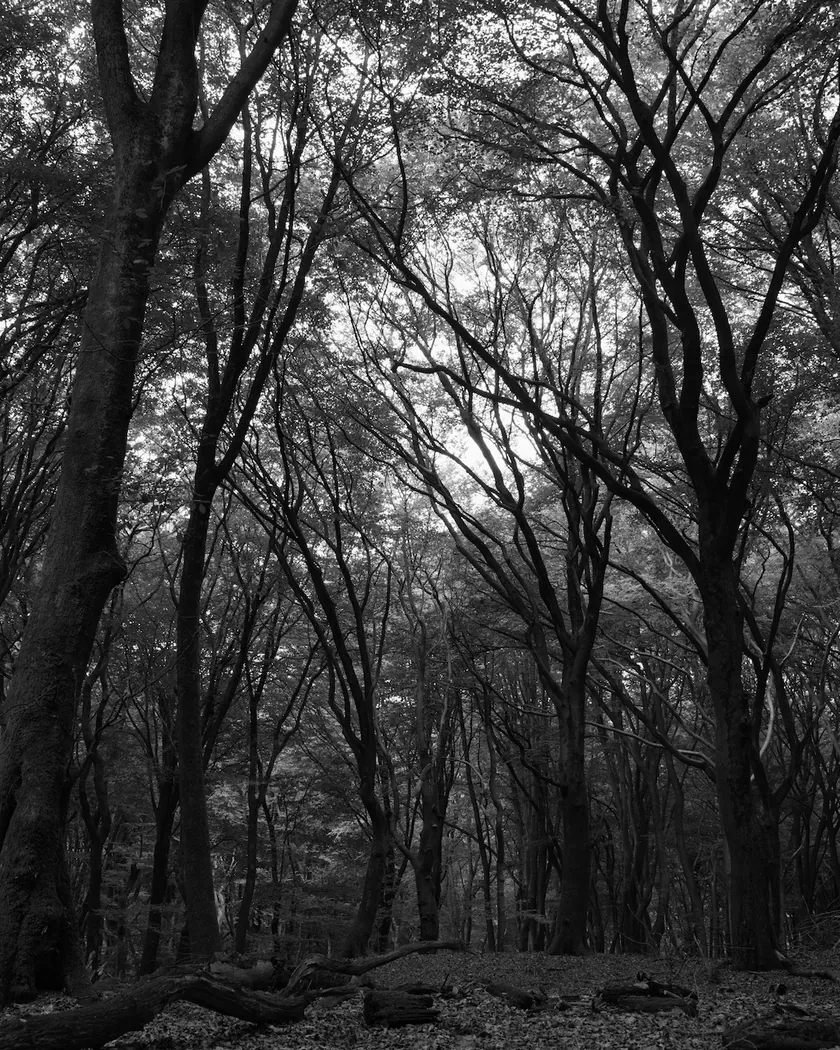
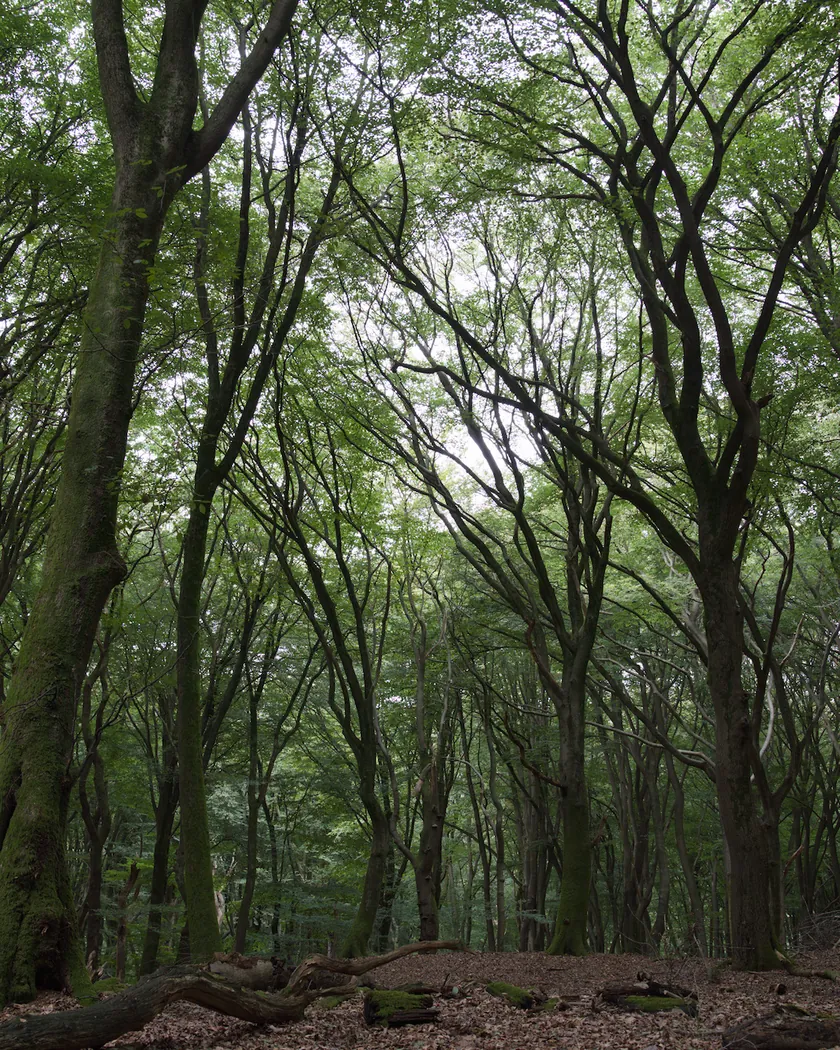
Character
- Contrast
- Soft to moderate per most reviews; the datasheet claims 'enhanced negative contrast' for printing
- Grain
- 'Fine grain' (datasheet); no RMS or grain index published
- Latitude
- EI 50 to 800 on the same film, same C-41 development
- Best for
- Lab development next to color film; scenes with a wide brightness range (Ilford)
Ilford XP2 Super is a black-and-white negative film rated ISO 400 that is developed in standard C-41 color chemistry, so any lab that handles color negatives can process it [1]. It is a chromogenic film: the image is made of dye formed during development, not of silver [1]. It is still sold under the Ilford name, in 35 mm and 120 [2].
Look and color
XP2 Super is panchromatic and gives a soft, gray-heavy black-and-white image:
- Many midtones. One reviewer describes “a lot of midtones and greys” and finds HP5 Plus “more dramatic” [4]. Another describes “buttery smooth” images [5].
- Contrast is debated. Some reviews stress the soft rendering, while others praise “crisp bright whites and deep blacks” [8] or “inky blacks” [5], and one calls it “remarkably high-contrast” with crushed blacks [7]. Ilford’s own wording, “enhanced negative contrast”, is about print quality on paper [1]. We read the graph as soft (see below) and this disagreement likely reflects the lab, the scanner and the scene.
- The negative is pink or red-brown, a dye mask that Ilford says does not affect image quality [1]. Color proof prints from a lab may come out close to neutral or toned, depending on the lab [1].
Tonality
- Curve. On the datasheet’s characteristic curve, base plus fog sits near 0.25 density. The toe is soft, the slope is about 0.55 between log H 2 and 3, and the shoulder is long, with a slope of about 0.3 beyond 3 (our reading of a small graph, so about ±0.05 in density) [1]. It is the same for 35 mm and 120 [1].
- Latitude. Ilford calls the exposure latitude “extremely wide”: EI 50 to 800 with the same development [1]. Overexposed or down-rated negatives have finer grain, the opposite of a silver film, and underexposed ones lose only a little quality [1]. A reviewer found it forgiving of overexposure but less so of severe underexposure [7].
- Speed choice. EI 400 gives the best balance of sharpness and grain; EI 200 gives finer grain with easy printing; EI 50 gives the finest grain with denser negatives [1].
- Pushing. Ilford advises against push processing: it brings no practical speed gain, so expose at EI 800 and process normally [1]. Reviewers report EI 800 with no visible loss [6] and, in one case, EI 1600 [4].
- Long exposures. No correction from 1 to 1/10,000 s; beyond 1 s, adjusted time is metered time to the power 1.31 [1].
Grain and sharpness
| Film | RMS granularity | Note |
|---|---|---|
| Ilford XP2 Super | not published [1] | “Fine grain” |
| Ilford HP5 Plus | not published [12] | – |
| Kodak T-Max 400 | 10 [11] | D-76 |
| Kodak Tri-X 400 | 17 [10] | HC-110 (B) |
- Ilford’s datasheet gives no RMS or grain index, so XP2 Super cannot be ranked on paper against silver films. RMS values from different developers are only roughly comparable.
- Reviews: “smooth, small-grained images, with a softness” [5]; fine grain “even at 800”, which “doesn’t impose itself on the look” [6]; “fine and even” [8]. One reviewer found the grain “slightly chunkier than Kodak’s Tri-X” [7], which contradicts the others.
- The grain is made of dye clouds, not silver crystals, and Ilford describes the film as sharp with “exceptionally sharp, crisp prints” [1]. No resolving power figure is given.
Spectral sensitivity
Sensitivity is broad from violet to orange: a plateau near 0.8 from 430 to 490 nm, a slight dip near 500 nm, a maximum around 575 nm, then a sharp cut-off between 635 and 658 nm [1]. In practice, blue skies come out lighter and skin and reds darker than in a luminance conversion, close to HP5 Plus [9]. The film has no sensitivity beyond about 658 nm, which is why deep reds should render dark.
Datasheet digest
| Item | Value | Source |
|---|---|---|
| ISO speed | 400/27° to daylight, measured with standard C-41 processing | [1] |
| Exposure range | EI 50/18° to 800/30°; best balance of sharpness and grain at EI 400; EI 200 for finer grain, EI 50 for the finest grain (denser negatives) | [1] |
| Process | Standard C-41, no change of time, temperature or replenishment; replenish as for an ISO 200 color negative film | [1] |
| Push processing | Not recommended: no practical speed gain; expose at EI 800 and process normally instead | [1] |
| Base | 35 mm: 0.125 mm (5 mil) acetate; 120: 0.110 mm (4 mil) clear acetate with an anti-halation backing that clears in development | [1] |
| Grain | Described as fine; no RMS granularity or print grain index given. Grain gets finer when overexposed or down-rated | [1] |
| Characteristic curve | Base plus fog about 0.25; soft toe; slope about 0.55 between log H 2 and 3; long shoulder, slope about 0.3 beyond log H 3 (our reading of the graph, same for 35 mm and 120) | [1] |
| Reciprocity | No adjustment from 1 to 1/10,000 s; beyond 1 s, adjusted time Ta = Tm^1.31 | [1] |
| Negative color | Pink or red-brown; slightly darker than silver black-and-white negatives | [1] |
| Scanning | Digital ICE dust removal can be used, because the image is dye, not silver | [1] |
| Conventional B&W chemistry | Not recommended (grain-free look and ICE are lost), although users report good images | [1] |
Names, status and history
- Family. According to Wikipedia, XP1 came in 1981, XP2 in 1991, XP2 Plus in 1996 and XP2 Super in 1998 [3]. This is a secondary source.
- Single-use cameras. Ilford’s page lists XP2 Super in single-use cameras [2]; Wikipedia dates them from 2013 [3].
- Status. On September 30, 2026, Ilford’s product page listed the film as available, in 35 mm, 120 and single-use cameras [2]. The datasheet adds 24 and 36 exposure cassettes, 30.5 m (100 ft) bulk rolls, and 120 edge-numbered 1 to 19 [1].
- Other chromogenic film. Wikipedia says Kodak’s BW400CN was discontinued in 2014, and that XP2 Super was later the only black-and-white film developed in C-41 [3]. We did not confirm the current market ourselves.
- Datasheet. The most recent we found is dated November 2018, published by Harman technology (Ilford’s maker) [1].
Alternatives
- GA — 001 Ilford HP5 Plus
Conventional silver ISO 400 from the same maker, with nearly the same spectral curve; a reviewer found it more dramatic and XP2 richer in midtones
- GA — 019 Kodak T-Max 400
Fine-grain ISO 400 in silver: Kodak publishes an RMS of 10, a figure Ilford does not give for XP2 Super
- GA — 003 Kodak Tri-X 400
Classic silver ISO 400 with stronger contrast and visible grain (RMS 17 in Kodak's datasheet)
- GA — 042 Ilford Delta 400 Professional
Ilford's modern-grain ISO 400 in silver, developed in black-and-white chemistry
- Not on file Kodak Bw400cn
The other chromogenic C-41 black-and-white film, reportedly discontinued in 2014
Get the look in darktable
The GA — 043 / P preset, inspired by Ilford XP2 Super, is a darktable 5.6 style of 4 native modules, with no LUT. It sits on top of your own exposure and tone mapping.
| Zone | Metric | Before → after |
|---|---|---|
| sky | L | 55.3 → 59.6 |
| skin | L | 78.2 → 73.8 |
| pink T-shirt | L | 47.3 → 45.0 |
Settings, all measurements and limits of the Ilford XP2 Super preset
GA — 043 / P · darktable preset
XP2 Super
for darktable
See real photos
Scans of real Ilford XP2 Super film, published by others:
Questions about Ilford XP2 Super
Can XP2 Super be developed in C-41?
Yes. XP2 Super is a black-and-white film made for the standard C-41 color negative process. Ilford says it needs no change of time, temperature or replenishment and can run alongside any color negative film. Ilford does not recommend conventional black-and-white developers, because the grain-free image and Digital ICE scanning are then lost.
What ISO should I shoot XP2 Super at?
The rated speed is ISO 400, and Ilford says the best balance of sharpness and grain comes at EI 400. The film can be exposed from EI 50 to EI 800 with the same C-41 development. Ilford suggests EI 200 for finer grain and warns that EI 50 gives the finest grain but denser negatives.
Can you push XP2 Super?
Ilford does not recommend push processing, because the film gains no practical speed from it. The maker's answer is to expose at EI 800 and process normally. One reviewer reports pushing to EI 1600 with a useful result, but that is his experience, not a datasheet claim.
Why are XP2 Super negatives pink?
The negative is a dye image, not silver. Ilford says correctly processed negatives are usually pink or red-brown and a little darker than other black-and-white negatives, and that this does not affect image quality. The pink comes from sensitizing dye and can fade after long washing or long exposure to daylight.
Is XP2 Super still made?
Yes. Ilford's product page lists XP2 Super as available in 35 mm and 120, and in single-use cameras, when checked on September 30, 2026. Wikipedia dates the current XP2 Super to 1998, after XP2 in 1991 and XP2 Plus in 1996, so those dates are a secondary source.
Sources
- 1DS Harman, Ilford XP2 Super technical information (November 2018)
- 2M Ilford Photo: XP2 Super 35mm, product page Accessed September 30, 2026.
- 3C Wikipedia: Ilford XP2 Accessed September 30, 2026.
- 4C 35mmc: Ilford XP2, high street superhero (Ted Ayre, March 2023) Accessed September 30, 2026.
- 5C Casual Photophile: Ilford XP2 Super, the film that saved my photography (October 22, 2019) Accessed September 30, 2026.
- 6C Emulsive: Why shoot film, part 3: Ilford XP2 Super (Simon King) Accessed September 30, 2026.
- 7C Analog.cafe: Ilford XP2 Super 400 film review (published March 13, 2022, updated April 11, 2025) Accessed September 30, 2026.
- 8C Parallax Photographic: Ilford XP2 Super 400 film review (November 2020) Accessed September 30, 2026.
- 9B The Grain Archive: Ilford XP2 Super style, validation measurements
- 10DS Kodak Professional Tri-X 320 and 400, technical data F-4017 (October 2021)
- 11DS Kodak Professional T-Max 400, technical data F-4043 (February 2016)
- 12DS Ilford HP5 Plus, technical information (November 2018)
DS: datasheet · M: manufacturer · C: review or community · B: Grain Archive measurement