KodakEktachrome E100VS
Very saturated, warmer than Velvia; neutral gray scale (Kodak)
- Manufacturer
- Eastman Kodak
- ISO
- 100
- Type
- Slide
- Process
- E-6
- Formats
- 135, 120, 220, 4x5, 8x10
- Status
- Discontinued (2012)
- Datasheet
- E-163
- Preset
- GA — 062 / P
Status checked [2]
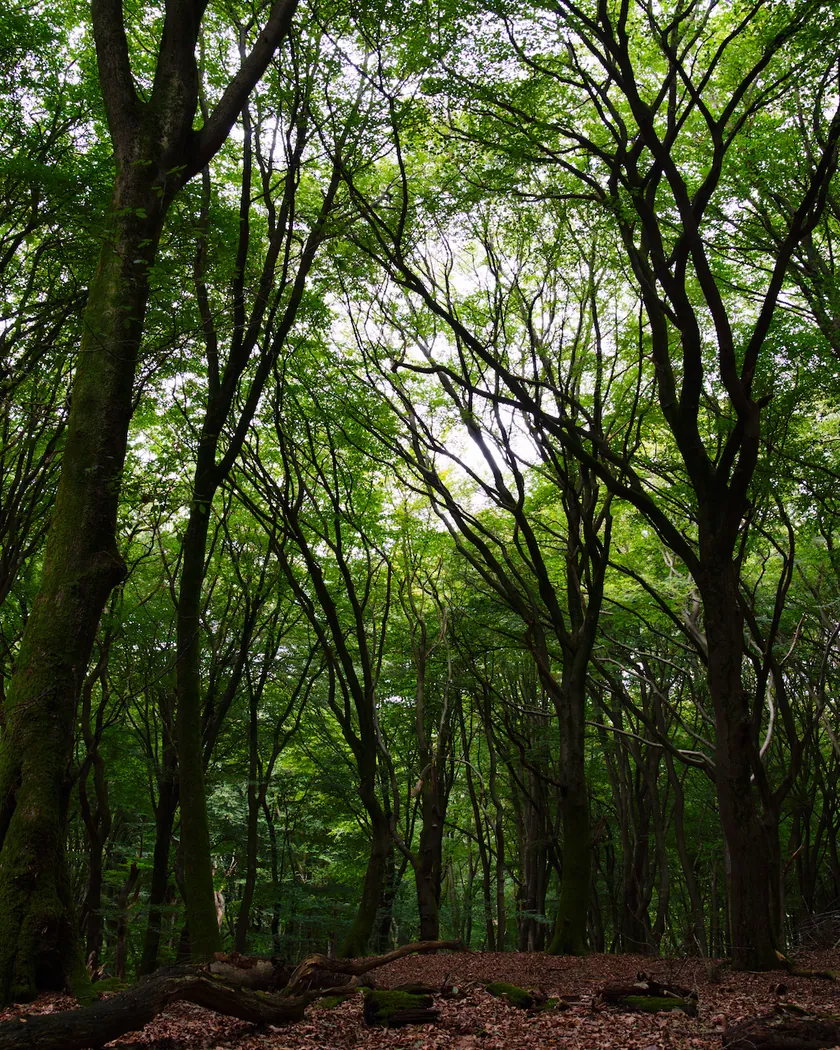
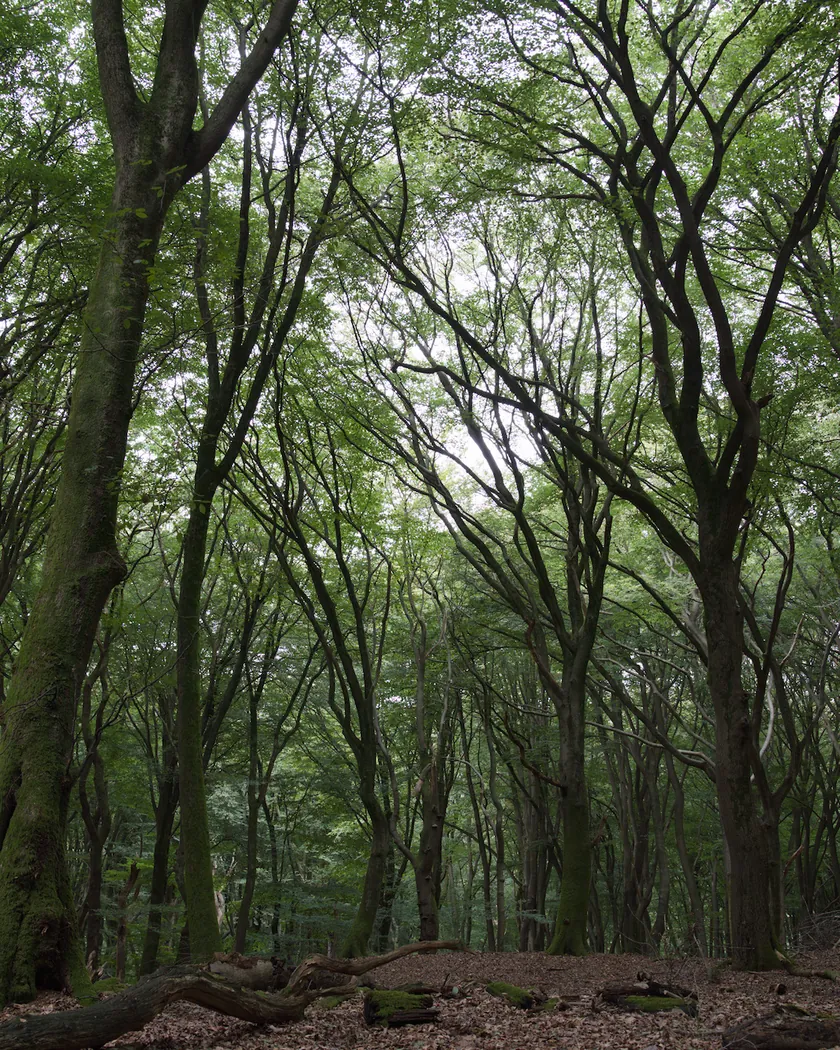
Character
- Contrast
- High; slope about 1.6 in the midtones, with a gradual toe and shoulder (our reading of the datasheet graph)
- Grain
- Diffuse RMS granularity 11, rated "very fine" (datasheet)
- Latitude
- Not quantified by Kodak; reviewers say it copes with bright, harsh light
- Best for
- Nature, scenics, wildlife, food and jewelry (Kodak)
Kodak Professional Ektachrome E100VS is an ISO 100 daylight color slide film for E-6 processing. Kodak sold it as having “the most vivid, saturated” colors of any 100-speed transparency film, with a neutral gray scale [1]. It is discontinued: Emulsive dates the end of production to March 2012 [2]. It is not the Ektachrome E100 that Kodak brought back later.
Look and color
- Saturation is the point. The “VS” stands for very saturated. Kodak attributes it to its Color Amplifying Technology and says the high color position is reached while keeping a neutral gray scale [1]. Emulsive describes “rich, vivid, saturated colors” [3].
- Warmer than Velvia. Fuji X Weekly calls it Kodak’s best attempt at Velvia: similar, but “the warmth of the film was the most obvious difference”, with colors slightly less vibrant [4].
- Neutral grays. On the datasheet, the three characteristic curves stay close together, which fits Kodak’s “neutral gray scale” claim [1] (our reading of the graph).
- Kodak versus the reviews. Kodak’s sheet says nothing about the direction of hues, only that colors are saturated and grays are neutral [1]. The warm cast comes from reviewers [4], and we did not find a second reviewer confirming which colors it favors. Treat hue descriptions as opinion.
Tonality
- Curve. On the datasheet, D-min is about 0.17 and D-max about 3.6 (blue), 3.5 (green) and 3.2 (red). The slope is about 1.6 in the midtones, with a gradual toe and shoulder rather than the abrupt shoulder seen on the Velvia 50 sheet [1] [5] (our reading of the graphs, approximate).
- Bright light. Emulsive says it handles bright and even harsh sunlight with ease, with “deep, rich shadow detail” [2] [3].
- Exposure. Kodak lists EI 100 in daylight or flash, EI 32 with a No. 80B filter under 3400 K photolamps and EI 25 with a No. 80A under 3200 K tungsten [1]. It gives no latitude figure.
- Long exposures. No filter correction or exposure compensation is needed from 1/10,000 to 10 seconds, and none for up to 4 flashes [1].
- Fluorescent light. Kodak recommends filters and extra exposure: for example a 30M filter and +2/3 stop when the lamp type is unknown, and 50R with +1 stop for daylight tubes [1].
Grain and sharpness
| Film | Diffuse RMS granularity |
|---|---|
| Kodak Ektachrome E100VS | 11 (very fine) [1] |
| Fujifilm Velvia 50 | 9 [5] |
| Fujifilm Velvia 100 | 8 [8] |
| Fujifilm Provia 100F | 8 [7] |
| Kodak Ektachrome E100 | 8 [6] |
- All values use a 48 µm aperture and a density of 1.0, but Kodak reads a gross density of 1.0, while Fujifilm’s Velvia and Provia sheets measure 1.0 above D-min: close, not identical, conditions [1] [5] [7].
- Coarser than its rivals on paper. E100VS has the highest RMS in this table. Emulsive says its grain is fine and smooth but “not as super fine as Velvia 100” [2].
- Sharpness. Kodak credits T-Grain emulsion technology with “very fine grain and an unsurpassed level of sharpness in a 100-speed film” [1]. That is a manufacturer claim; the sheet gives a modulation-transfer graph but no lines-per-millimeter figure.
Spectral sensitivity
The three layers do not top out at the same height: the yellow-forming (blue-sensitive) layer peaks near 430 nm at about 1.55 log, the cyan-forming (red-sensitive) layer near 645 nm at about 1.4, and the magenta-forming (green-sensitive) layer has a broad top near 550 to 570 nm at about 1.3 [1]. Measured from the green top, the blue-green and green-red crossings sit about 1.1 and 0.9 log lower, close to the 1.15 and 0.9 we read on the Velvia 50 sheet [1] [5] (our reading of the two datasheets). The Grain Archive style is not computed from these curves.
Datasheet digest
| Item | Value | Source |
|---|---|---|
| ISO speed | 100 in daylight or electronic flash; EI 32 under 3400 K photolamps with a No. 80B filter; EI 25 under 3200 K tungsten with a No. 80A filter | [1] |
| Diffuse RMS granularity | 11, "very fine" (48 µm aperture, 12x magnification, gross diffuse visual density 1.0) | [1] |
| Characteristic curve | D-min about 0.17; D-max about 3.6 (blue), 3.5 (green), 3.2 (red); slope about 1.6 in the midtones; the three curves stay close together (our reading of the graph) | [1] |
| Reciprocity | No filter correction or exposure compensation from 1/10,000 to 10 s (daylight) | [1] |
| Multiple flash | No correction for up to 4 flashes | [1] |
| Base | Acetate, 5 mil (0.13 mm) for 135; 3.9 mil (0.10 mm) for 120 and 220; ESTAR thick base, 7 mil (0.18 mm) for sheets | [1] |
| Process | Kodak Chemicals, Process E-6 | [1] |
Names, status and history
- Kodak’s own description (2005 sheet). A daylight-balanced E-6 film sold in 135, 120, 220 and sheet sizes, including a 4x5 ReadyLoad packet [1].
- Discontinued. Emulsive states that Kodak discontinued it in March 2012 [2]. Another Emulsive page says 2010 [3]. The two disagree, and we found no Kodak notice; the year 2012 is reported, not confirmed. Expired stock still circulates on the secondary market [3].
- Not the current E100. An editor’s note on Emulsive says Kodak later reintroduced slide film under the E100 name [2]. The current film has its own datasheet, with an RMS of 8 [6].
- No renaming. We found no verified alias for E100VS.
Alternatives
- GA — 014 Fujifilm Velvia 50
The film E100VS was measured against: RMS 9 against 11, and cooler; a 2023 review calls E100VS warmer and slightly less vibrant
- GA — 038 Fujifilm Velvia 100
Another ISO 100 high-saturation slide film, with a published RMS of 8 against E100VS's 11; not sold in the US since July 2021
- GA — 017 Kodak Ektachrome E100
Kodak's current ISO 100 slide film, RMS 8, with a more neutral rendering than E100VS
- GA — 015 Fujifilm Provia 100F
Fujifilm's ISO 100 slide film with a published RMS of 8; less saturated and less contrasty than Velvia
Get the look in darktable
The GA — 062 / P preset, inspired by Kodak Ektachrome E100VS, is a darktable 5.6 style of 5 native modules, with no LUT. It sits on top of your own exposure and tone mapping.
| Zone | Metric | Before → after |
|---|---|---|
| sky | C (chroma) | 27.5 → 40.2 |
| sea | C (chroma) | 22.2 → 33.8 |
| skin | C (chroma) | 16.4 → 26.5 |
Settings, all measurements and limits of the Kodak Ektachrome E100VS preset
GA — 062 / P · darktable preset
Ektachrome E100VS
for darktable
See real photos
Scans of real Kodak Ektachrome E100VS film, published by others:
Questions about Kodak Ektachrome E100VS
Is Kodak Ektachrome E100VS discontinued?
Yes. Emulsive writes that Kodak discontinued it in March 2012. A second Emulsive page says 2010, so the year is not settled; we use 2012, the more specific statement. Stock circulates on the secondary market. Kodak's later Ektachrome E100 is a different film.
What is the difference between E100VS and Velvia?
Fuji X Weekly calls E100VS Kodak's best attempt at Velvia: similar, but the warmth was the most obvious difference, and the colors slightly less vibrant. It adds that many photographers preferred Velvia. On paper, Velvia 50 is finer, with an RMS of 9 against 11.
How fine is the grain of E100VS?
Kodak gives an RMS granularity of 11 and rates it very fine. Lower numbers mean finer grain, so Velvia 50 (9) and Ektachrome E100 (8) are finer on paper. Emulsive calls the grain smooth and fine, but not as fine as Velvia 100.
Is E100VS the same as the new Ektachrome E100?
No. E100VS is the saturated, warm-leaning Kodak slide film of the 2000s. The E100 Kodak brought back later, rated RMS 8 on its datasheet, is a separate emulsion with a more neutral look. An Emulsive editor's note also points to the new E100 as a different film.
Does E100VS need a correction for long exposures?
Not up to 10 seconds. Kodak's datasheet says no filter correction or exposure compensation is required from 1/10,000 to 10 seconds in daylight, and none for up to 4 flashes. That is a broader no-correction range than Velvia 50, which needs magenta filtration from 4 seconds.
Sources
- 1DS Kodak Professional Ektachrome Film E100VS, technical data E-163 (September 2005), copy hosted by 125px
- 2C Emulsive: Film stock review, Kodak Ektachrome 100VS (E100VS), 120 format Accessed September 30, 2026.
- 3C Emulsive: Film notes, Kodak Ektachrome 100VS (E100VS) (published June 22, 2015, updated October 16, 2020) Accessed September 30, 2026.
- 4C Fuji X Weekly: Can AI make a Fujifilm recipe? Kodak Ektachrome E100VS (April 29, 2023) Accessed September 30, 2026.
- 5DS Fujifilm Fujichrome Velvia 50 Professional [RVP50], product information bulletin AF3-0221E2 (print code KAMIQ-07.3), copy hosted by ishootfujifilm.com
- 6DS Kodak Professional Ektachrome E100, technical data E-4000 (August 2018)
- 7DS Fujifilm Fujichrome Provia 100F Professional [RDP III], data sheet AF3-036E
- 8M Fujifilm USA: Fujichrome Velvia 100, product page Accessed September 29, 2026.
- 9B Grain Archive measurements: Kodak Ektachrome E100VS style
DS: datasheet · M: manufacturer · C: review or community · B: Grain Archive measurement