KodakKodachrome 64
Warm, with rich reds and deep neutral blacks, in photographers' accounts
- Manufacturer
- Eastman Kodak
- ISO
- 64
- Type
- Slide
- Process
- K-14
- Formats
- 135, 120
- Status
- Discontinued (2009)
- Datasheet
- E-55
- Preset
- GA — 018 / P
Status checked [3]
Character
- Contrast
- Slightly higher than Ektachrome (RIT)
- Grain
- Diffuse RMS granularity 10 (datasheet)
- Process
- K-14 only; color processing ended in January 2011
- Best for
- Advertising, medical, editorial, outdoor, travel and nature work (Kodak)
Kodak Kodachrome 64 was an ISO 64 color slide film for daylight, processed only in Kodak’s K-14 process. It was introduced in 1974 and discontinued in June 2009; the last lab developing it in color, Dwayne’s Photo in Kansas, stopped at the turn of 2011 [4] [3]. Its look can no longer be shot on film: it survives in existing slides, and in imitations such as the Grain Archive style.
Look and color
Kodak itself only wrote that the film “reproduces subtle color naturally” [1]. What follows are photographers’ and analysts’ accounts, often of slides decades old:
- Warm, with strong reds. An RIT author found that Kodachromes “render the world warmer with more red saturation than some Ektachromes”, and that Ektachrome 64 Professional rendered subjects cooler than Kodachrome 64 Professional [7]. Digitising his own 1990s slides, David Hume writes: “The red in the Kodachrome actually is this vivid” [10]. A cinematographer remembers “reds and yellows accentuated” in 16 mm and 1950s–60s Kodachrome [9].
- Blacks and whites. The same account describes “clean white whites and crisp, deep, neutral blacks” [9].
- Skies: blue, sometimes cyan. Simon Foale thought Kodachrome 64 “sometimes had a bit of a cyan cast, especially compared to KM25 and Velvia” [11]; Alex Luyckx found the skies “a perfect blue” and yellows “bright and sunny” [13]. VISNS suggests, as a hypothesis from the red layer’s sensitivity peak near 650 nm, that blue skies were recorded “slightly darker, maybe by ¼ stop”, with a little more cyan dye [8].
- Greens: the sources disagree. VISNS describes “vivid, almost surreal, green foilage” on projected slides [8], and Luyckx sees “Reds and Greens standing out” [13]. We found no written source for the subdued greens often attributed to Kodachrome.
- Accuracy. Foale found the colors “generally were pretty accurate”, with Kodachrome 25 more accurate than 64 [11]. Steve McCurry, who shot the last roll, said Kodachrome “had more poetry in it, a softness, an elegance” [6].
- Why many scans look blue. SilverFast writes that Kodachrome was made with “a light blue cast” to offset the yellowish light of slide projectors, which modern scanners do not have [12]. Luyckx, scanning his own slides, found “little in the way of colour cast” on properly stored ones [13].
Tonality
- Curve. On the datasheet’s characteristic curves, D-min sits near 0.2 and D-max is not reached: the red, green and blue curves are still rising at about 3.7, 3.45 and 3.3 [1]. Our reading of the graph:
- a slope of about 1.1 in the highlights, 1.7 in the midtones and 1.85 in the shadows, then a gradual descent, with no hard wall;
- about 5.8 stops between densities 0.3 and 3.0;
- in the shadows, the red curve sits above the green, and the green above the blue.
- Contrast. The RIT author found Kodachrome “slightly more contrasty” than Ektachrome films [7]. A Cinematography Mailing List member summed it up as “Exremely rich colours, wide tonal range, fine grain” (sic) [9].
- No push. Kodak did not recommend push processing for Kodachrome 25 or 64 [1].
- Long exposures: no correction from 1/10,000 to 1/100 s, +⅓ stop with a CC05R filter at 1/10 s, and exposures of 1 s or longer not recommended [1].
- Tungsten light: EI 16 with an 80A filter at 3200 K, EI 20 with an 80B filter at 3400 K [1].
Grain and sharpness
| Slide film | Diffuse RMS granularity |
|---|---|
| Kodachrome 25 | 9 [1] |
| Kodachrome 64 | 10 [1] |
| Kodachrome 200 | 16 [1] |
| Ektachrome E100 (current) | 8 [14] |
| Fujichrome Velvia 50 (current) | 9 [15] |
- Kodak described Kodachrome 25 and 64 as “extremely sharp” with “extremely fine grain” [1]. The figures come from different decades and manufacturers: treat them as roughly comparable only.
- Sharpness: the datasheet gives modulation transfer curves but no resolving power figure [1].
Spectral sensitivity
The blue-sensitive layer peaks near 423 nm and falls steadily, the green-sensitive layer peaks near 552 nm and the red-sensitive layer near 650 nm, both dropping steeply on their long-wavelength side. The curves cross near 497 nm (blue and green) and 583 nm (green and red) [1]. The Grain Archive style is tuned from the reviews above, not computed from these curves [16].
Datasheet digest
| Item | Value | Source |
|---|---|---|
| ISO speed | 64 in daylight or flash; EI 20 under 3400 K photolamps with an 80B filter; EI 16 under 3200 K tungsten with an 80A filter | [1] |
| Diffuse RMS granularity | 10 (gross diffuse visual density 1.0, 48 µm aperture, 12×) | [1] |
| D-min and D-max | About 0.2; D-max not reached on the graph (red 3.7, green 3.45, blue 3.3 and still rising) (read from the graph) | [1] |
| Characteristic curve | Slope about 1.1 in the highlights, 1.7 in the midtones and 1.85 in the shadows, no hard wall; about 5.8 stops between densities 0.3 and 3.0 (read from the graph) | [1] |
| Reciprocity | No correction from 1/10,000 to 1/100 s; +⅓ stop and CC05R at 1/10 s; 1 s and longer not recommended | [1] |
| Push processing | Not recommended for Kodachrome 25 and 64 (only for Kodachrome 200) | [1] |
| Process | K-14 | [1] |
| Base (Professional, 135-36) | 5.3 mil acetate | [2] |
| Resolving power | Not given; MTF curves published | [1] |
Names, status and history
- 1935 and 1974. Kodachrome, launched in 1935, was the first commercially successful color film. In 1974, with the move to the K-14 process, Kodachrome 25 and 64 replaced Kodachrome II and Kodachrome-X [4] [3].
- A film without couplers. Unlike E-6 and C-41 films, Kodachrome held no dye couplers in its layers: the dyes were added during processing [4]. Kodak called it “a complex film to manufacture and an even more complex film to process” [3].
- Formats. Kodachrome 64 was sold in 135 from 1974 and as a professional 135 film (PKR) from 1983, both until 2009; in 120 from 1986 to 1996; and in 126 and 110 cartridges for some years [4]. The 1996 datasheet lists PKR in 135-36 on a 5.3 mil acetate base [2].
- June 22, 2009. Kodak announced it would retire Kodachrome, which then represented “just a fraction of one percent” of its still-film sales, and suggested Ektachrome E100G and Ektar 100 instead [3]. The June 2009 datasheet adds that there was “no exact replacement” [1].
- The last roll. In July 2010, Dwayne’s Photo developed the last roll of Kodachrome made, shot by Steve McCurry [4] [6].
- End of processing. Dwayne’s Photo in Parsons, Kansas, was the last lab. Its last Kodachrome machine was due to shut down on December 30, 2010 [5]; Wikipedia reports that the last rolls were processed on January 18, 2011 [4]. Kodachrome can no longer be developed in color, only as black and white by some labs [4].
- Datasheet. The last edition, E-55 from June 2009, carries the discontinuance notice; we link a copy hosted by 125px, as Kodak no longer publishes it [1].
Alternatives
- GA — 017 Kodak Ektachrome E100
Kodak's current E-6 slide film, with finer grain on paper (RMS 8); in 2009, Kodak suggested the earlier Ektachrome E100G as an alternative
- GA — 007 Kodak Ektar 100
The other film Kodak suggested when it retired Kodachrome: a color negative with extremely fine grain
- GA — 014 Fujifilm Velvia 50
A current slide film with similar grain on paper (RMS 9)
- GA — 015 Fujifilm Provia 100F
A current ISO 100 slide film with RMS 8
Get the look in darktable
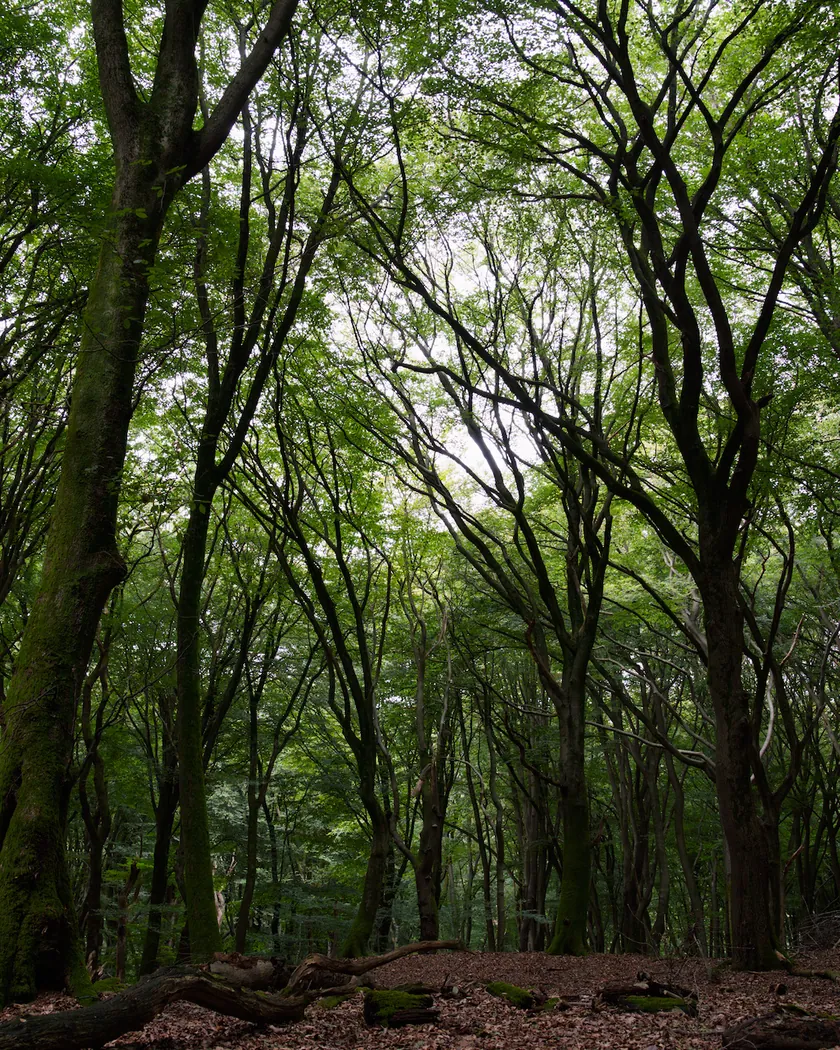
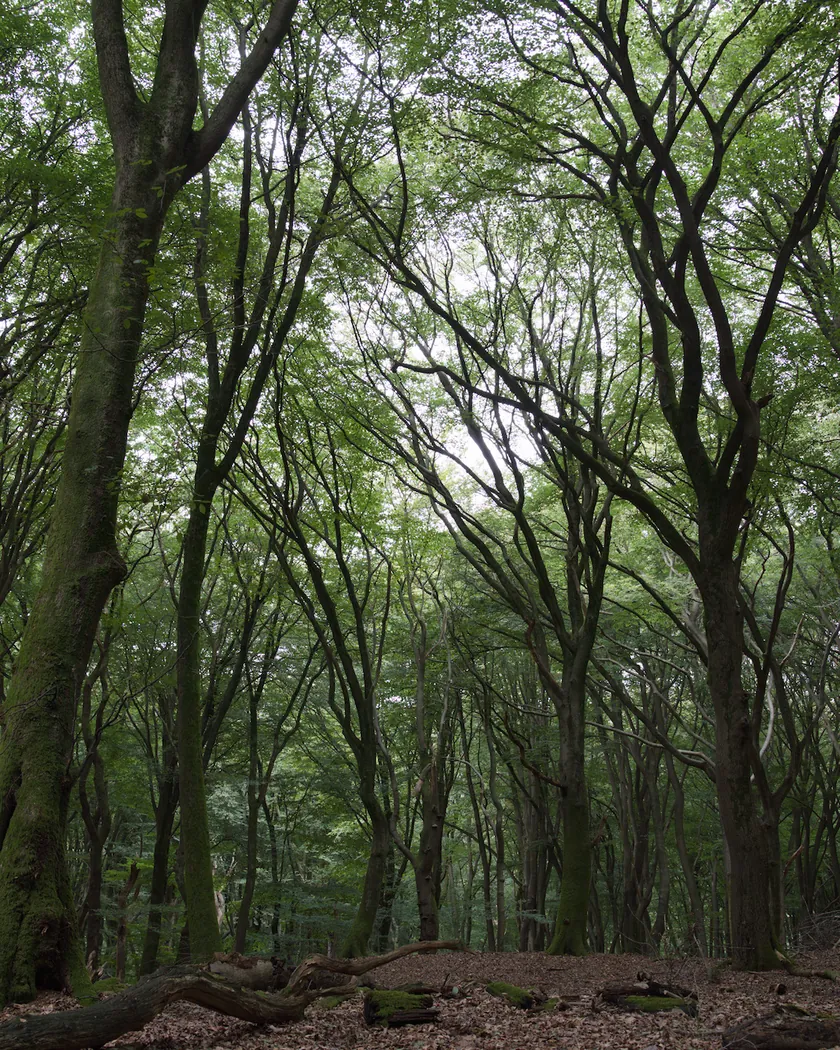
The GA — 018 / P preset, inspired by Kodak Kodachrome 64, is a darktable 5.6 style of 4 native modules, with no LUT. It sits on top of your own exposure and tone mapping.
| Zone | Metric | Before → after |
|---|---|---|
| sky | L | 55.3 → 52.2 |
| skin | C (chroma) | 16.4 → 22.4 |
| pink T-shirt | C (chroma) | 33.7 → 41.9 |
Settings, all measurements and limits of the Kodak Kodachrome 64 preset
GA — 018 / P · darktable preset
Kodachrome 64
for darktable
See real photos
Scans of real Kodak Kodachrome 64 film, published by others:
Questions about Kodak Kodachrome 64
What does Kodachrome look like?
Kodak said Kodachrome 64 'reproduces subtle color naturally', with extremely fine grain. Photographers remember rich reds and yellows, crisp neutral blacks and slightly more contrast than Ektachrome; one found a slight cyan cast in Kodachrome 64 skies. Many scans look bluer than the slides, because the film was balanced for yellowish projector light.
Why does Kodachrome look so good?
There is no single measured answer. Kodachrome differed in its chemistry: its layers held no dye couplers, and the dyes were added during the complex K-14 process. Kodak rated its grain at RMS 10. Steve McCurry, who shot the last roll, said it 'had more poetry in it, a softness, an elegance.'
Is Kodachrome still made?
No. Kodak announced its retirement on June 22, 2009, when it made up a fraction of one percent of Kodak's still-film sales. Dwayne's Photo in Kansas, the last lab, stopped processing it in color at the turn of 2011. Kodak's 2009 datasheet named no exact replacement but suggested Ektar 100 and Ektachrome E100G.
Can you still develop Kodachrome?
Not in color. The K-14 chemicals are no longer made, and the last color processing ran at Dwayne's Photo in January 2011. Some labs can still develop Kodachrome as a black-and-white image, which recovers the silver image but none of the colors. Unexposed rolls found today cannot give the Kodachrome look.
Kodachrome vs Ektachrome?
Kodachrome was processed in K-14, with the dyes added during development; Ektachrome is an E-6 film with couplers in its layers, and is still made as E100. A Rochester Institute of Technology author found Kodachrome slightly more contrasty and warmer, with more red saturation than some Ektachromes. On paper, Kodachrome 64 has RMS 10 and E100 RMS 8.
Sources
- 1DS Kodachrome 25, 64 and 200 Professional Film, technical data E-55 (June 2009), copy hosted by 125px
- 2DS Kodachrome 25, 64 and 200 Professional Films, technical data E-55 (December 1996), copy hosted by 125px
- 3M Kodak press release: Kodak retires Kodachrome film (June 22, 2009), reproduced by Photography Blog Accessed September 29, 2026.
- 4C Wikipedia: Kodachrome Accessed September 29, 2026.
- 5C The New York Times, via NBC News: Kodachrome's road ends at Kansas photo lab (A. G. Sulzberger, December 30, 2010) Accessed September 29, 2026.
- 6C Vanity Fair: The last roll of Kodachrome, frame by frame (David Friend, February 2011), Wayback Machine copy Accessed September 29, 2026.
- 7C Michael R. Peres (Rochester Institute of Technology): Color interpretation, a function of process and film (about 1993), hosted by davidhazy.org Accessed September 29, 2026.
- 8C VISNS: How good was Kodachrome color film? A colorimetric analysis (Chris Wetherill) Accessed September 29, 2026.
- 9C Cinematography Mailing List: Kodachrome look (discussion thread) Accessed September 29, 2026.
- 10C 35mmc: Kodachrome 64, digitising for the "look"? (David Hume, December 21, 2020) Accessed September 29, 2026.
- 11C 35mmc: 5 frames of Kodachrome 25 and 64, an unromantic retrospective (Simon Foale, September 1, 2023) Accessed September 29, 2026.
- 12C SilverFast (LaserSoft Imaging): Scanning Kodachromes Accessed September 29, 2026.
- 13C Alex Luyckx: Classic film review, Kodachrome 64 (June 3, 2019) Accessed September 29, 2026.
- 14DS Kodak Professional Ektachrome E100, technical data E-4000 (August 2018)
- 15DS Fujifilm Fujichrome Velvia 50, data guide AF3-0221E2, copy hosted by ishootfujifilm.com
- 16B The Grain Archive: Kodak Kodachrome 64 style, validation measurements
DS: datasheet · M: manufacturer · C: review or community · B: Grain Archive measurement