darktable preset inspired by KodakVision3 500T
Deeper blacks, denser color and blue-teal shadows on a daylight scene; no halation, no tungsten balance.
- Film
- GA — 030 · sheet, datasheet, sources
- Pack
- Full pack
- darktable
- 5.6 or later
- In darktable
- Styles › Pellicules › Cinéma
- File
- Pellicules - Cinéma - Kodak Vision3 500T.dtstyle
A darktable 5.6 style built from the Kodak Vision3 500T datasheet: native modules, no LUT, measured on real RAW files. In the full pack.
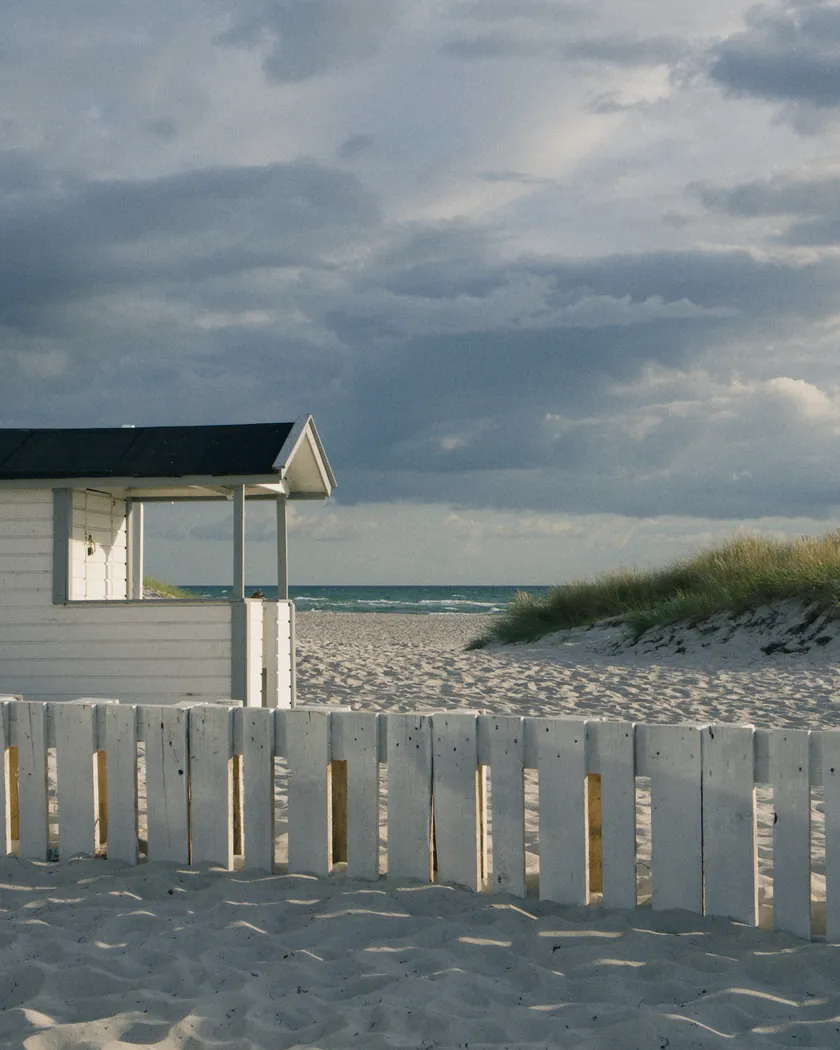
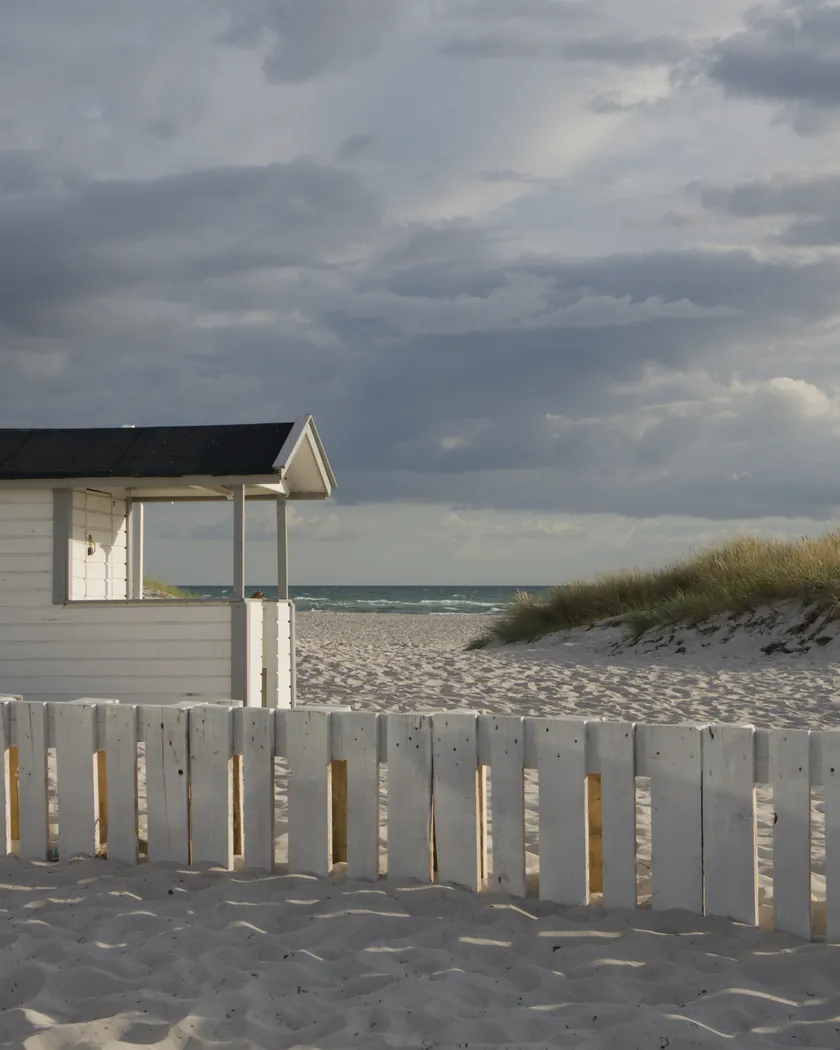
Translation into darktable
| Module | Role | Settings |
|---|---|---|
| rgb primaries | Greens pushed slightly toward teal, reds and blues a little purer | Green +0.02 rad, red purity 1.03, blue purity 1.02 |
| color balance rgb (instance “film”) | Blue-teal shadows, barely cool midtones, a discreet warmth in the highlights | Shadows 215° / 0.028, midtones 225° / 0.005, highlights 60° / 0.010 |
| color equalizer | Rich reds and neon colors, greens toward teal | Saturation: red ×1.05, magenta ×1.03, green ×0.94; green hue +5° |
| tone curve (RGB, per channel) | A soft S: deeper blacks, medium-to-strong midtone contrast, a late shoulder. Saturation follows the contrast | Nodes (0, 0) (0.10, 0.075) (0.25, 0.225) (0.5, 0.5) (0.75, 0.78) (0.9, 0.92) (1, 0.985) |
| grain | Visible, sharp grain: between the Portra 400 and CineStill 800T styles | Coarseness 1500, strength 19, midtones bias 80 |
Measurements
The measurements come from a few test photos of our own, which are not published on this site. The photos shown here are different.
| Photo | Zone | Baseline | Metric | Before | After | Film expectation |
|---|---|---|---|---|---|---|
| 1014 | whole image | Base rendering | Lsd (contrast) | 30.7 | 32.3 | More contrast, per reviews of ECN-2 scans |
| 1014 | whole image | Base rendering | L5 (blacks) | 2.6 | 2.0 | Deeper blacks |
| 1014 | whole image | Base rendering | L95 (whites) | 87.9 | 90.2 | Not documented |
| 0775 | whole image | Base rendering | Lsd (contrast) | 14.3 | 15.7 | More contrast, per reviews of ECN-2 scans |
| 0775 | sky | Base rendering | C (chroma) | 27.5 | 31.2 | Saturated colors (reviews disagree) |
| 0775 | sky | Base rendering | h (hue, °) | 273.6 | 270.9 | Blue-teal cast |
| 0775 | sea | Base rendering | C (chroma) | 22.2 | 27.1 | Saturated colors (reviews disagree) |
| 0775 | sea | Base rendering | h (hue, °) | 270.1 | 264.5 | Blue-teal cast |
| 0989 | skin | Base rendering | C (chroma) | 16.4 | 17.8 | Accurate skin, slightly denser |
| 0989 | skin | Base rendering | h (hue, °) | 44.2 | 44.4 | Skin hue unchanged |
| 1014 | pink T-shirt | Base rendering | C (chroma) | 33.7 | 38.4 | Saturated colors (reviews disagree) |
| 1014 | pink T-shirt | Base rendering | h (hue, °) | 358.8 | 356.1 | Not documented |
| 1014 | floor shadow | Base rendering | b* | -4.6 | -6.7 | Bluer shadows |
| 1014 | floor shadow | Base rendering | L | 7.9 | 6.3 | Deeper blacks |
| 1014 | white wall | Base rendering | b* | -0.8 | 0.1 | Highlights barely warm |
| 0989 | red vest | Base rendering | C (chroma) | 44.5 | 51.3 | Rich reds |
Base rendering: darktable’s default processing of the RAW file, without the preset. Luminance conversion (black and white): the same photo converted with plain luminance weights, to isolate the effect of the film’s spectral sensitivity.
What the style changes
The style sets five darktable modules. It aims at the lab scan of a negative developed in ECN-2, without halation: the film’s rem-jet layer (or, since 2025, its anti-halation undercoat) removes the red halo that marks CineStill 800T. What the film is and how reviewers describe it is on the Kodak Vision3 500T film page. All figures below come from renders made with darktable-cli 5.6.0 at 1000 px, measured in CIELab. The CineStill 800T style of this collection serves as a comparison.
- Deeper blacks, more contrast. A soft S-shaped tone curve raises contrast (Lsd 30.7 → 32.3 and 14.3 → 15.7) and deepens the blacks (L5 2.6 → 2.0; floor shadow L 7.9 → 6.3). The CineStill 800T style raises its blacks instead. The curve acts on each channel, and its nodes are in perceptual lightness.
- Blue-teal shadows. The “film” color balance rgb instance tints the shadows blue-teal: floor shadow b* goes from −4.6 to −6.7. Sky and sea hues move toward cyan (273.6° → 270.9° and 270.1° → 264.5°).
- Denser color. Chroma rises in the sky (27.5 → 31.2), the sea (22.2 → 27.1), a pink T-shirt (33.7 → 38.4) and a red vest (44.5 → 51.3). The curve does most of the work; color equalizer adds to reds and magenta and pulls greens toward teal.
- Skin: same hue, a little denser. Skin hue stays at 44.2° → 44.4° and chroma goes from 16.4 to 17.8.
- Barely warm highlights. A white wall goes from b* −0.8 to +0.1.
- Visible grain, between the Portra 400 and CineStill 800T styles.
What it leaves alone
- Your base development. The style contains no exposure, no sigmoid or filmic, no white balance and no LUT. Those settings stay as you made them.
- Your color balance rgb. The style’s color balance rgb is a separate instance named “film”: it is added next to yours, which stays untouched.
- But not your rgb primaries, color equalizer, tone curve or grain. When you apply a style from the lighttable or the darkroom, each of its modules replaces the instance of the same module with the same name, if the photo has one, and is added otherwise. These four modules carry no instance name, so they replace any settings you had already made in them. Your earlier settings remain in the history.
- Tungsten white balance. The style does not simulate the film’s tungsten balance: it assumes a photo whose white balance is already set. There is no halation module either.
Exporting with a style, or rendering with darktable-cli, works differently: every module of the style is added as a separate instance. Our measurements were made that way, on darktable’s default rendering. The details are in Install and apply darktable styles.
Limits
- The night look is not validated. The film’s real use, tungsten light, neon and point sources, is absent from the test photos, which were all taken in daylight. The settings are tuned on daytime scenes.
- No tungsten balance. See “What it leaves alone” above.
- Conflicting sources. Reviews disagree on saturation, on grain and on the effect of development (ECN-2 or C-41). The style follows ECN-2, rather contrasty and saturated.
- Approximate curves. The datasheet’s curves are read from a graph with no numeric values: slope and toe are approximate.
- The scanner decides. A scan depends on the lab and the scanner; no scan settings are published.
- Grain not measured. It is tuned from the datasheet’s RMS graph and from conflicting reviews.
- A modest gap with the 800T style on daytime photos, halation aside: the difference shows mainly in the blacks and in color density.
Tips
- For the “daylight without a filter” look (blue-teal), lower the temperature in the photo’s color calibration before applying the style.
- Apply it early. If you plan to fine-tune the tone curve, rgb primaries, color equalizer or grain yourself, apply the style first: it would replace those settings if you made them before.
- Installation: see Install and apply darktable styles.
Get the preset
GA — 030 / P · darktable preset
Vision3 500T
for darktable