darktable preset inspired by KodakVision3 50D
Accurate daylight color and very fine grain; firmer curve than the 250D style, denser greens and blues.
- Film
- GA — 031 · sheet, datasheet, sources
- Pack
- Full pack
- darktable
- 5.6 or later
- In darktable
- Styles › Pellicules › Cinéma
- File
- Pellicules - Cinéma - Kodak Vision3 50D.dtstyle
A darktable 5.6 style built from the Kodak Vision3 50D datasheet: native modules, no LUT, measured on real RAW files. In the full pack.
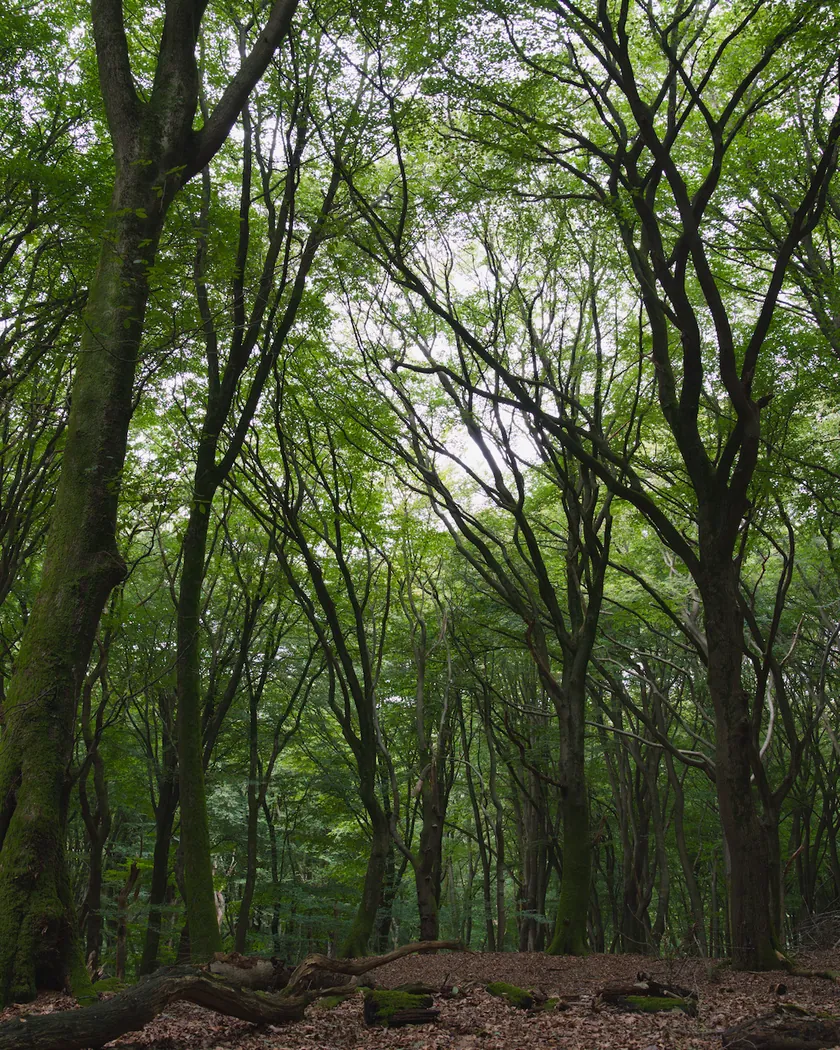
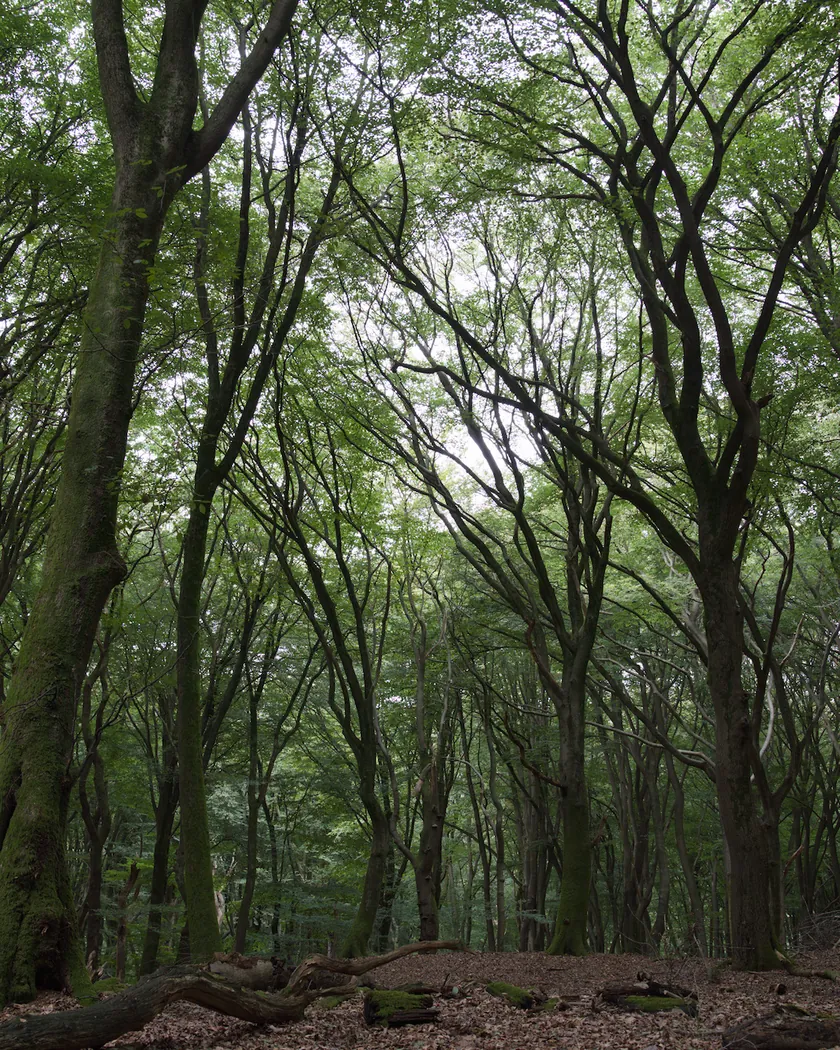
Translation into darktable
| Module | Role | Settings |
|---|---|---|
| rgb primaries | Slightly purer greens and blues, with no hue rotation: exact colors | Green purity 1.05, blue purity 1.02 |
| color balance rgb (instance “film”) | Slight yellow warmth in the highlights, almost neutral shadows, denser color than the 250D style | Highlights 65° / 0.012, shadows 130° / 0.008; saturation +7 %, shadow saturation +8 %, vibrance +0.06 |
| color equalizer | More saturated greens above all, then blues | Saturation: green ×1.14, blue ×1.08, yellow ×1.06, red ×1.05 |
| tone curve (RGB, per channel) | A firmer curve than the 250D style: blacks less lifted, steeper midtones, highlights held back | Nodes (0, 0.03) (0.10, 0.105) (0.25, 0.245) (0.5, 0.5) (0.75, 0.76) (0.9, 0.895) (1, 0.97) |
| grain | Lower granularity than the 250D style, from Kodak's finest-grain motion picture film | Coarseness 800, strength 7, midtones bias 90 |
Measurements
The measurements come from a few test photos of our own, which are not published on this site. The photos shown here are different.
| Photo | Zone | Baseline | Metric | Before | After | Film expectation |
|---|---|---|---|---|---|---|
| 1014 | whole image | Base rendering | Lsd (contrast) | 30.7 | 30.2 | Contrast almost unchanged; firmer than the 250D style (28.6) |
| 1014 | whole image | Base rendering | L5 (blacks) | 2.6 | 4.9 | Blacks barely lifted (250D style: 6.8) |
| 1014 | whole image | Base rendering | L95 (whites) | 87.9 | 87.6 | Highlights held back slightly (250D style: 86.0) |
| 1014 | whole image | Base rendering | C (chroma) | 8.6 | 9.9 | A little more saturated than the base |
| 0775 | whole image | Base rendering | Lsd (contrast) | 14.3 | 14.7 | Contrast almost unchanged (250D style: 13.5) |
| 0775 | whole image | Base rendering | C (chroma) | 21.4 | 25.0 | Denser color than the base |
| 0775 | sky | Base rendering | C (chroma) | 27.5 | 32.3 | Franker blues (250D style: 29.8) |
| 0775 | sky | Base rendering | h (hue, °) | 273.6 | 273.1 | Sky hue unchanged |
| 0775 | sea | Base rendering | C (chroma) | 22.2 | 26.6 | Franker blues (250D style: 24.4) |
| 0989 | skin | Base rendering | C (chroma) | 16.4 | 20.2 | Accurate skin, richer than the 250D style (19.4) |
| 0989 | skin | Base rendering | h (hue, °) | 44.2 | 46.9 | Skin hue almost unchanged |
| 1014 | pink T-shirt | Base rendering | C (chroma) | 33.7 | 40.1 | Rich reds (250D style: 36.5) |
| 1014 | pink T-shirt | Base rendering | h (hue, °) | 358.8 | 2.3 | No drift toward orange |
Base rendering: darktable’s default processing of the RAW file, without the preset. Luminance conversion (black and white): the same photo converted with plain luminance weights, to isolate the effect of the film’s spectral sensitivity.
What the style changes
The style sets five darktable modules. It aims at what most still photographers see from this film: the lab scan of a negative developed in ECN-2. A print on Kodak 2383 print film is not the target. What the film is and how reviewers describe it is on the Kodak Vision3 50D film page. All figures below come from renders made with darktable-cli 5.6.0 at 1000 px, measured in CIELab. There was no reference scan of this film to compare with.
- A firmer curve than the 250D style. The tone curve barely lifts the blacks and keeps the midtones steeper, in line with a slope of about 0.55 read on Kodak’s curves. Contrast stays close to the base (Lsd 30.7 → 30.2 and 14.3 → 14.7), the darkest 5 % of the frame rise from L 2.6 to 4.9 and the brightest 5 % move from 87.9 to 87.6. The Vision3 250D style flattens more (Lsd 28.6, L5 6.8). The curve acts on each channel without color preservation, and its nodes are in perceptual lightness: 0.5 is about middle gray.
- Denser color. A color balance rgb instance named “film” adds saturation (+7 %, +8 % in the shadows) and a touch of vibrance. Whole-image chroma goes from 8.6 to 9.9 on photo 1014 and from 21.4 to 25.0 on photo 0775.
- Stronger greens and blues. color equalizer raises green saturation the most, then blue, yellow and red; rgb primaries makes greens and blues slightly purer without turning them. Sky chroma rises from 27.5 to 32.3 with its hue unchanged (273.6° → 273.1°), sea chroma from 22.2 to 26.6.
- Accurate skin, rich reds. Skin hue barely moves (44.2° → 46.9°) while its chroma rises from 16.4 to 20.2. A pink T-shirt gains chroma (33.7 → 40.1) without turning orange: its hue moves by 3.5°.
- A slight warmth in the highlights, from the yellow tint of the “film” instance.
- Very fine grain, finer than in the Vision3 250D style, from Kodak’s claim that this is its finest-grain motion picture film.
What it leaves alone
- Your base development. The style contains no exposure, no sigmoid or filmic, no white balance and no LUT. Those settings stay as you made them.
- Your color balance rgb. The style’s color balance rgb is a separate instance named “film”: it is added next to yours, which stays untouched.
- But not your rgb primaries, color equalizer, tone curve or grain. When you apply a style from the lighttable or the darkroom, each of its modules replaces the instance of the same module with the same name, if the photo has one, and is added otherwise. These four modules carry no instance name, so they replace any settings you had already made in them. Your earlier settings remain in the history.
- Your pipeline order. The style file carries no module order list, so it does not impose one on your image.
Exporting with a style, or rendering with darktable-cli, works differently: every module of the style is added as a separate instance. Our measurements were made that way, on darktable’s default rendering. The details are in Install and apply darktable styles.
Limits
- An interpretation, not a calibration. The style is built from Kodak’s datasheet and published reviews. No film was scanned or measured to tune it.
- The scanner decides. A scan depends on the lab and the scanner. Sources on the 250D describe warm scans; none says so for the 50D. The slight warming of the highlights is carried over from the 250D by analogy (same family) and is not confirmed.
- Conflicting sources. Reviews disagree on saturation and contrast: pastel and soft in C-41 on CineStill, rich and vivid in ECN-2. The style picks a saturation above the 250D style. A +23 % chroma change on skin is on the high side of what the sources say; lower the style’s opacity to reduce it.
- No halation. The Kodak film has a rem-jet backing, so the style adds no halos. CineStill 50D, which is sold without it, shows red halos around highlights; they are not emulated.
- No 2383 print look.
- Greens not measured. The test photos have no green reference area.
- Grain barely visible at 1000 px. It shows only when zoomed in on the 2560 px examples.
- Color response not modeled. The film’s dye density curves are not reproduced; only the general directions are followed.
Tips
- For 50D developed in C-41, as sold by CineStill, reviewers disagree on whether contrast and saturation go up or down compared with ECN-2. The style aims at ECN-2: adjust the tone curve or the style’s opacity to taste.
- Skin looks too rich? Lower the style’s opacity: the +23 % chroma on skin is the strongest change.
- Apply it early. If you plan to fine-tune the tone curve, rgb primaries, color equalizer or grain yourself, apply the style first: it would replace those settings if you made them before.
- Installation: see Install and apply darktable styles.
Get the preset
GA — 031 / P · darktable preset
Vision3 50D
for darktable