FujifilmProvia 400X
Saturated but realistic; strong blues, darker greens
- Manufacturer
- Fujifilm
- ISO
- 400
- Type
- Slide
- Process
- E-6
- Formats
- 135, 120
- Status
- Discontinued (2013)
- Datasheet
- AF3-0213E
- Preset
- GA — 064 / P
Status checked [2]
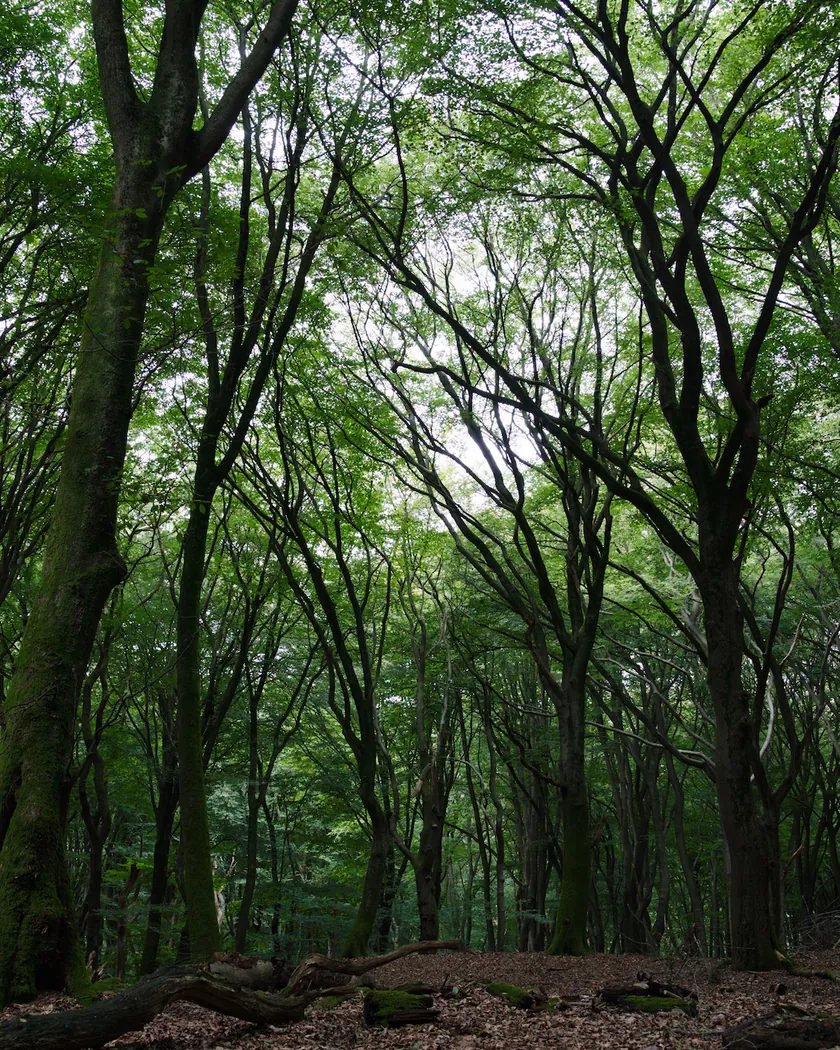
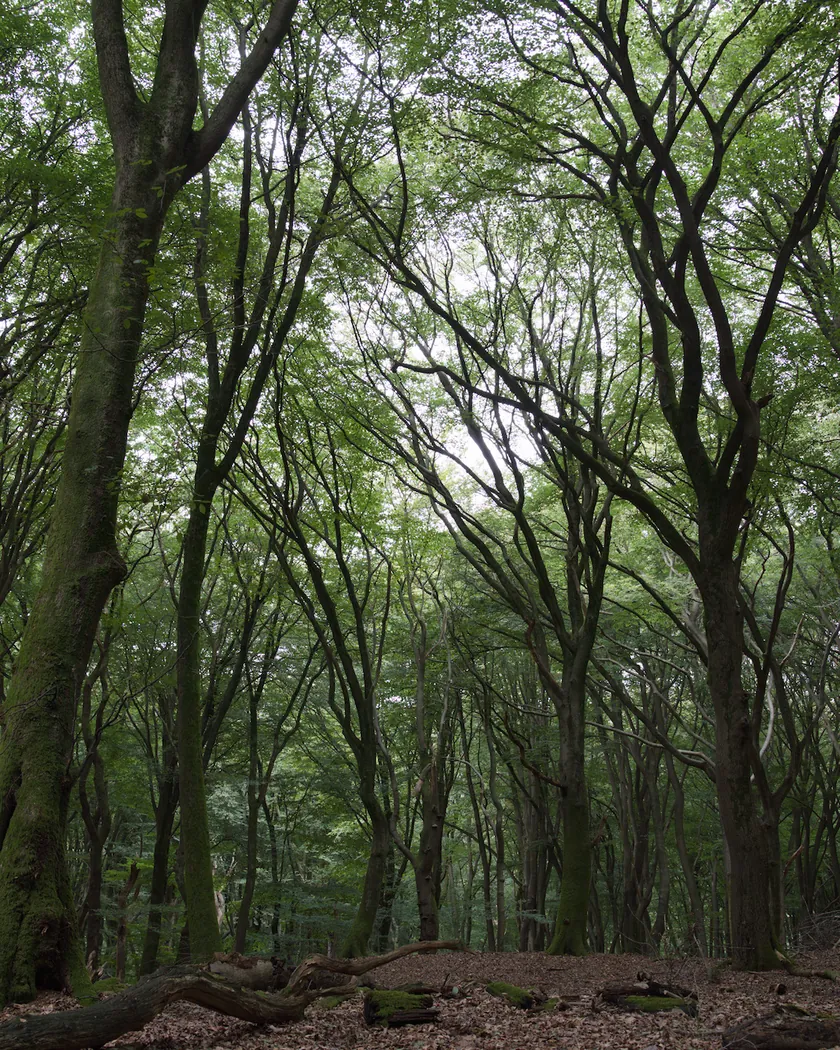
Character
- Contrast
- Disputed: medium-low to high, depending on the review
- Grain
- Diffuse RMS granularity 11 (datasheet)
- Latitude
- About 4 stops of usable range (Analog.cafe)
- Best for
- Landscape, nature, snapshots and portraits (Fujifilm)
Fujifilm Provia 400X (Fujichrome Provia 400X Professional, code RXP) was an ISO 400 daylight color slide film for E-6 processing, sold in 135 and 120 [1]. Fujifilm presented it as combining a very fine grain for its speed with the color saturation and gray balance of its ISO 100 films [1]. It replaced Provia 400F (RHP III) and was discontinued in 2013 [2].
Look and color
- Saturated, but realistic. Fujifilm describes “brilliant ISO 100-level color reproduction”, built with the couplers of Velvia 100, Velvia 100F and Astia 100F and a multi-color correction layer, aimed at both landscape saturation and portrait skin tones [1]. Analog.cafe calls it “tastefully saturated”, both realistic and exaggerated, with greens a little dark next to the reds and blues, and advises shooting in golden-hour light [3].
- Between realistic and deep. Jim Grey finds it “a sweet spot” between the two, richer than memory but more restrained than Velvia [4].
- Tungsten. Indoors, his roll picked up a green cast from the incandescent light, which he corrected afterward [4]. Fujifilm’s answer is a Wratten 80A filter for 3200 K lamps, at ISO 125 [1].
- Skin. Fujifilm claims skin tones suited to portraits [1]. Reviews we could open do not say much about skin, so we treat this as the manufacturer’s claim.
Tonality
- Curve. On the datasheet, the red, green and blue curves nearly coincide, which points to a balanced gray. D-min is about 0.1 and D-max about 3.2 (red) to 3.5 (green); the mean slope is about 1.4 between densities 0.5 and 2.5 [1]. These figures are our visual reading of a printed graph, not a measurement.
- Fujifilm’s wording: “smooth tone reproduction from the highlights to the shadows” and “subtly differentiated gray gradation” [1].
- Contrast: the sources disagree. Analog.cafe calls it high, sometimes “unnatural” for a slide film, and puts the usable range at about 4 stops, so scenes must be chosen with care [3]. A review summary we saw only in search results calls it medium-low for a slide. The datasheet does not rate contrast.
- Processing. Fujifilm rates −1/2 to +2 stops (EI 280 to 1600) with minimal color and gradation change, and up to +3 stops depending on the subject [1]. Long exposures need no correction up to 1 minute; 2.5R and +1/2 stop at 2 minutes, 5R and +1 stop at 4 to 8 minutes [1].
Grain and sharpness
| Film | Diffuse RMS granularity | Resolving power (1000:1) |
|---|---|---|
| Fujifilm Provia 400X | 11 [1] | 135 lines/mm [1] |
| Fujifilm Provia 100F | 8 [5] | 140 lines/mm [5] |
| Fujifilm Velvia 50 | 9 [6] | 160 lines/mm [6] |
| Kodak Ektachrome E100 | 8 [7] | not given [7] |
- Conditions. All are read with a 48 µm aperture, but Fujifilm’s sheets measure at 1.0 above D-min or a sample density of +1.0, while Kodak uses a gross density of 1.0: close, not identical [1] [5] [6] [7].
- What Fujifilm claims. Its epitaxial sigma crystal technology gives an ISO 400 film with a granularity “approaching” that of ISO 100 reversal film [1]. On paper, it is still coarser than the ISO 100 films above.
- Reviews. Analog.cafe finds it finer-grained than Provia 400F [3]. Analog.cafe also quotes RMS 8 for this film, which is the Provia 100F figure and contradicts the datasheet’s 11; we follow the datasheet.
Spectral sensitivity
Blue peaks near 445 nm, green near 545 nm with a shoulder around 565 to 575 nm, and red near 640 nm, each layer topping out at a different height (log 1.96, 1.73 and 1.43) [1]. Measured from the green peak, the blue–green and green–red crossings sit about 1.12 and 0.90 log lower, against about 0.95 and 0.75 on Provia 100F and 1.15 and 0.9 on Velvia 50, so the layers overlap little, closer to Velvia than to Provia 100F [1] [5] [6] (our reading of the datasheets). The Grain Archive style is not computed from these curves.
Datasheet digest
| Item | Value | Source |
|---|---|---|
| ISO speed | 400 in daylight; 125 under 3200 K tungsten with a Wratten 80A filter | [1] |
| Diffuse RMS granularity | 11 (48 µm aperture, sample density +1.0), 'one of the world's highest levels of grain quality among ISO 400 color reversal films' | [1] |
| Resolving power | 55 lines/mm at 1.6:1 chart contrast, 135 lines/mm at 1000:1 | [1] |
| Characteristic curve | The three curves nearly overlap; D-min about 0.1, D-max about 3.2 (red), 3.35 (blue) and 3.5 (green); about 1.4 mean slope between D 0.5 and 2.5 (our reading of the graph, approximate) | [1] |
| Push and pull | From −1/2 stop (EI 280) to +2 stops (EI 1600) with minimal color and gradation change; up to +3 stops (EI 3200) depending on the subject | [1] |
| Reciprocity | No correction from 1/4000 s to 1 minute; 2.5R and +1/2 stop at 2 minutes; 5R and +1 stop at 4 to 8 minutes | [1] |
| Base | Cellulose triacetate, 127 µm (135) and 98 µm (120) | [1] |
| Process | E-6 or Fujifilm CR-56 | [1] |
Names, status and history
- Successor to Provia 400F (RHP III). Fujifilm states that Provia 400X improves color image permanence and fade resistance over RHP III, thanks to new couplers [1]. Wikipedia lists it as the replacement for Provia 400F [2].
- Discontinued in 2013. Wikipedia gives 2013 for the end of Provia 400X [2]. We could not open the contemporary press report, so the exact date and the stated reason are unconfirmed.
- Not Sensia or Fortia. Those are separate Fujifilm films, not names of this one [2].
- Expired stock. Analog.cafe found no significant degradation on the expired roll it tested [3]; Jim Grey’s roll “performed as new” [4]. Storage history varies from roll to roll.
Alternatives
- GA — 015 Fujifilm Provia 100F
The Provia still in production, two stops slower: RMS 8 against 11, with no reciprocity correction up to 128 seconds; still in production
- GA — 038 Fujifilm Velvia 100
Fujifilm's saturated ISO 100 slide film, whose couplers Provia 400X borrows; slower, more saturated
- GA — 017 Kodak Ektachrome E100
ISO 100, RMS 8; the other slide film still in production, two stops slower
- GA — 014 Fujifilm Velvia 50
The saturated end of Fujifilm's slide range: ISO 50, RMS 9, harder contrast, narrower latitude
- GA — 004 Kodak Portra 400
A color negative at the same ISO, for shooters who want to keep the speed without slide film's narrow exposure margin; a different look
Get the look in darktable
The GA — 064 / P preset, inspired by Fujifilm Provia 400X, is a darktable 5.6 style of 4 native modules, with no LUT. It sits on top of your own exposure and tone mapping.
| Zone | Metric | Before → after |
|---|---|---|
| sky | C (chroma) | 27.5 → 34.6 |
| sea | C (chroma) | 22.2 → 31.2 |
| skin | C (chroma) | 16.4 → 16.3 |
Settings, all measurements and limits of the Fujifilm Provia 400X preset
GA — 064 / P · darktable preset
Provia 400X
for darktable
See real photos
Scans of real Fujifilm Provia 400X film, published by others:
Questions about Fujifilm Provia 400X
Is Provia 400X discontinued?
Yes. Wikipedia dates the end of Provia 400X to 2013. It was sold only in 135 and 120. Expired rolls are still shot and reviewed: Analog.cafe found no significant degradation on the expired stock it tested, and Jim Grey said his roll performed as new. Provia 100F is Fujifilm's remaining Provia. [2] [3] [4]
Provia 400X vs Provia 400F: what changed?
Provia 400X replaced Provia 400F (RHP III). Fujifilm gave it new-generation couplers for better color and fade resistance, and a diffuse RMS granularity of 11, called 'approaching' ISO 100 reversal film. Analog.cafe finds it finer-grained than Provia 400F. We did not consult the RHP III datasheet, so we give no figure for it. [1] [2] [3]
Provia 400X vs Provia 100F?
Provia 400X is two stops faster with coarser grain on paper: RMS 11 against 8. Resolving power is close at 1000:1 contrast, 135 against 140 lines/mm. Fujifilm says 400X reaches 'ISO 100-level' color reproduction. Provia 100F needs no reciprocity correction up to 128 seconds; 400X, up to 1 minute. [1] [5]
Can Provia 400X be pushed?
Yes. Fujifilm rates it for push or pull processing from −1/2 stop (EI 280) to +2 stops (EI 1600), with minimal variation in color and gradation. It also says +3 stops (EI 3200) is possible, depending on the subject. This is Fujifilm's own claim; we have not checked it against push-processed scans. [1]
Is Provia 400X high contrast?
Sources disagree. Analog.cafe calls its contrast high and sometimes unnatural, and puts usable range at about 4 stops. A review roundup we found only in summary calls it medium-low for a slide film. Fujifilm's datasheet gives no contrast rating, only nearly overlapping curves and 'smooth tone reproduction'. [1] [3]
Sources
- 1DS Fujifilm Fujichrome Provia 400X Professional [RXP], product information bulletin AF3-0213E (print code ESD-06.1-FP), Fujifilm Hong Kong
- 2C Wikipedia: Provia Accessed September 30, 2026.
- 3C Analog.cafe: Fujichrome Provia 400X slide film review (updated August 3, 2024) Accessed September 30, 2026.
- 4C Jim Grey: Shooting Fujifilm Provia 400X (December 5, 2018) Accessed September 30, 2026.
- 5DS Fujifilm Fujichrome Provia 100F Professional [RDP III], data sheet AF3-036E
- 6DS Fujifilm Fujichrome Velvia 50 Professional [RVP50], product information bulletin AF3-0221E2, copy hosted by ishootfujifilm.com
- 7DS Kodak Professional Ektachrome E100, technical data E-4000 (August 2018)
- 8B Grain Archive: the Fujifilm Provia 400X style, measurements
DS: datasheet · C: review or community · B: Grain Archive measurement