darktable preset inspired by FujifilmProvia 400X
Saturated but realistic slide look: firm blues, denser greens, neutral grays, fine visible grain.
- Film
- GA — 064 · sheet, datasheet, sources
- Pack
- Full pack
- darktable
- 5.6 or later
- In darktable
- Styles › Pellicules › Diapo
- File
- Pellicules - Diapo - Fujifilm Provia 400X.dtstyle
A darktable 5.6 style built from the Fujifilm Provia 400X datasheet: native modules, no LUT, measured on real RAW files. In the full pack.
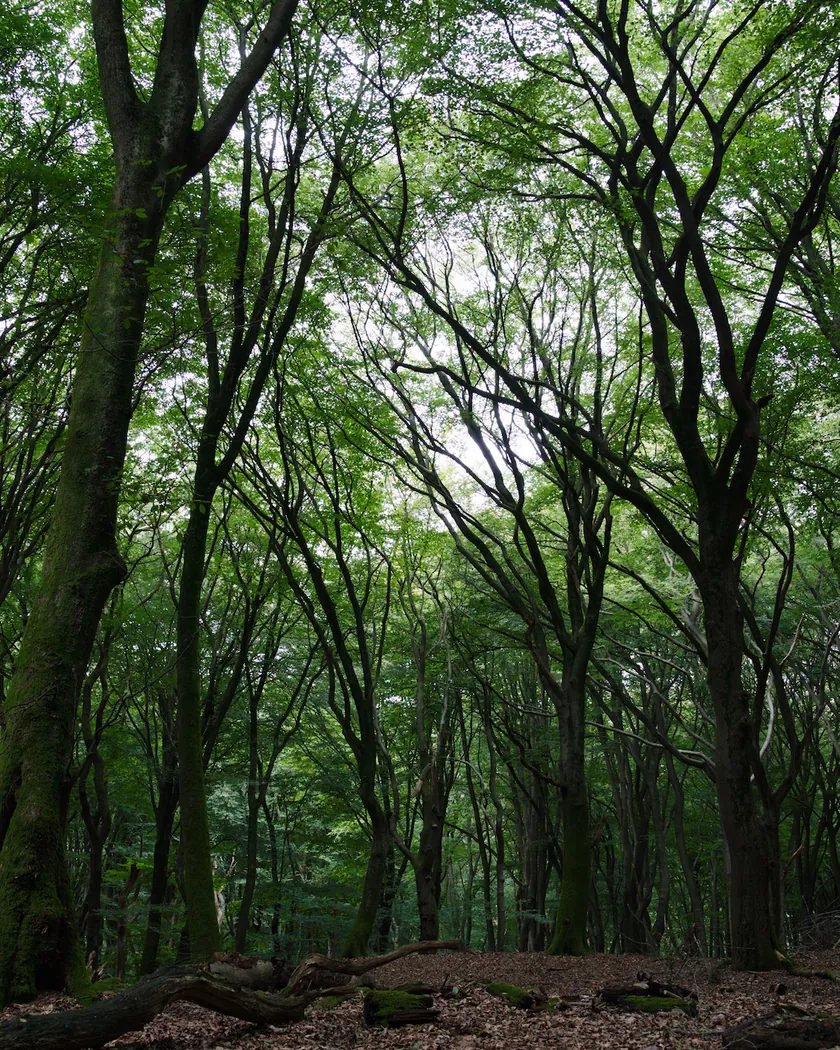
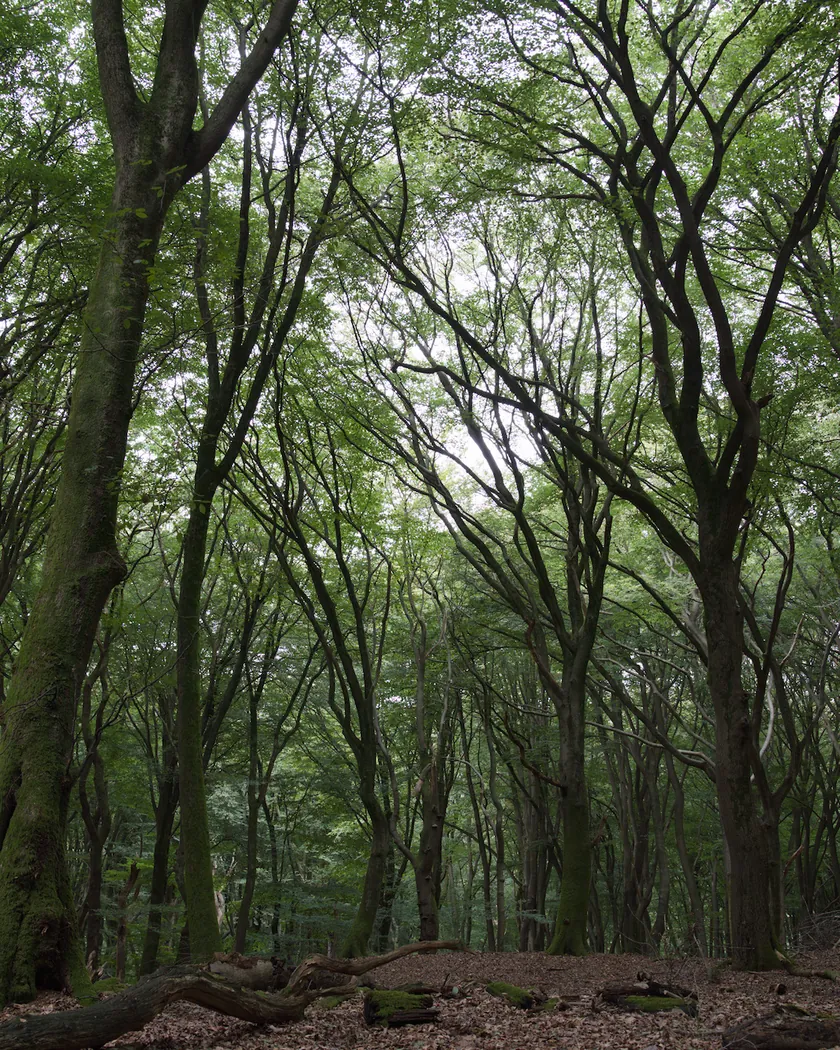
Translation into darktable
| Module | Role | Settings |
|---|---|---|
| color balance rgb (instance “film”) | Saturation a little above Provia 100F without inflating pastels; very slightly cool midtones, neutral blacks and whites | Chroma +0.06, vibrance +0.03; midtones 200° / 0.004 |
| color equalizer | Firm blues, denser greens, skin not reddened, blue hue compensated against a cyan drift | Saturation blue ×1.05, green ×1.05, orange ×0.97; brightness green ×0.96; hue blue +4° |
| tone curve (RGB, per channel) | Moderate slide-film contrast, close to Provia 100F: deep shadows, soft shoulder | Nodes (0, 0) (0.1, 0.048) (0.25, 0.19) (0.5, 0.5) (0.75, 0.78) (0.9, 0.92) (1, 1) |
| grain | RMS 11: fine but visible, less present in the highlights | Coarseness 1100, strength 11, midtone bias 85 |
Measurements
The measurements come from a few test photos of our own, which are not published on this site. The photos shown here are different.
| Photo | Zone | Baseline | Metric | Before | After | Film expectation |
|---|---|---|---|---|---|---|
| 1014 | whole image | Base rendering | Lsd (contrast) | 30.7 | 33.4 | Slide-film contrast; sources disagree on how high |
| 1014 | whole image | Base rendering | L5 (blacks) | 2.6 | 1.1 | Deep blacks that are not blocked |
| 1014 | whole image | Base rendering | L95 (whites) | 87.9 | 90.1 | Clean whites |
| 0775 | whole image | Base rendering | Lsd (contrast) | 14.3 | 16.7 | Slide-film contrast; sources disagree on how high |
| 0775 | sky | Base rendering | C (chroma) | 27.5 | 34.6 | Firm blues |
| 0775 | sky | Base rendering | h (hue, °) | 273.6 | 275.1 | Blues that do not drift toward cyan or violet |
| 0775 | sea | Base rendering | C (chroma) | 22.2 | 31.2 | Firm blues |
| 0775 | sea | Base rendering | h (hue, °) | 270.1 | 271.4 | Blues that do not drift toward cyan or violet |
| 0989 | skin | Base rendering | C (chroma) | 16.4 | 16.3 | Natural skin, not reddened |
| 0989 | skin | Base rendering | h (hue, °) | 44.2 | 45.4 | Natural skin, not reddened |
| 1014 | pink T-shirt | Base rendering | C (chroma) | 33.7 | 39.0 | Saturated but restrained |
| 1014 | pink T-shirt | Base rendering | h (hue, °) | 358.8 | 357.9 | Hue kept |
Base rendering: darktable’s default processing of the RAW file, without the preset. Luminance conversion (black and white): the same photo converted with plain luminance weights, to isolate the effect of the film’s spectral sensitivity.
What the style changes
The style adds three color and tone modules and a grain module. It aims at Provia 400X as its datasheet and reviews describe it: slide-film saturation a little above Provia 100F, firm blues, denser greens, neutral grays and a visible but fine grain. The sources are detailed on the Fujifilm Provia 400X film page. All figures below come from renders at 1000 px, measured in CIELab with our validation tool.
- Moderate contrast. The tone curve stays close to Provia 100F’s, because the sources contradict each other on this film’s contrast. Contrast (Lsd) goes from 30.7 to 33.4 on photo 1014 and from 14.3 to 16.7 on photo 0775. The darkest 5 % of photo 1014 go from L 2.6 to 1.1: deep, but not blocked.
- Saturation a little above Provia 100F. Sky chroma goes from 27.5 to 34.6 and sea chroma from 22.2 to 31.2, about 26 % and 41 % more. The neighboring Provia 100F style gives 19 % and 27 %, consistent with the Velvia couplers Fujifilm says the 400X uses.
- Blues stay blue. Hue moves by only 1.5° in the sky and 1.3° in the sea. A +4° blue hue shift in color equalizer offsets the drift toward cyan that the per-channel curve would cause.
- Denser greens. Saturation goes up and brightness down, after reviews that call the greens dark.
- Skin left alone. Chroma goes from 16.4 to 16.3 and hue from 44.2° to 45.4°. The pink T-shirt gains 16 % chroma.
- Neutral grays. On the white wall of photo 1014, a / b goes from 0.0 / +0.3 to −0.1 / −0.2. Shadows lose their warm cast: the shaded floor goes from +3.0 / +0.3 to +1.1 / −0.1, and the dark vault of photo 1013 from +1.8 / +4.0 to +0.2 / +1.7.
- Visible grain. RMS 11 is fine but not invisible: the grain is barely visible at 1000 px, and visible on the 2560 px examples.
What it leaves alone
- Your base development. The style contains no exposure, no sigmoid or filmic, no white balance, no color calibration and no LUT: those stay as you set them.
- Your pipeline order. The style file carries no module order list, so it does not impose one on your image.
- Your own color balance rgb. The style’s instance is named “film”, so it is added next to yours without changing it (unless the photo already has an instance named “film”, for example from an earlier application of the style).
What it does not leave alone: applied from the lighttable or the darkroom, each module of the style replaces the instance of the same name on the photo, or is added if there is none. The style’s unnamed modules, color equalizer, tone curve and grain, therefore overwrite any settings you had already made in those modules. Your earlier settings stay in the history stack. Exporting with a style, or rendering with darktable-cli as our measurements do, adds the style’s modules as separate instances instead. Details in Install and apply darktable styles.
Limits
- An interpretation, not a calibration. No film was scanned or measured to tune the style.
- Little separates it from the Provia 100F style. Saturation is a bit higher, the greens a bit denser, and the grain is present. Contrast is deliberately the same, for lack of consensus in the sources.
- The sources disagree on contrast and on whether the balance is neutral or slightly cool. The choice is an interpretation.
- The datasheet curve was read by eye. D-min, D-max and slope are approximate.
- Greens are not verified. The test photos hold few greens.
- Expired-film artifacts are not simulated. Reviews often read outdated rolls (red or blue casts in the shadows); the style does not simulate them, nor long-exposure shifts or the green cast under incandescent light.
- The chunky grain of underexposed shadows is not reproduced. The grain bias is a simple one.
- Some color notes in our research came from summaries of pages we could not open (photrio, dpreview, Lomography, all returning error 403), and are treated as summaries.
Tips
- For a punchier look, raise the chroma of the “film” color balance rgb instance a little; for something closer to Provia 100F, lower it toward +0.04.
- Under tungsten light, correct white balance first: the film shows a green cast there, and the style does not touch white balance.
- Installation: see Install and apply darktable styles.
Get the preset
GA — 064 / P · darktable preset
Provia 400X
for darktable