darktable preset inspired by ADOXCHS 100 II
Orthopanchromatic ISO 100 gray mix with open shadows, capped whites and classical grain.
- Film
- GA — 087 · sheet, datasheet, sources
- Pack
- Full pack
- darktable
- 5.6 or later
- In darktable
- Styles › Pellicules › N&B
- File
- Pellicules - N&B - ADOX CHS 100 II.dtstyle
A darktable 5.6 style inspired by ADOX CHS 100 II: orthopanchromatic gray mix, open shadows, distinct shoulder, classical grain. Native modules, no LUT.
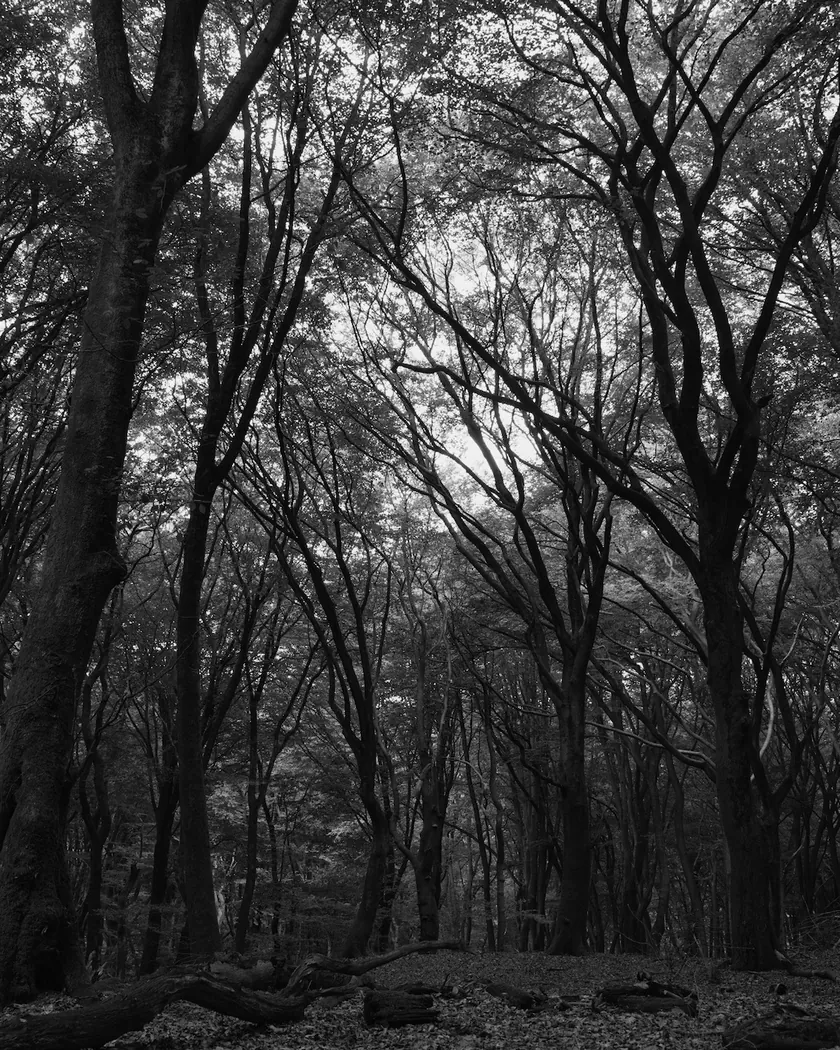
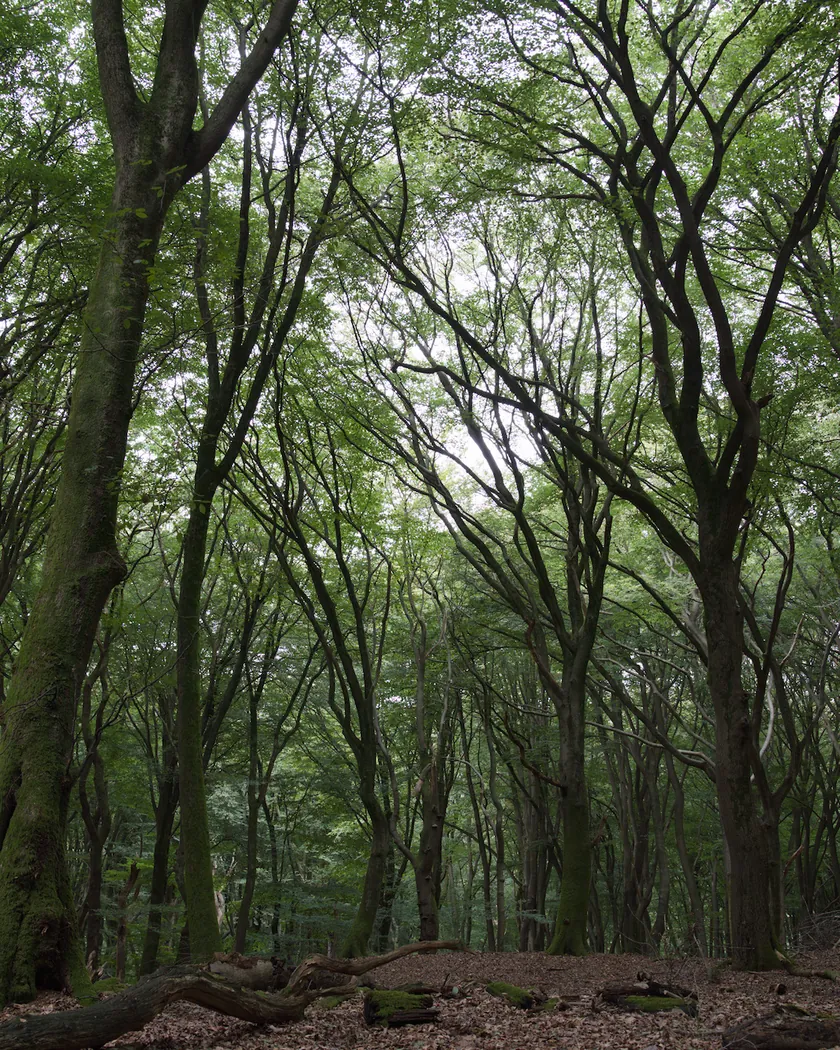
Translation into darktable
| Module | Role | Settings |
|---|---|---|
| color calibration (main instance) | Switched off, so chromatic adaptation cannot tint the gray; left at darktable's default settings so it can be switched back on | Disabled; “as shot in camera”, CAT16 |
| color calibration (instance “N&B”) | Black-and-white conversion with weights integrated from the spectral response graph of the ADOX datasheet, read as log sensitivity under 2850 K tungsten light (an assumption, see Limits) | Gray = 0.2436·X + 0.2000·Y + 0.5564·Z |
| tone curve | Raised toe for open shadows, gentle slope, distinct shoulder that caps white | Nodes (0, 0.008) (0.08, 0.06) (0.2, 0.185) (0.35, 0.34) (0.5, 0.5) (0.65, 0.66) (0.78, 0.79) (0.9, 0.895) (1, 0.95) |
| grain | Set by eye against the Fomapan 100 style, because ADOX publishes no RMS figure | Coarseness 1500, strength 24, midtones bias 70 |
Measurements
The measurements come from a few test photos of our own, which are not published on this site. The photos shown here are different.
| Photo | Zone | Baseline | Metric | Before | After | Film expectation |
|---|---|---|---|---|---|---|
| 0775 | whole image | Base rendering | Lsd (contrast) | 14.3 | 15.0 | Lowest contrast of the black-and-white styles compared; open shadows and a shoulder |
| 1014 | whole image | Base rendering | Lsd (contrast) | 30.7 | 30.0 | Lowest contrast of the black-and-white styles compared |
| 1014 | whole image | Base rendering | L5 (blacks) | 2.6 | 2.2 | Open shadows: blacks kept the most open |
| 1014 | whole image | Base rendering | L95 (whites) | 87.9 | 84.6 | Shoulder that keeps highlights from blowing out: lowest whites |
| 0775 | sky | Base rendering | L | 55.3 | 60.6 | Blue-sensitive film, but retailer text promises deeper skies: not settled |
| 0775 | sea | Base rendering | L | 38.4 | 40.4 | Strong blue sensitivity: lighter |
| 0989 | skin | Base rendering | L | 78.2 | 73.1 | Reduced red sensitivity: darker skin |
| 1014 | pink T-shirt | Base rendering | L | 47.3 | 44.3 | Reduced red sensitivity: darker reds |
| 1014 | whole image | Base rendering | C (neutrality) | 8.6 | 0.0 | Neutral gray, no color cast |
Base rendering: darktable’s default processing of the RAW file, without the preset. Luminance conversion (black and white): the same photo converted with plain luminance weights, to isolate the effect of the film’s spectral sensitivity.
What the style changes
The style converts the photo to black and white the way the ADOX datasheet curve suggests, then adds an open-shadow, capped-highlight tone curve and grain. What it is based on is detailed on the ADOX CHS 100 II film page. Figures below come from 1000 px renders measured in CIELab; the base render is darktable’s default rendering.
- Gray from the film’s spectral response. A color calibration instance named “N&B” mixes the channels with weights integrated from the ADOX graph. Compared with the base render, the sea gets lighter (L 38.4 → 40.4) and the sky too (55.3 → 60.6), while skin (78.2 → 73.1) and a pink T-shirt (47.3 → 44.3) get darker. The sky is not lightened more than in the FP4 Plus style (60.7), which fits the dip near 495 nm on the curve and the “deeper skies” of the retailer text, but not “much greater blue sensitivity” taken alone.
- Low contrast, open shadows, capped whites. Contrast (Lsd) goes from 14.3 to 15.0 on one test photo and from 30.7 to 30.0 on the other, the lowest of the four black-and-white styles compared (FP4 Plus, Fomapan 100 and Tri-X 400 are higher). The darkest 5 % of the frame stay at L 2.2 (base 2.6) and the brightest 5 % drop from L 87.9 to 84.6, because the curve ends at 0.95.
- Classical grain. Set by eye against the Fomapan 100 style. On the sky of one test photo the grain measures 4.9, against 4.8 for Fomapan 100, 3.5 for FP4 Plus and 6.8 for Tri-X 400 (standard deviation of the image minus its Gaussian blur, 4 px radius, 2560 px examples).
- A neutral gray. Chroma falls from 8.6 to 0.0: no color cast is left.
What it leaves alone
-
Your base development. No exposure, sigmoid, filmic or LUT: those settings stay as you made them.
-
But it switches off your main color calibration. The style holds two color calibration instances:
- a disabled one with no instance name, which replaces your main color calibration and switches it off. It is set to “as shot in camera” with CAT16, like darktable’s default, so you can switch it back on;
- the “N&B” instance, which does the conversion.
Why: an active color calibration running after the black-and-white conversion would tint the gray through chromatic adaptation. darktable’s own black-and-white presets bypass it too, and film does not white-balance.
-
It also replaces your tone curve and grain. Applied from the lighttable or the darkroom, each module of the style replaces the instance of the same name, if the photo has one, and is added otherwise. The style’s tone curve and grain have no instance name, so they replace any earlier settings in those two modules; those settings remain in the history.
-
Your pipeline order. The style file carries no module order list.
Exporting with a style, or rendering with darktable-cli, adds every module of the style as a separate instance, and the disabled color calibration still switches off the existing one. The details are in Install and apply darktable styles.
Limits
-
An interpretation, not a calibration. No film was scanned or measured to tune the style.
-
The spectral graph has no vertical scale and no stated light source. We assumed, as for the Ilford and Foma styles, that the curve height is log sensitivity and the light is 2850 K tungsten. The other readings give:
Reading X Y Z log, 2850 K (used) 0.2436 0.2000 0.5564 linear, 2850 K 0.2410 0.2117 0.5473 log, equal energy 0.3547 0.3354 0.3099 linear, equal energy 0.3490 0.3439 0.3071 Both equal-energy readings make the film less blue-sensitive than Tri-X 400 (Z = 0.39), which contradicts every source, so we kept tungsten. If skin looks too dark or blues too light, an intermediate mix is possible.
-
Hand-digitized curve. The weights come from a manual reading with about 2 % error on heights. The finer trace shown on the film page places the cut-off near 663 nm; the reading used for the weights placed it near 666 nm.
-
No characteristic curve on the datasheet. Tonality comes from the datasheet’s text and from descriptions, not from figures. The 0.95 ceiling and the raised toe are interpretation choices.
-
No published RMS. Grain is set by eye.
-
Halation and light piping from the PET base are not simulated. The datasheet lists two anti-halation layers.
-
Few sources. Retailer text is commercial, and 35mmc describes a flatter look than the style gives. The film is thinly documented.
Tips
- Apply it early. If you plan to adjust the tone curve or grain, apply the style first: it would replace those settings if you made them before.
- Sunny scenes suit it. The reviewer at 35mmc found the film better in strong light than in flat light.
- See the spectral conversion alone by switching off the tone curve and grain modules the style set.
- Back to color: switch the main color calibration back on and switch off the “N&B” instance.
- Installation: see Install and apply darktable styles.
Get the preset
GA — 087 / P · darktable preset
CHS 100 II
for darktable