darktable preset inspired by KentmerePan 100
Medium-to-soft black and white with smooth mid-tones, near-neutral blacks and a fine, classic grain.
- Film
- GA — 081 · sheet, datasheet, sources
- Pack
- Full pack
- darktable
- 5.6 or later
- In darktable
- Styles › Pellicules › N&B
- File
- Pellicules - N&B - Kentmere Pan 100.dtstyle
A darktable 5.6 style inspired by Kentmere Pan 100: medium to soft contrast, fine classic grain. Native modules, no LUT, measured on RAW files. Full pack.
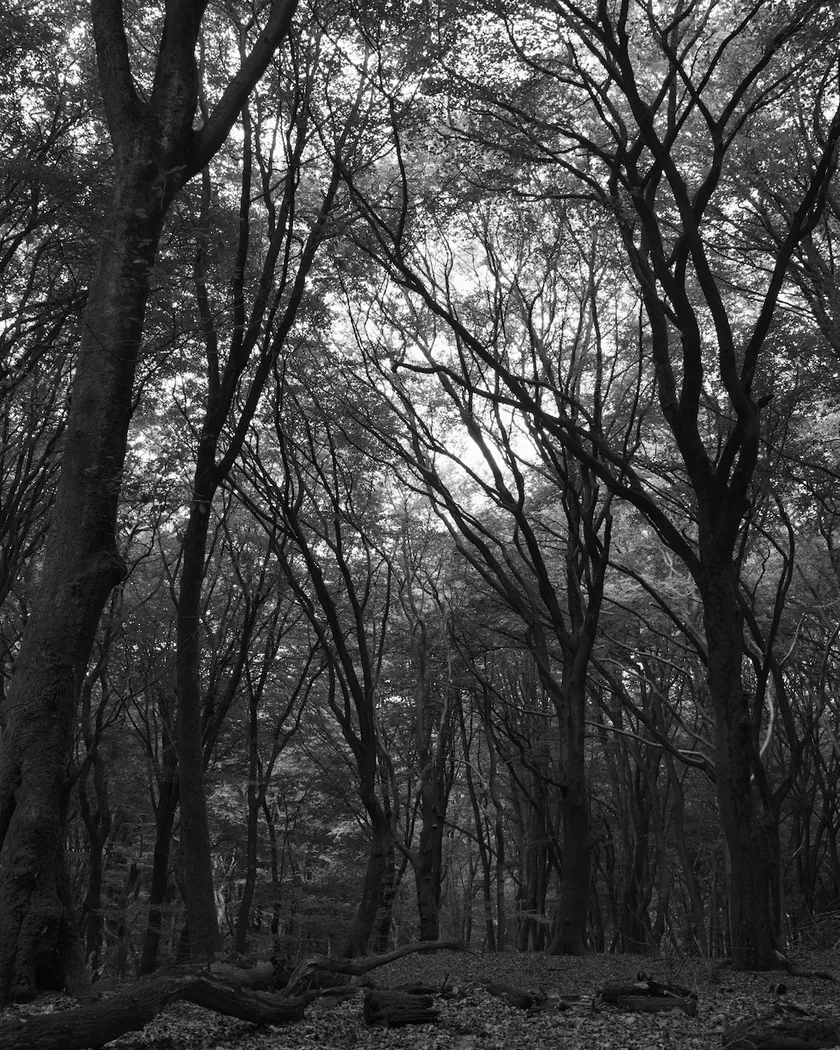
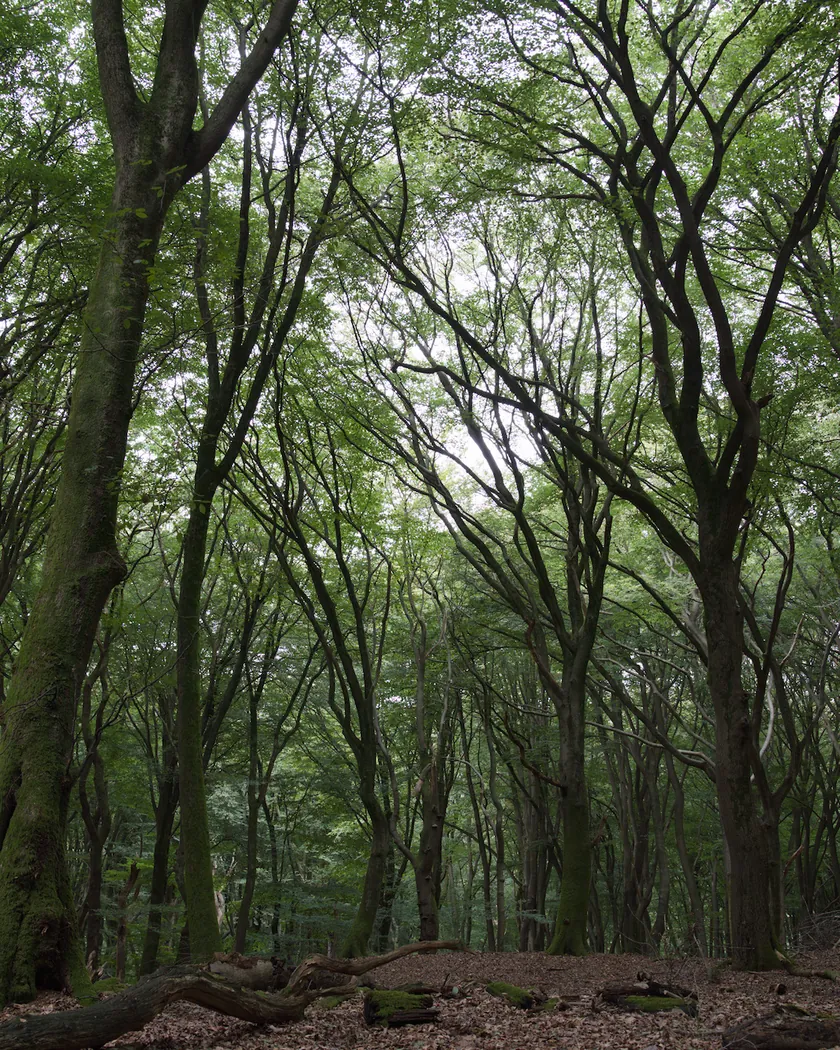
Translation into darktable
| Module | Role | Settings |
|---|---|---|
| color calibration (main instance) | Switched off, so chromatic adaptation cannot tint the gray; left at darktable's default settings so it can be switched back on | Disabled; “as shot in camera”, CAT16 |
| color calibration (instance “N&B”) | Black-and-white conversion. Assumption: the same weights as the Kentmere Pan 400 style (average of the Tri-X and HP5 Plus weights), because Harman publishes no spectral curve | Gray = 0.284·X + 0.280·Y + 0.436·Z |
| tone curve | Medium to soft contrast, a little firmer than the Pan 400 style: blacks barely lifted, soft shoulder | Nodes (0, 0.006) (0.06, 0.058) (0.18, 0.170) (0.35, 0.338) (0.5, 0.5) (0.65, 0.665) (0.8, 0.818) (0.92, 0.932) (1, 0.994) |
| grain | Fine but classic grain, between the FP4 Plus style (1100 / 18) and the Pan 400 style (2400 / 29) | Coarseness 1350, strength 20, midtones bias 80 |
Measurements
The measurements come from a few test photos of our own, which are not published on this site. The photos shown here are different.
| Photo | Zone | Baseline | Metric | Before | After | Film expectation |
|---|---|---|---|---|---|---|
| 1014 | whole image | Base rendering | Lsd (contrast) | 30.7 | 30.3 | Medium to soft contrast: between Pan 400 style (29.6) and FP4 Plus style (32.1) |
| 0775 | whole image | Base rendering | Lsd (contrast) | 14.3 | 15.3 | Medium to soft contrast (Pan 400 style 14.8, FP4 Plus style 16.9) |
| 1014 | whole image | Base rendering | L5 (blacks) | 2.6 | 2.5 | Blacks barely lifted, no crushed blacks (Pan 400 style 3.0, FP4 Plus style 1.1) |
| 1014 | whole image | Base rendering | L95 (whites) | 87.9 | 86.7 | Held-back highlights, no burnt whites (Pan 400 style 85.6, FP4 Plus style 88.5) |
| 0775 | sky | Base rendering | L | 55.3 | 59.8 | Lighter: panchromatic film, blue rendered light (Pan 400 style 59.2) |
| 0775 | sea | Base rendering | L | 38.4 | 39.5 | Slightly lighter (Pan 400 style 39.7) |
| 0989 | skin | Base rendering | L | 78.2 | 76.1 | Darker skin (Pan 400 style 75.0) |
| 1014 | pink T-shirt | Base rendering | L | 47.3 | 46.1 | Darker reds (Pan 400 style 46.0) |
| 1014 | whole image | Base rendering | C (neutrality) | 8.6 | 0.0 | Neutral gray, no color cast |
Base rendering: darktable’s default processing of the RAW file, without the preset. Luminance conversion (black and white): the same photo converted with plain luminance weights, to isolate the effect of the film’s spectral sensitivity.
What the style changes
The style converts the photo to black and white as a panchromatic ISO 100 film would, then adds medium to soft contrast and a fine, classic grain. What it is based on is on the Kentmere Pan 100 film page. All figures below come from renders made at 1000 px with tools/validate.py, measured in CIELab, and compared with darktable’s base rendering and with the Kentmere Pan 400, FP4 Plus and HP5 Plus styles.
- Gray from assumed channel weights. A color calibration instance named “N&B” mixes the channels with the same weights as the Pan 400 style, halfway between the Tri-X and HP5 Plus styles. Harman’s datasheet publishes no spectral sensitivity curve, so this is an assumption backed by reviews, not by measurements.
- Against the base rendering, the sky gets lighter (L 55.3 → 59.8) and skin darker (78.2 → 76.1), as with any panchromatic film. The shift is close to the Pan 400 style (sky 59.2, skin 75.0) because the weights are the same.
- Medium to soft contrast. Global contrast (Lsd) sits between the Pan 400 style and the FP4 Plus style: 30.3 against 29.6 and 32.1 on photo 1014 (base 30.7), and 15.3 against 14.8 and 16.9 on photo 0775 (base 14.3). It is firmer than the 400 and softer than FP4 Plus.
- Blacks barely lifted, whites held back. L5 goes from 2.6 to 2.5 and L95 from 87.9 to 86.7. In a complementary one-off measurement, 1.1 % of pixels are near black (5/255 or below) on photo 1014, against 1.7 % for the base, 0.3 % for Pan 400 and 7.4 % for FP4 Plus. On photo 0989, 0.0 % of pixels are at 250/255 or above (base 0.3 %).
- Fine, classic grain. Coarseness 1350 and strength 20. The high-pass standard deviation on the top third of photo 0775 is 1.93, against 0.46 for the base, 3.71 for Pan 400 and 1.58 for FP4 Plus.
- A truly neutral gray. Chroma falls from 8.6 to 0.0: no color cast is left.
What it leaves alone
-
Your base development. The style contains no exposure, no sigmoid or filmic and no LUT. Those settings stay as you made them.
-
But it switches off your main color calibration. The style contains two color calibration instances:
- a disabled one with no instance name, which replaces your main color calibration and switches it off. It is set to “as shot in camera” with CAT16, like darktable’s default, so you can switch it back on;
- the “N&B” instance, which does the black-and-white conversion.
Why: when an active color calibration runs after the black-and-white conversion, its chromatic adaptation tints the gray. The disabled instance avoids that.
-
It also replaces your tone curve and grain. The style’s tone curve and grain carry no instance name, so they replace any settings you had already made in those two modules. Your earlier settings remain in the history.
-
Your pipeline order. The style file carries no module order list.
Details on applying a style: Install and apply darktable styles.
Limits
- An interpretation, not a calibration. No film was scanned or measured to tune the style.
- No spectral or characteristic curve. Harman’s datasheet (4 pages) publishes neither a spectral sensitivity curve, nor a characteristic curve, nor a granularity figure. The channel weights and the tone curve are assumptions supported by reviews, not by measurements. The spectral sensitivity is therefore identical to that of the Pan 400 style, without proof.
- Reviews are subjective and contradict each other on contrast (soft or firm). The tone curve is the most uncertain setting. For more contrast, raise the midtone slope toward that of the FP4 Plus style.
- Some reviews were only read as automatic summaries. Treat the quotes with caution.
- The rendering varies with the developer and the exposure. The style aims at normal development at EI 100.
- The grain. darktable’s grain is procedural noise: it imitates the texture of film grain, not the shape of real silver grains.
- Close to Pan 400 and FP4 Plus. The gray has the same color as the Pan 400 style; the difference comes mostly from contrast and grain.
- The measurements come from a few test photos of our own. They are not published on this site.
Tips
- Apply it early. If you plan to fine-tune the tone curve or grain yourself, apply the style first: it would replace those settings if you made them before.
- For firmer contrast, steepen the midtones of the tone curve. If the grain looks too strong, lower the strength.
- Back to color: switch the main color calibration back on and switch off the “N&B” instance.
- Installation: see Install and apply darktable styles.
Get the preset
GA — 081 / P · darktable preset
Pan 100
for darktable