KodakEktachrome E100G
Neutral color balance, moderately enhanced saturation (Kodak); reviews split between cool and magenta
- Manufacturer
- Eastman Kodak
- ISO
- 100
- Type
- Slide
- Process
- E-6
- Formats
- 135, 120, 220, 4x5, 8x10
- Status
- Discontinued (2012)
- Datasheet
- E-4024
- Preset
- GA — 079 / P
Status checked [2]
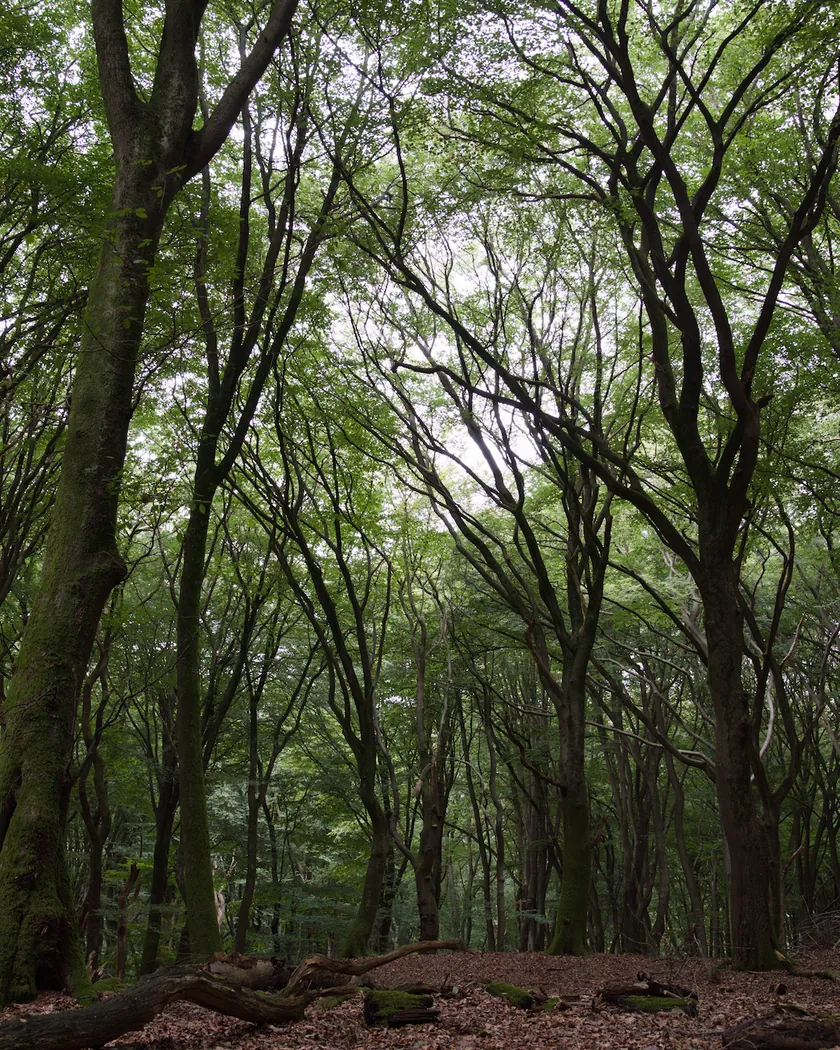
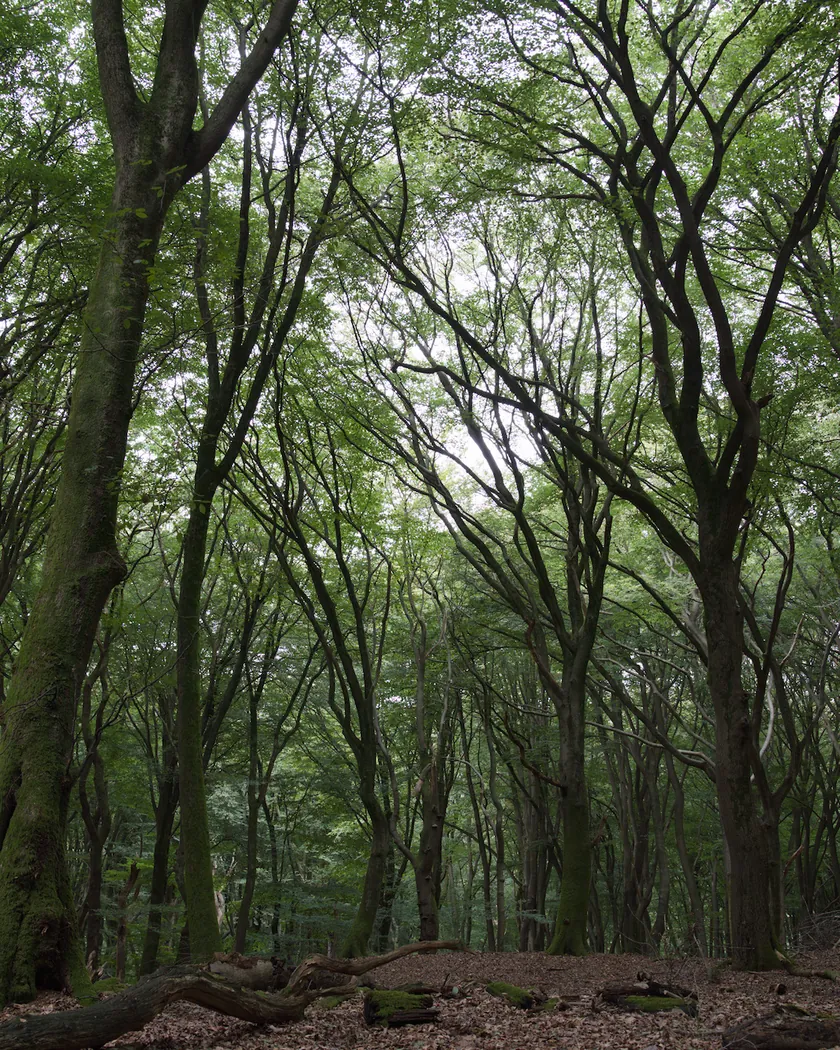
Character
- Contrast
- Lower than other slide films; a "lower contrast tone scale" (datasheet)
- Grain
- Diffuse RMS granularity 8, "extremely fine" (datasheet)
- Latitude
- Not quantified by Kodak; one reviewer calls it "one of the more tolerant slide films"
- Best for
- Advertising, fashion, editorial, architecture, nature and wildlife (Kodak)
Kodak Professional Ektachrome E100G is an ISO 100 daylight color slide film for E-6 processing. Kodak sold it as the neutral-balance member of a pair with the warm E100GX, with extremely fine grain (RMS 8), moderately enhanced saturation and a lower-contrast tone scale than earlier films [1]. It is discontinued. It is not the current Ektachrome E100, although that film was reportedly based on it [5].
Look and color
- Neutral, moderately saturated: Kodak’s claim. The 2009 datasheet promises “moderately enhanced color saturation with a neutral color balance”, matched color records for a neutral tone scale, and “pleasing, natural skin tone reproduction” [1].
- Not the warm one. The letter in E100GX stands for warm: the same sheet says it has the same saturation “with a warm balance” [1]. E100G carries no warm or golden cast in any source we read.
- The reviews disagree on direction. Emulsive found colors “more muted than I experienced in real life” and “a good bit cooler”, with paler blues and less vibrant yellows, from an expired 120 roll [4]. The Film Photography Project says it “tends to lean a little more to the magenta side”, scans cleanly and needs little correction [3]. Cool and magenta are not the same thing, and both reviews are a single opinion each.
- Ease of scanning. The Film Photography Project says very little post-processing is needed to bring a scan close to the slide, and compares the scan to Portra [3]. Kodak says its Ektachrome films use dye sets that behave alike when scanned [1].
Tonality
- Curve. On the datasheet, the three characteristic curves stay close together, with a D-max of about 3.6 in blue, 3.4 in green and 3.2 in red and a gentle slope. This is our reading of the graph and is approximate [1].
- Lower contrast. Kodak lists a “lower contrast tone scale”, an “extended tonal range from highlights to shadows” and a lower D-min for “whiter, brighter whites” [1].
- Latitude. Kodak gives no figure. Emulsive found the film handled highlights and their “relatively smooth transition to total white”, and called it “definitely one of the more tolerant slide films out there”, while noting that slide films generally have little exposure latitude [4].
- Exposure. EI 100 in daylight or flash, EI 32 with an 80B filter under 3400 K photolamps, EI 25 with an 80A under 3200 K tungsten [1].
- Push processing. Kodak suggests EI 200 with 8 minutes in the first developer as a starting point, and says a short push slightly raises contrast and sharpens highlights [1].
- Long exposures. No correction from 1/10,000 to 10 seconds; add CC10R filtration at 120 seconds [1].
Grain and sharpness
| Film | Diffuse RMS granularity |
|---|---|
| Kodak Ektachrome E100G | 8 (extremely fine) [1] |
| Kodak Ektachrome E100 | 8 [6] |
| Fujifilm Provia 100F | 8 [8] |
| Fujifilm Velvia 50 | 9 [7] |
| Kodak Ektachrome E100VS | 11 [10] |
| Fujifilm Astia 100F (discontinued) | 7 [9] |
- All values use a 48 µm aperture and a density of 1.0, but Kodak reads a gross density of 1.0, while Fujifilm’s Velvia and Provia sheets measure 1.0 above D-min: close, not identical, conditions [1] [7] [8].
- T-Grain. Kodak credits its T-Grain emulsion technology for the fine grain, “remarkably detailed scans” and “greater enlargements” [1]. These are manufacturer claims; the sheet gives a modulation-transfer graph but no lines-per-millimeter figure.
- What the reviews say. The Film Photography Project describes “very little grain” and bright negatives with crisp shadows and clean highlights [3]. Emulsive could not judge grain from low-resolution scans but saw fine detail in medium format [4].
Spectral sensitivity
The three layers peak at different heights: the yellow-forming (blue-sensitive) layer near 425 nm at about 1.5 log, the cyan-forming (red-sensitive) layer near 650 nm at about 1.4, and the magenta-forming (green-sensitive) layer has a broad top near 545 to 575 nm at about 1.2 [1]. Measured from the green top, the blue-green and green-red crossings sit about 1.1 and 0.85 log lower [1] (our reading of the graph). Kodak publishes one graph for E100G and E100GX together. The Grain Archive style is not computed from these curves.
Datasheet digest
| Item | Value | Source |
|---|---|---|
| ISO speed | 100 in daylight or electronic flash; EI 32 under 3400 K photolamps with an 80B filter; EI 25 under 3200 K tungsten with an 80A filter | [1] |
| Diffuse RMS granularity | 8, "extremely fine" (48 µm aperture, gross diffuse visual density 1.0) | [1] |
| Characteristic curve | D-max about 3.6 (blue), 3.4 (green), 3.2 (red); the three curves stay close together, with a gentle slope (our reading of the graph, approximate) | [1] |
| Reciprocity | No filter correction or exposure compensation from 1/10,000 to 10 s (daylight); CC10R filtration at 120 s | [1] |
| Multiple flash | No correction for up to 4 flashes; CC05M for 8 flashes | [1] |
| Push processing | Starting point: EI 200 with 8 minutes in the first developer (push 1) | [1] |
| Dark storage stability | At least 80 years at 10 °C (50 °F) and 15 to 20 % relative humidity | [1] |
| Base | Acetate, 5 mil (0.13 mm) for 135; 3.9 mil (0.10 mm) for 120 and 220; ESTAR thick base, 7 mil (0.18 mm) for sheets | [1] |
| Process | Kodak Chemicals, Process E-6 | [1] |
Names, status and history
- 2003: E100G and E100GX. Emulsive’s timeline says they were introduced, replacing E100S and E100SW [5].
- 2009: end of E100GX. The September 2009 datasheet announces the discontinuation of E100GX by year end or when stock runs out, “due to declining sales volumes”, and suggests E100G as the alternative [1].
- 2012: end of E100G. Wikipedia says Kodak announced on March 1, 2012 the discontinuance of three color Ektachrome films, without naming them [2]. The Film Photography Project names E100G, E100VS and Elite Chrome Extra Color 100 [3]. We found no Kodak notice, so the year is reported, not confirmed.
- 2018: E100 returns. Emulsive says the new Ektachrome was based upon E100G, and quotes a Kodak announcement that “the new EKTACHROME 100 (E100) will be based on E100G”, the finest-grained film of that series [5]. “Based on” is not “identical”: the current film has its own datasheet [6].
- Expired stock. Emulsive’s review used a 120 roll that had expired in 2011 [4], so color observations from it carry the uncertainty of aged film.
- No renaming. We found no verified alias for E100G.
Alternatives
- GA — 017 Kodak Ektachrome E100
The film Kodak brought back in 2018, reportedly based on E100G; same RMS of 8 and the same neutral, moderately saturated description on its datasheet
- GA — 062 Kodak Ektachrome E100VS
The saturated sibling of the same era: RMS 11 against 8, warmer and more vivid
- GA — 015 Fujifilm Provia 100F
Fujifilm's ISO 100 slide film: RMS 8, published resolving power of 140 lines/mm, a neutral rendering
- GA — 016 Fujifilm Astia 100F
Fujifilm's slide film made for skin tones, with a finer published RMS of 7; now discontinued
- GA — 014 Fujifilm Velvia 50
The high-saturation counterpart: RMS 9, much steeper contrast and stronger colors
Get the look in darktable
The GA — 079 / P preset, inspired by Kodak Ektachrome E100G, is a darktable 5.6 style of 4 native modules, with no LUT. It sits on top of your own exposure and tone mapping.
| Zone | Metric | Before → after |
|---|---|---|
| sky | C (chroma) | 27.5 → 30.8 |
| sea | C (chroma) | 22.2 → 25.9 |
| skin | C (chroma) | 16.4 → 19.9 |
Settings, all measurements and limits of the Kodak Ektachrome E100G preset
GA — 079 / P · darktable preset
Ektachrome E100G
for darktable
See real photos
Scans of real Kodak Ektachrome E100G film, published by others:
- Emulsive: Film review, Kodak Ektachrome 100G (E100G), 120 format, by James King emulsive.org
- The Film Photography Project: Shooting Kodak Ektachrome 100G filmphotographyproject.com
Questions about Kodak Ektachrome E100G
Is Kodak Ektachrome E100G discontinued?
Yes. Wikipedia says Kodak announced on March 1, 2012 that it was discontinuing three color Ektachrome films, and a Film Photography Project review names E100G among them. We found no Kodak notice, so 2012 is reported, not confirmed. Expired rolls still turn up on the secondary market. [2] [3]
What is the difference between E100G and E100GX?
Kodak's 2009 sheet gives both the same fine grain and moderately enhanced saturation. E100G has a neutral color balance; E100GX has a warm one, the X standing for warm. The same sheet announced the end of E100GX by year end 2009 and named E100G as its alternative. [1]
Is E100G the same as the current Ektachrome E100?
No, but they are related. Emulsive's history says the new film was based upon E100G and quotes Kodak's announcement that the new E100 would be based on E100G. Both datasheets describe fine grain and neutral color, but Kodak presents E100 as a new film with its own sheet. [5] [6]
Does E100G have a warm or a cool color balance?
Kodak says neutral. The reviews we read disagree: Emulsive found colors cooler and more muted than reality, while the Film Photography Project says it leans a little toward magenta. Neither describes a warm or golden cast; in Kodak's lineup that was E100GX. [1] [3] [4]
How fine is the grain of E100G?
Kodak rates the diffuse RMS granularity at 8, described as extremely fine, the same figure as Ektachrome E100 and Provia 100F. Velvia 50 is 9 and E100VS is 11. Lower numbers mean finer grain. Emulsive could not judge grain from its low-resolution scans, but saw fine detail in medium format. [1] [4]
Sources
- 1DS Kodak Professional Ektachrome Films E100G and E100GX, technical data E-4024 (September 2009), copy hosted by Tate
- 2C Wikipedia: Ektachrome Accessed September 30, 2026.
- 3C The Film Photography Project: Shooting Kodak Ektachrome 100G (Alex Luyckx, April 9, 2013) Accessed September 30, 2026.
- 4C Emulsive: Film review, Kodak Ektachrome 100G (E100G) (James King, April 24, 2018) Accessed September 30, 2026.
- 5C Emulsive: A brief history of Kodak Ektachrome film Accessed September 30, 2026.
- 6DS Kodak Professional Ektachrome E100, technical data E-4000 (August 2018)
- 7DS Fujifilm Fujichrome Velvia 50 Professional [RVP50], product information bulletin AF3-0221E2 (print code KAMIQ-07.3), copy hosted by ishootfujifilm.com
- 8DS Fujifilm Fujichrome Provia 100F Professional [RDP III], data sheet AF3-036E
- 9DS Fujifilm Fujichrome Astia 100F Professional [RAP100F], product information bulletin AF3-149E, copy hosted by 125px
- 10DS Kodak Professional Ektachrome Film E100VS, technical data E-163 (September 2005), copy hosted by 125px
- 11B The Grain Archive: Kodak Ektachrome E100G style, validation measurements
DS: datasheet · C: review or community · B: Grain Archive measurement