PolaroidB&W 600 / i-Type
Monochrome print, described as rich in contrast; warm sepia tones in one review
- Manufacturer
- Polaroid
- ISO
- 640
- Type
- Instant
- Process
- instant
- Formats
- 600, i-Type
- Status
- In production
- Datasheet
- None published
- Preset
- GA — 066 / P
Status checked [1]
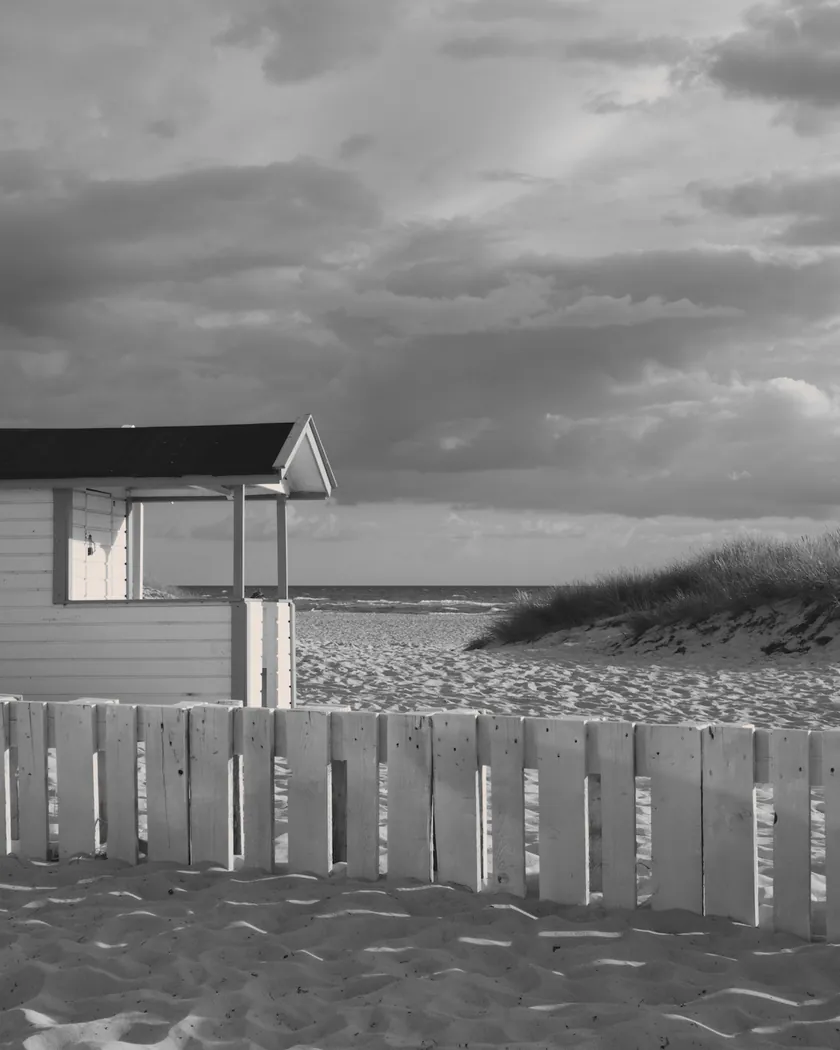
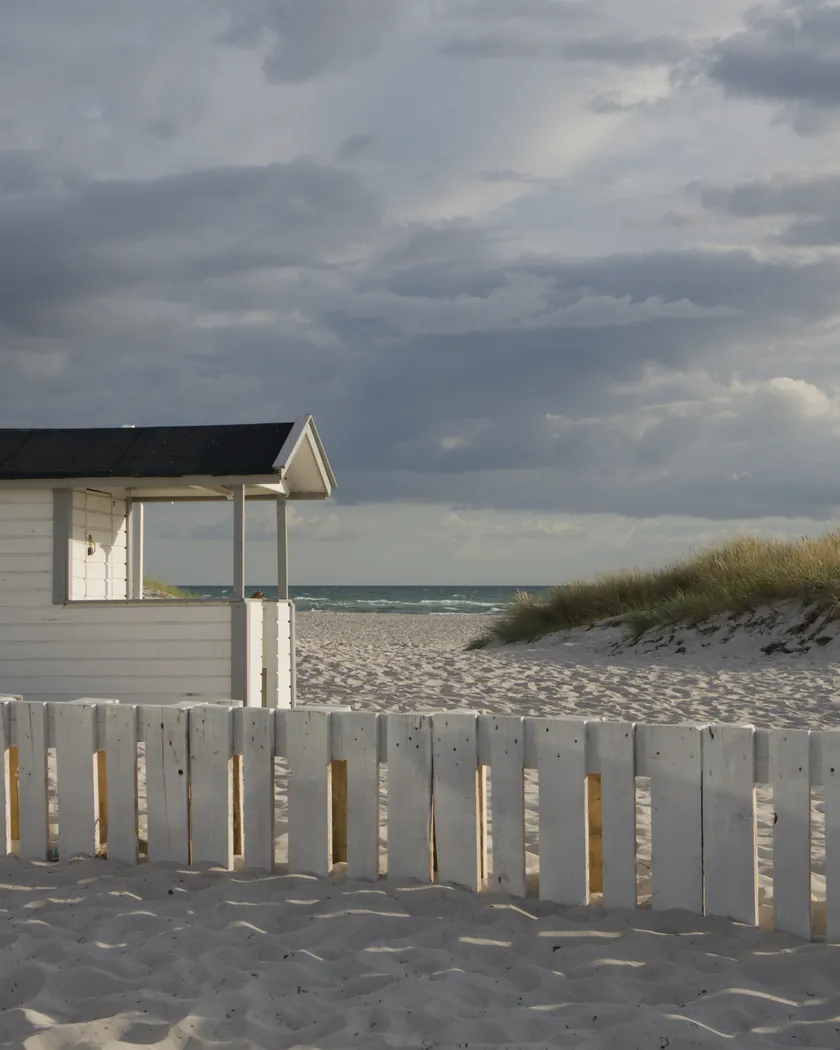
Character
- Contrast
- High in most reviews; Polaroid announced 'lighter contrast' for its 2024 chemistry
- Grain
- Virtually grain-free
- Latitude
- About 3.5 stops, measured on the SX-70 version of the film (Analog.cafe)
- Best for
- Low-contrast scenes; shadows and highlights lose detail in harsh light
Polaroid Black & White film for 600 and i-Type cameras is an integral instant film rated ASA 640: the print comes out of the camera and develops by itself, in 15 minutes according to Polaroid’s 600 page [1]. It is made in the Netherlands by today’s Polaroid, formerly the Impossible Project, which recreated an instant chemistry after the original Polaroid Corporation stopped making film [1] [10]. Polaroid lists the same speed and 8-photo packs for i-Type, whose packs have no battery [2].
Look and color
- Monochrome, with a tint that varies. Analog.cafe found “warm sepia tones” rather than neutral gray on B&W SX-70 prints, intensifying with days and weeks of bright light [3]. Analog.cafe reports that Polaroid’s newer chemistry adds color stability so that frames stay black and white instead of turning brown [4]. The sepia comes from a review of the SX-70 version of the film; we found no tint measurement on 600 or i-Type film.
- Faithful gray tones. Alex Luyckx, in a search excerpt only, calls it a panchromatic film that renders colors in a good range of grays [9]. No spectral sensitivity curve is published.
- No color casts. A customer comment on a retailer page says the film “can’t go wrong in terms of colour casts” [6]. That is one retailer comment, not a test.
- Polaroid’s own words are marketing: the film is meant to bring “depth, nuance, atmosphere, and the stark, dramatic geometry of shapes and lines” [1].
Tonality
- Rich contrast, short range. The retailer page describes “fantastic contrast” [6], and Parallax found the black-and-white film “more contrasty” than the color one, with a “soft, dreamy look” [8]. Analog.cafe measured about 3.5 stops of dynamic range, using controlled lighting and spot metering, but on B&W SX-70 film, not on 600 [3]. Alex Luyckx, in a search excerpt only, regrets the “lack of dynamic range” [9].
- Light changes the print. Frames shielded from sunlight while developing show stronger contrast than those exposed to direct light [3].
- The 2024 chemistry pulls in two directions. PetaPixel reported on May 7, 2024 that Polaroid announced a new B&W 600 chemistry with “improved clarity and lighter contrast” and “significantly more nuance” [5]. Analog.cafe adds that it aims to extend dynamic range, with greater shadow and highlight detail and more sharpness from extra developer [4]. Reviews written before that date describe the older formula. We found no measurement of the new one, and no source says which packs on sale carry it, apart from the new packaging (see below).
- A different generation, a different verdict. In late 2017 Dan Finnen found “excellent exposure balance” and more dynamic range than Instax monochrome, which he says blows out skin tones [7].
- Contradiction. Most sources say high contrast and short latitude, while Polaroid’s 2024 text says lighter contrast. The Grain Archive style follows the reviews and keeps the short range.
Grain and sharpness
- No visible grain. Analog.cafe calls the film virtually grain-free at ASA 160 and 600, because of how the chemistry develops within its layers [3].
- Sharpness depends on the print size. Analog.cafe says B&W Polaroid looks sharper than its color counterpart, but enlarged prints lack detail: the translucent plastic layer behind the emulsion distorts the image. At normal viewing distance, with a good lens, sharpness is “plenty” [3]. Dan Finnen found the 2017 film “sharp, detailed” [7]; Parallax says it held more detail than color [8].
- The style leaves sharpness alone. It adds no grain and no blur.
Specs
| Item | Value | Source |
|---|---|---|
| Film speed | ASA 640, for 600 and i-Type | [1] |
| Development time | 15 minutes for 600; 5 to 10 minutes on the i-Type page (the two pages disagree) | [1] |
| Format | 107 × 88 mm; image area 79 × 77 mm; 8 photos per pack | [1] |
| Battery | i-Type packs are battery-free | [2] |
| Origin | Made in the Netherlands at what Polaroid calls the last Polaroid film factory | [1] |
| Dynamic range | About 3.5 stops, measured by the reviewer on B&W SX-70 film (ASA 160), not on 600 | [3] |
Names, status and history
- Status. On September 30, 2026, Polaroid sold B&W film for 600 [1] and for i-Type [2], both at ASA 640, in packs of 8 photos.
- Development time. The 600 page says 15 minutes [1] and the i-Type page says 5 to 10 minutes [2]. We could not tell whether this reflects two chemistries or two pages written at different times. A retailer comment says the B&W film tends to develop faster than the color film [6].
- 2008 to 2020: from Impossible to Polaroid. The Impossible Project began in 2008 after the original Polaroid Corporation stopped making film. Its owners took over the plant in Enschede, Netherlands. The company became Polaroid Originals in September 2017 and Polaroid in March 2020 [10].
- 2017. Dan Finnen found the black-and-white film from Polaroid Originals better than the previous generation, which sometimes showed “subtle splotches” in areas meant to be solid black [7]. Parallax reviewed the Impossible-era version and says the company kept improving it [8].
- 2024 chemistry update. Announced on May 7, 2024. New packs have “diagonal gray gradient striping”, older ones a solid gray and white box [5].
- Datasheet. We found no datasheet, no characteristic curve and no spectral curve for this film. Everything here rests on Polaroid’s product pages and on reviews, and several measurements come from the SX-70 version of the film.
Alternatives
- GA — 025 Polaroid Color 600 / i-Type
Polaroid's color film in the same 600 and i-Type packs, also ASA 640
- Not on file Fujifilm Instax
Fujifilm's instant film; its monochrome version has a cool tint, according to Analog.cafe
- GA — 001 Ilford HP5 Plus
A conventional black-and-white film in the collection, for comparison with an instant print
- GA — 003 Kodak Tri-X 400
A conventional black-and-white film in the collection, for comparison with an instant print
Get the look in darktable
The GA — 066 / P preset, inspired by Polaroid B&W 600 / i-Type, is a darktable 5.6 style of 4 native modules, with no LUT. It sits on top of your own exposure and tone mapping.
| Zone | Metric | Before → after |
|---|---|---|
| skin | C (chroma) | 16.4 → 3.4 |
| whole image | Lsd (contrast) | 14.3 → 17.0 |
Settings, all measurements and limits of the Polaroid B&W preset
GA — 066 / P · darktable preset
B&W 600 / i-Type
for darktable
See real photos
Scans of real Polaroid B&W 600 / i-Type film, published by others:
Questions about Polaroid B&W 600 / i-Type
Is Polaroid black and white film the same for 600 and i-Type?
Polaroid lists the same ASA 640 speed and 8-photo packs for both, and the same wording about depth and nuance. The i-Type pack has no battery. The development time differs on the two product pages: 15 minutes for 600, 5 to 10 minutes for i-Type. We could not confirm whether the chemistry differs.
How many stops of dynamic range does Polaroid B&W film have?
Analog.cafe measured about 3.5 stops with controlled lighting and spot metering, but on B&W SX-70 film, not on 600. Polaroid said in May 2024 that a new B&W 600 chemistry makes over- and under-exposure easier to avoid, and gave no figure. We found no measurement of the new formula.
Does Polaroid black and white film have grain?
Not like silver-based film. Analog.cafe calls the B&W film virtually grain-free at both ASA 160 and 600, and says enlarged prints lack detail because of the translucent plastic layer behind the emulsion. Sharpness is described as fine at normal viewing distances when shot with a good lens.
What changed in Polaroid's B&W 600 film in 2024?
PetaPixel reported on May 7, 2024 that Polaroid announced a new chemistry, with 'improved clarity and lighter contrast' and 'significantly more nuance'. New packs have diagonal gray gradient striping, old ones a solid gray and white box. Analog.cafe adds richer shadow and highlight detail and color stability, from Polaroid's own text.
Do Polaroid B&W prints turn brown with age?
Analog.cafe found warm sepia tones on B&W SX-70 prints, intensifying after days and weeks in bright light. Polaroid's 2024 chemistry update reportedly adds color stability so that frames stay black and white instead of turning brown. No independent aging test of the new formula has been found.
Sources
- 1M Polaroid: B&W 600 film, product page Accessed September 30, 2026.
- 2M Polaroid: B&W i-Type film, product page Accessed September 30, 2026.
- 3C Analog.cafe: Polaroid B&W SX-70 instant film review (Dmitri, April 8, 2023, updated July 4, 2024) Accessed September 30, 2026.
- 4C Analog.cafe: Polaroid has just announced improvements to their black and white 600 film (May 8, 2024) Accessed September 30, 2026.
- 5C PetaPixel: Polaroid unveils improved chemistry for B&W 600 instant film (May 7, 2024) Accessed September 30, 2026.
- 6C Analogue Wonderland: Polaroid 600 film, B&W, ISO 640 (retailer page with customer comments) Accessed September 30, 2026.
- 7C Dan Finnen: Polaroid Originals film for 600, color and black and white, late 2017 (October 27, 2017) Accessed September 30, 2026.
- 8C Parallax Photographic: Impossible Black and White 600 film review (undated) Accessed September 30, 2026.
- 9C Alex Luyckx: Film review blog no. 85, Polaroid Black & White 600 (July 11, 2022); search excerpt only, the page did not load
- 10C Wikipedia: Polaroid B.V. Accessed September 30, 2026.
M: manufacturer · C: review or community