darktable preset inspired by KonicaImpresa 50
Clean, saturated blues and cyans, deep blacks and very fine grain, with muted yellows and oranges.
- Film
- GA — 071 · sheet, datasheet, sources
- Pack
- Full pack
- darktable
- 5.6 or later
- In darktable
- Styles › Pellicules › Couleur
- File
- Pellicules - Couleur - Konica Impresa 50.dtstyle
A darktable 5.6 style built from the Konica Impresa 50 datasheet: native modules, no LUT, very fine grain, measured on real RAW files. In the full pack.
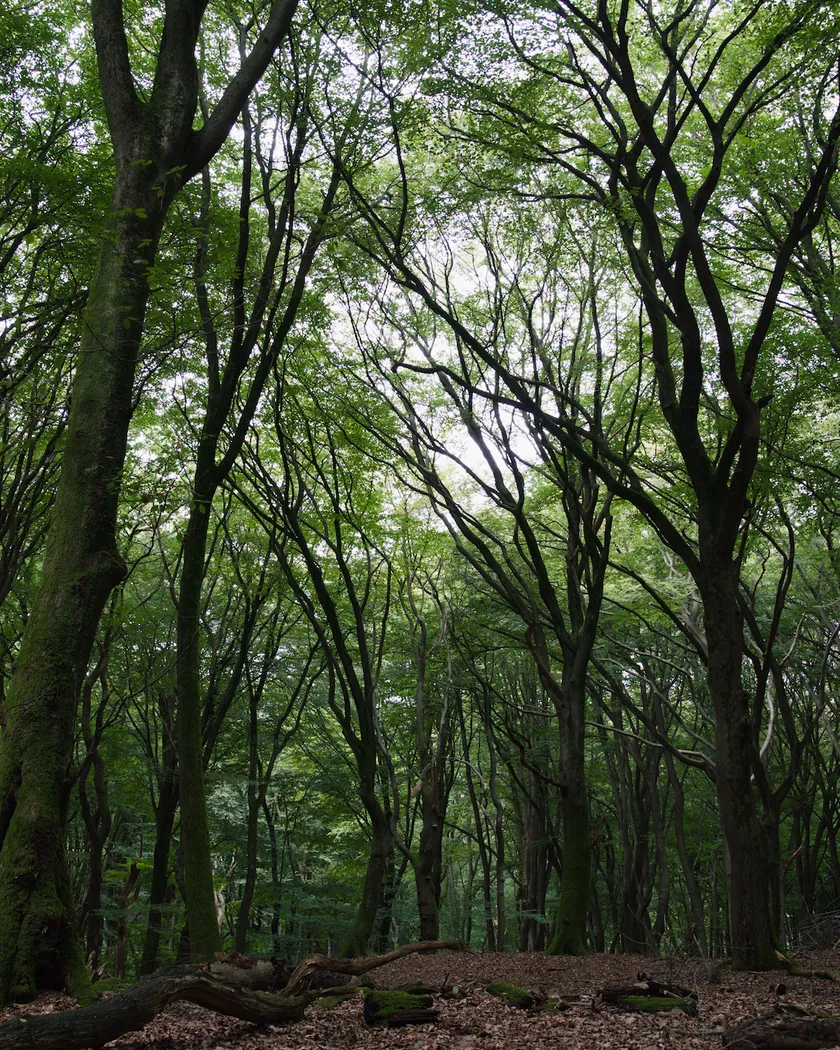
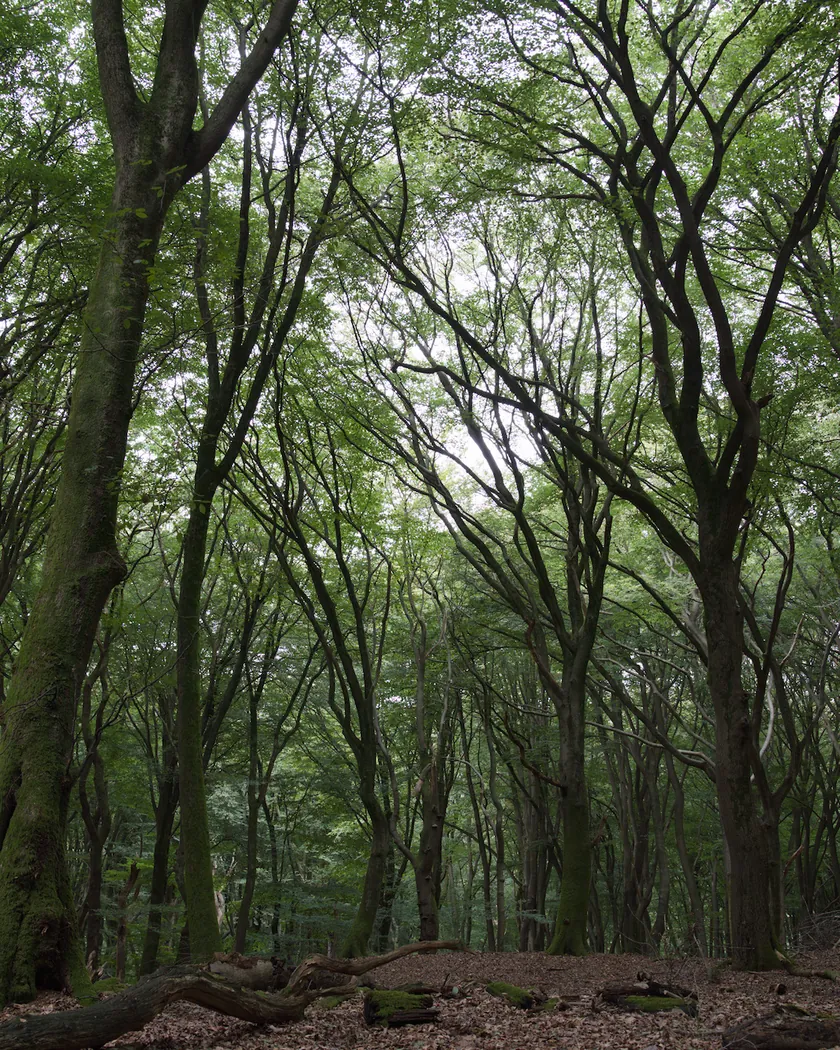
Translation into darktable
| Module | Role | Settings |
|---|---|---|
| rgb primaries | Purer blues and greens, blue barely toward cyan | Purity red 1.02, green 1.05, blue 1.05; blue hue −0.02 rad |
| color balance rgb (instance “film”) | A faint cool trace in the shadows, almost neutral highlights, sustained but not excessive saturation | Shadows 205° / 0.012, highlights 40° / 0.004; global chroma +0.04, shadow saturation +0.04, vibrance +0.03 |
| color equalizer | Blues, cyans and greens pushed, yellows and oranges held back | Saturation: blue ×1.05, cyan ×1.08, green ×1.07, yellow ×0.94, orange ×0.95 |
| tone curve (RGB, per channel) | Firm slope, deeper blacks than the Centuria 400 style, light shoulder | Nodes (0, 0.005) (0.10, 0.06) (0.25, 0.21) (0.5, 0.5) (0.75, 0.79) (0.9, 0.92) (1, 0.98) |
| grain | Very fine grain: finer than the Centuria 400 style (1500 / 19), close to the Ektar 100 style (800 / 7) | Coarseness 700, strength 6, midtones bias 90 |
Measurements
The measurements come from a few test photos of our own, which are not published on this site. The photos shown here are different.
| Photo | Zone | Baseline | Metric | Before | After | Film expectation |
|---|---|---|---|---|---|---|
| 0775 | whole image | Base rendering | L (mean lightness) | 53.2 | 53.7 | No specific target |
| 0775 | whole image | Base rendering | Lsd (contrast) | 14.3 | 16.5 | Medium to firm contrast (a choice: sources disagree) |
| 0775 | whole image | Base rendering | L5 (blacks) | 29.4 | 26.3 | Deeper blacks |
| 0775 | whole image | Base rendering | L95 (whites) | 75.2 | 79.1 | Whites more open |
| 0775 | whole image | Base rendering | C (chroma) | 21.4 | 27.2 | Sustained saturation |
| 1014 | whole image | Base rendering | Lsd (contrast) | 30.7 | 33.1 | Medium to firm contrast |
| 1014 | whole image | Base rendering | L5 (blacks) | 2.6 | 1.8 | Deeper blacks |
| 1014 | whole image | Base rendering | L95 (whites) | 87.9 | 90.3 | Whites more open |
| 0775 | sky | Base rendering | C (chroma) | 27.5 | 35.0 | Clean, sustained blues |
| 0775 | sky | Base rendering | h (hue, °) | 273.6 | 271.5 | Blue barely toward cyan |
| 0775 | sea | Base rendering | C (chroma) | 22.2 | 29.6 | Clean, sustained blues and cyans |
| 0775 | sea | Base rendering | h (hue, °) | 270.1 | 267.3 | Blue barely toward cyan |
| 0989 | skin | Base rendering | L (lightness) | 78.2 | 81.1 | No specific target |
| 0989 | skin | Base rendering | C (chroma) | 16.4 | 17.3 | Skin nearly unchanged |
| 0989 | skin | Base rendering | h (hue, °) | 44.2 | 45.3 | Skin hue nearly unchanged |
| 1014 | pink T-shirt | Base rendering | C (chroma) | 33.7 | 41.0 | Sustained saturation |
Base rendering: darktable’s default processing of the RAW file, without the preset. Luminance conversion (black and white): the same photo converted with plain luminance weights, to isolate the effect of the film’s spectral sensitivity.
What the style changes
The style sets five darktable modules. It aims at a careful reading of Konica Impresa 50: very fine grain, clean color with sustained saturation, blues, cyans and greens on the pure side, yellows and oranges held back, a faint cool trace in the shadows and firm but not hard contrast, as described on the Konica Impresa 50 film page. All figures below come from renders made with darktable-cli 5.6.0 at 1000 px, measured in CIELab.
- A firmer tone curve. The slope follows the datasheet’s curves (about 0.55 to 0.7, our reading). Contrast rises against the base (Lsd 14.3 → 16.5 on photo 0775, 30.7 → 33.1 on 1014), blacks deepen (L5 29.4 → 26.3 and 2.6 → 1.8) and whites open (L95 75.2 → 79.1 and 87.9 → 90.3). The curve acts on each channel, so saturation follows contrast. This is firmer than the Centuria 400 style (Lsd +1.1 and +0.8).
- Clean blues, cyans and greens. rgb primaries raises the purity of blue and green, and color equalizer pushes blue, cyan and green while lowering yellow and orange. Sky chroma goes from 27.5 to 35.0 (+27 %), sea from 22.2 to 29.6 (+33 %), with hue moving only 2° to 3° toward cyan. On the synthetic patch chart (flat sRGB patches), foliage chroma rises from 46.7 to 58.2 and yellow falls from 82.7 to 79.7.
- A faint cool trace in the shadows. A color balance rgb instance named “film” adds a cool tint at 205° to the shadows and almost none to the highlights. Reviews mention a blue cast, but its cause is not established. On the patch chart, mid gray reaches a chroma of 1.0, so the trace spills slightly onto the midtones.
- Skin stays close to the base. Its hue moves from 44.2° to 45.3° and its chroma from 16.4 to 17.3, while it gets lighter (L 78.2 → 81.1).
- Very fine grain, from the datasheet’s claim of the finest granularity and 160 lines/mm resolving power. The datasheet gives no RMS or Print Grain Index, so the setting (strength 6) is a choice.
What it leaves alone
- Your base development. The style contains no exposure, no sigmoid or filmic, no white balance and no LUT. Those settings stay as you made them.
- Your color balance rgb. The style’s color balance rgb is a separate instance named “film”, added next to yours, which stays untouched.
- But not your tone curve, rgb primaries, color equalizer or grain. When you apply a style from the lighttable or the darkroom, each of its modules replaces the instance of the same module with the same name, if the photo has one, and is added otherwise. Modules without an instance name replace any settings you already made in them. Your earlier settings remain in the history.
- Your pipeline order. The style file carries no module order list.
Exporting with a style, or rendering with darktable-cli, adds every module of the style as a separate instance. Our measurements were made that way, on darktable’s default rendering. The details are in Install and apply darktable styles.
Limits
- No grain figure. The official datasheet gives neither RMS nor Print Grain Index, so the grain cannot be set from a number.
- Contradictory sources. The reviews disagree on saturation (“restrained” against “high for a low-contrast film”) and on contrast (“delicate” and “low” against the firmer curve chosen here). The style settles on sustained saturation and medium to firm contrast. That is a choice, not a measurement.
- Expired film. The only detailed accounts describe expired rolls that lost speed and showed grain and casts. How fresh film looked is not documented, and the style does not imitate aging.
- Unread pages. Several forum threads and two review pages could not be opened, so some opinions come from search summaries only.
- Cool cast. The cast reported by reviewers is reproduced only as a trace in the shadows.
- Speed and latitude. The narrow latitude and the underexposure at EI 50 are not simulated: styles do not touch exposure.
Tips
- To adjust the cool trace, change the shadow tint of the “film” color balance rgb instance.
- Apply it early. If you plan to fine-tune the tone curve, rgb primaries or grain yourself, apply the style first: it would replace those settings if you made them before.
- Everything stays editable. Each module the style sets can be adjusted or switched off afterwards, for example the grain strength.
- Installation: see Install and apply darktable styles.
Get the preset
GA — 071 / P · darktable preset
Impresa 50
for darktable